

Carbon certifier Verra has introduced a new standard aimed at embedding carbon justice at the heart of voluntary carbon markets, following sustained input from frontline communities and grassroots justice groups across the globe.
This comes after the company had suspended operations with “Northern Kenya Rangelands Carbon Project,” managed by the Northern Rangelands Trust (NRT), which was suspended by Verra for a second time, preventing it from issuing or selling new carbon credits.
A move that followed the suspension follows a Kenyan court ruling that found two conservancies involved in the project were established illegally without proper community consent. The updated rules incorporate principles developed by the Grassroots Justice Network, drawing on lessons from carbon projects implemented in more than 20 countries.
The reforms are designed to increase transparency, reinforce communities’ right to free, prior, and informed consent (FPIC), and ensure fair revenue sharing with local populations hosting carbon projects.
According to members of the Grassroots Justice Network, six core principles are essential to making carbon projects fair and accountable. These include access to information, genuine community participation, and equitable benefit sharing.
“Without access to information, fair benefit sharing, and genuine participation from local communities, justice is lost,” said Elijah Lempaira of Impact Kenya, emphasizing long-standing concerns around exclusion and opacity in carbon markets.
Verra’s revised standard reflects technical and legal input from Namati and the Grassroots Justice Network, an alliance of justice organisations spanning 180 countries. Namati advances social and environmental justice by supporting communities to use and shape the law, and convenes the Grassroots Justice Network, the world’s largest alliance of grassroots justice practitioners.
The new rules seek to address recurring challenges that have undermined trust in carbon projects while shifting more power to communities on the frontlines of climate action.
Under the updated framework:
- All land-based carbon projects must obtain the free, prior, and informed consent of affected communities, formalised through a legally binding agreement that allows communities to define the terms of engagement.
- Project developers are required to disclose full financial information, including total revenues earned from carbon credit sales.
- A share of project revenue must be directed to local communities for projects implemented on community land.
“Today’s changes are a step towards carbon justice,” said Namati CEO Vivek Maru, noting that communities are not opposed to carbon projects but demand fairness and accountability.
This approach is already taking shape on the ground. In October 2025, more than 220 communities in Sittia Chiefdom, Sierra Leone, signed a carbon agreement with legal support from Namati.
Guided by the same carbon justice principles that informed Verra’s reforms, the agreement protects 79,000 hectares of mangrove forests, an area four times the size of Washington, D.C. Communities will lead conservation efforts and receive at least 40 percent of gross project revenue.
As voluntary carbon markets continue to expand, justice advocates are calling for Verra’s commitments to be mirrored in other standards, including ART-TREES and the Integrity Council for the Voluntary Carbon Market’s Core Carbon Principles.
Further reforms, they argue, should include setting minimum revenue shares for communities and requiring carbon credit buyers to meaningfully reduce their own emissions alongside offsetting.
Author Profile

-
Seeker.
Inspire AFRIKA.
Latest entries
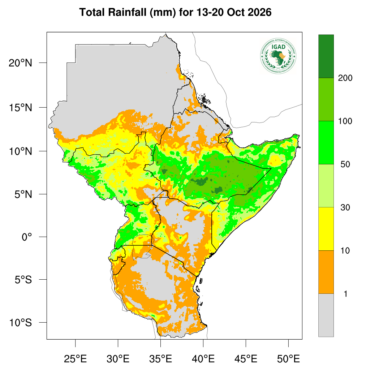 Weather Forecasts13 October 2026Rain and Rising Temperatures Forecast Across the Greater Horn of Africa
 Climate9 October 2026Beyond Negotiations: Africa Expects Concrete Outcomes from Antalya
 Animals7 October 2026In Kajiado’s Drylands, Collective Selling of Small Herds Is Changing the Livestock Trade
 Oceans6 October 202640 Years of Ocean Cooperation: The Western Indian Ocean’s Next Test Is Implementation


