

Kenya’s horticulture industry is entering a period in which producing more will no longer be enough. Climate change, global market pressures, rising costs, evolving regulations, and the need for greater efficiency are forcing the sector to rethink how it grows, processes, and markets its products.
At the 2026 Hortifare in Naivasha, Agriculture Cabinet Secretary Mutahi Kagwe framed that challenge in practical terms. Kenya may not be able to control some of the forces affecting agriculture, but it can determine how it responds to them.
“Climate change. You and I are not in control of climate change. And we have to respond to it,” Kagwe told journalists while touring the exhibition.

That response, he suggested, is already beginning to take shape in the technologies, research and agricultural solutions being showcased at Hortifare.
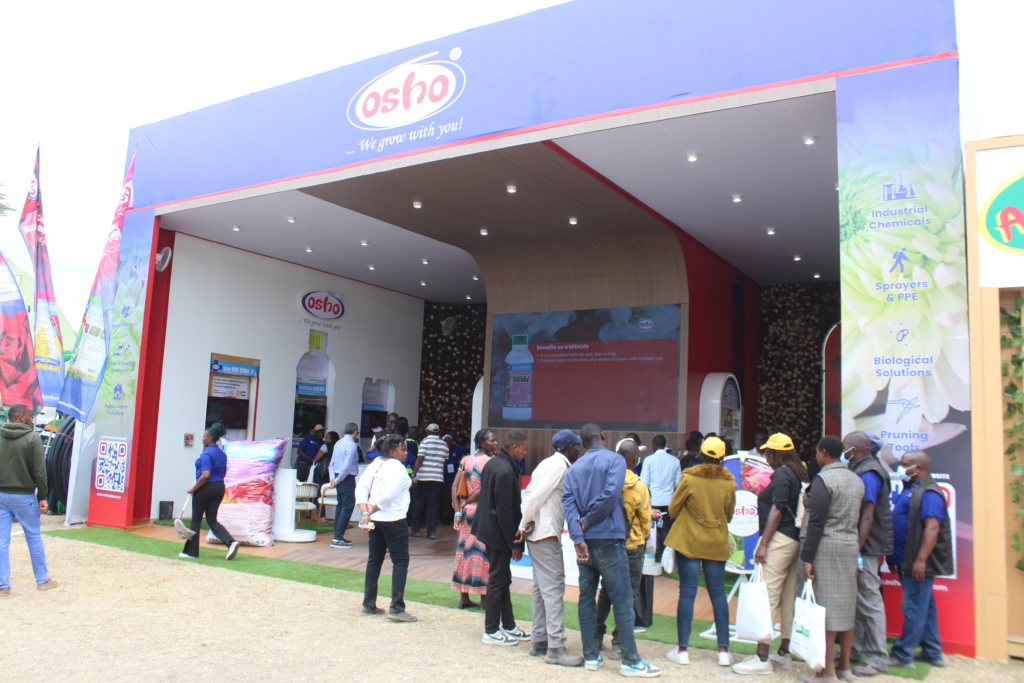
The event brought together companies working across different parts of the agricultural value chain, from crop inputs and soil management to machinery, digital systems and business solutions. Taken together, the exhibition offered a glimpse of an industry increasingly looking beyond conventional production methods.
For Kagwe, science will be central to that transition.
He pointed to research into crop varieties that can withstand or adapt to changing climatic conditions, as well as new approaches to pest and plant disease management. Such developments, he said, demonstrate why exhibitions such as Hortifare matter.
“This is science,” he said. “And it’s very important as part of what we do.”
Technology moves closer to the farm
Technology was one of the clearest threads running through the exhibition.
Kagwe highlighted the growing role of digital agriculture, including the use of drones for spraying, soil testing and soil analysis. He also emphasised the importance of understanding soil health before farmers put crops in the ground.
The message was reflected in the solutions being presented by exhibitors.
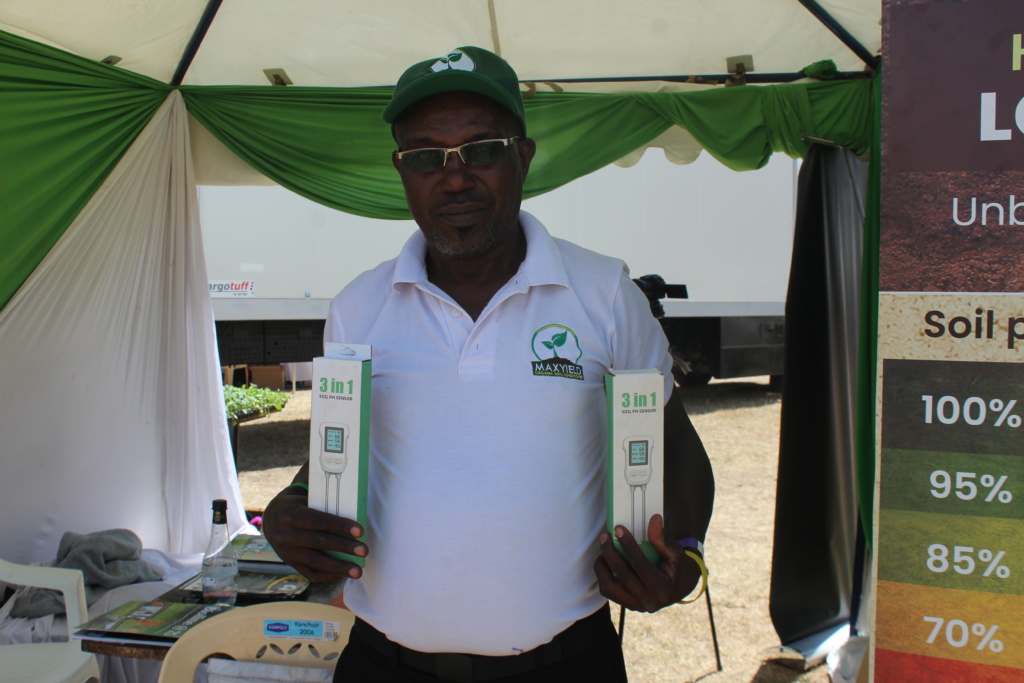
Among them was Ken & Tech, whose Key Account Manager Kenneth Nyaga discussed Maxyield and the growing importance of understanding the condition of the soil in determining crop performance. The conversation reflects a wider shift in horticulture: farmers are increasingly being encouraged to address the underlying condition of their production systems rather than simply adding more inputs when crops fail to perform.
That emphasis on information also extends beyond the field.
At Hortifare, Caleb Bett of Sunesis Consulting explained how business intelligence can help companies save time and improve the way they produce and use reports. For a modern horticultural business, where decisions increasingly depend on timely information, the ability to collect, analyse and act on data is becoming part of competitiveness.
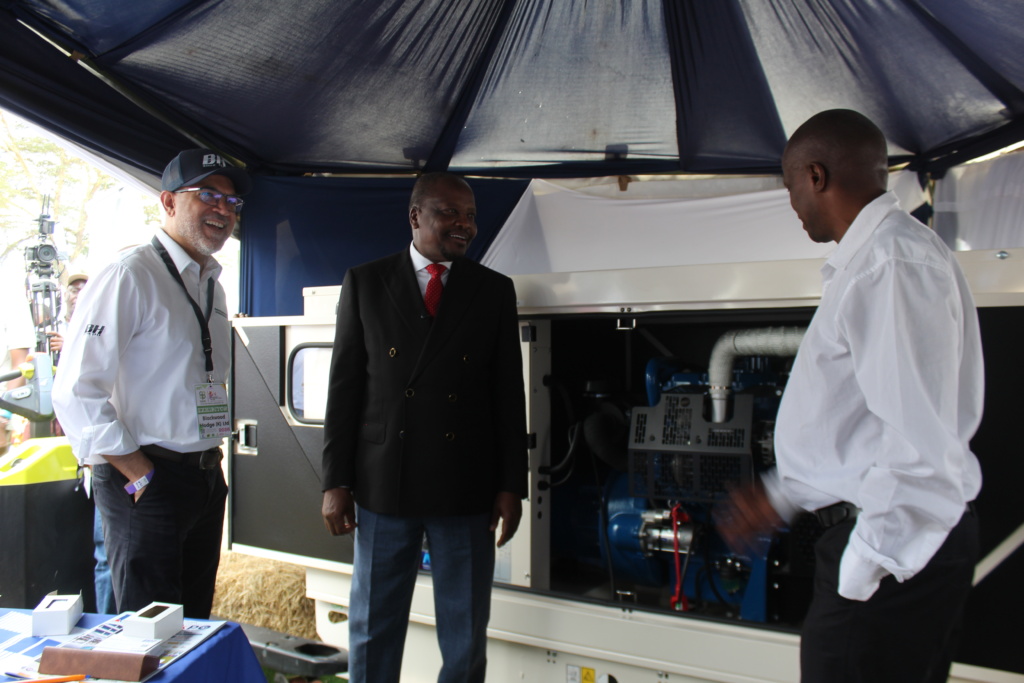
The same transition was visible in other parts of the exhibition. Discussions around machinery, mobility and equipment, including those represented by Simba Corp, pointed to an agricultural sector whose needs are becoming increasingly specialised.
The common thread is efficiency: using technology and information to make better decisions rather than relying entirely on traditional practices.
Information may be as important as inputs
Kagwe was particularly emphatic about what he sees as a gap in the way farmers are supported.
Speaking at the KEPHIS stand, he argued that government and the wider agricultural sector cannot simply provide farmers with products and leave them to determine how best to use them.
“It’s irresponsible for me to give a farmer a product. I haven’t told them how it will grow,” he said, arguing that much of the investment in inputs could be wasted if farmers do not understand the conditions in which crops are being planted.
His example was soil health.
“Even if you give fertilizer and you have got nematodes, how does that help?” he asked.

For Kagwe, soil testing, pest identification and appropriate mitigation measures need to happen before planting rather than after a crop has already begun to fail.
He went further, describing agricultural information as potentially more valuable than a conventional input subsidy.
“That information is a bigger subsidy than fertilizer subsidy,” he said.
It is an idea that fits neatly with the technologies being promoted at Hortifare. Digital tools, soil analysis and data-driven agriculture are not simply about introducing sophisticated gadgets to farms. Their value lies in helping farmers make better decisions at the right time.
Keeping investment in horticulture
But technology alone will not determine the industry’s future. Kagwe also placed considerable emphasis on the investment environment.
He argued that Kenya’s priority should be to strengthen the businesses already operating in the country while creating conditions that encourage new investment.
“This is the biggest horticultural centre anywhere in Africa,” he said, arguing that the country should first ensure that existing businesses have a positive business case.
Investors, he noted, come to Kenya to make money. Their contribution to the country comes through the economic activity, jobs and value chains created when those businesses succeed.
That makes the operating environment critical.
Kagwe pointed to taxation, security and tariffs as some of the factors that influence investment decisions, while also highlighting Kenya’s workforce as an important attraction.
“People come here because of our labour, because they know that Kenyans work hard,” he said.
He also returned to the issue of tax refunds owed to businesses in the horticultural sector, arguing that faster refunds allow companies to reinvest and support employment.
The example he gave was value addition within Kenya’s flower industry, where flowers can be packed locally into bouquets for supermarket markets in the United Kingdom.
The implication is significant: horticulture’s contribution is not limited to what happens on the farm. Processing, packaging, logistics, technology and other activities around production can create additional economic value and employment.
Kagwe’s broader message was blunt: “You cannot get growth out of taxation. You get growth out of production.”
Competing in a changing global market
Kenya’s horticulture sector, however, does not operate in isolation.
Kagwe noted that businesses are affected by what happens beyond Kenya’s borders. The country imports important agricultural inputs, including fertilisers, while horticultural producers depend heavily on international markets.
That exposure makes global disruptions a domestic concern.
The European market also continues to shape how Kenyan producers operate, particularly as standards and expectations evolve.
Kagwe acknowledged that Kenya and the European Union sometimes disagree over standards, but said the country remains committed to meeting the agreements and requirements governing its trade.
For growers and exporters, this means competitiveness increasingly depends on more than production volumes. Quality, traceability, sustainability, compliance and efficiency are becoming inseparable from market access.
The conversations taking place among exhibitors at Hortifare reflected this reality. Companies are developing technologies and services aimed not simply at helping farmers produce, but at helping them produce in ways that respond to increasingly demanding markets.
From exhibition to action
Hortifare therefore offered more than a display of agricultural products and technologies. It provided a snapshot of a sector trying to solve several challenges at once.
Climate change is forcing adaptation. Soil health is demanding greater attention. Digital tools are changing how farmers and businesses make decisions. International markets are raising expectations, while investors need an environment in which businesses can remain viable and reinvest.
For Kagwe, government must also become more responsive to an industry whose needs are constantly changing.
“A lot of it has to do with us responding as a government, being responsive to the needs of the industry,” he said.
That may ultimately be the bigger lesson from Hortifare 2026. The future of Kenyan horticulture will not be determined by one new product, one technology or one policy intervention. It will depend on how effectively research, farmers, technology providers, investors, regulators and government connect their efforts.
In Naivasha, many of those pieces were already on display. The next challenge is turning them into a more resilient, productive and competitive horticulture sector.


