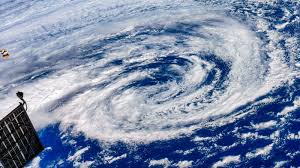
A new chapter in Africa’s space story lifted off from Florida, heading to the International Space Station.
In a historic first for the continent, three African nations, Kenya, Egypt, and Uganda, have built a climate camera that is orbiting around the Earth, a small device carrying a much bigger shift in how Africa sees its oceans.
The mission, lifted off on the 11th of April, 2026, the SpaceX Falcon 9 rocket carrying the Cygnus NG-24 spacecraft into orbit from Cape Canaveral, Florida, and on board was a three-and-a-half-kilogram payload called the ClimCam.
By the 13th of April, the spacecraft had arrived in the ISS. Astronauts aboard used a robotic arm to capture it.
Now, in the coming days, the ClimCam will be installed on an external platform. From there, it will spend the next year looking down at Africa, and by August of 2026, the system will start sending usable AI processed data that scientists can work with in real time.
What makes the ClimCam different is not just where it is, but also how it works.
Unlike traditional systems that simply take images and send them back to Earth, the ClimCam will process data in space.
It will use artificial intelligence to convert raw images into usable climate intelligence. Officials say the new tech will be used for flood detection signals, drought mapping, crop stress indicators, and other real-time environmental insights.
For Africa, the timing is critical. Floods are intensifying. Drought cycles are shifting. Agricultural systems across East Africa are under pressure. Officials say the ClimCam will act as an early warning system for climate threats.

“This innovation will support natural resources management, environmental monitoring, disaster management, and climate resilience initiatives across Eastern Africa, and strengthen data-driven decision-making for timely interventions,” said the Kenya Space Agency in a statement.
The technology is just one layer, but the collaboration behind it is the real shift. Three institutions built this system together. The Kenya Space Agency focused on how the data will be used on the ground.
The Egyptian Space Agency led technical assembly and testing. Uganda’s space program led the data processing operation.
It marked the first coordinated mission of its kind.
Reports say the mission supported through a United Nations framework marks a shift in how developing nations access space. Until now, African countries relied heavily on climate data from foreign satellites, which were often expensive and not always tailored to African geography.
That dependency is now starting to change. Africa is moving from buying space data to generating it. In 2025, the African Union also launched the African Space Agency.
Across the continent, countries including Nigeria, South Africa, Ethiopia, and Angola are also expanding satellite programs and partnerships.
Climate change is changing life on the ground, and Africa is now building the tools to track it from space. The nations which gain access to that information can shape the continent’s environmental policies in the years to come.
Author Profile

- How can we learn if we don't question?
Latest entries
 Oceans22 October 2026Seamounts Under Threat: Can Governments Turn Ocean Promises into Protection?
 Events21 October 2026New Guide Links Animal Welfare to Biodiversity and Human Health
 COP1717 October 2026The World Has a Plan to Save Nature. Can It Deliver by 2030?
 Agriculture16 October 2026“There Is No Shortcut”: A Kiambu Grower’s Decade in Mushrooms