
Africa’s youth are not sitting idle waiting for the green economy to arrive. They are working more, in fact, than young people almost anywhere else in the world.
An estimated 304 million young Africans, roughly 57% of the continent’s youth, are already in some form of work, a higher share than the global average of about 48%. The problem is what kind of work: overwhelmingly informal, low-paid, and disconnected from the skills the green transition actually needs.
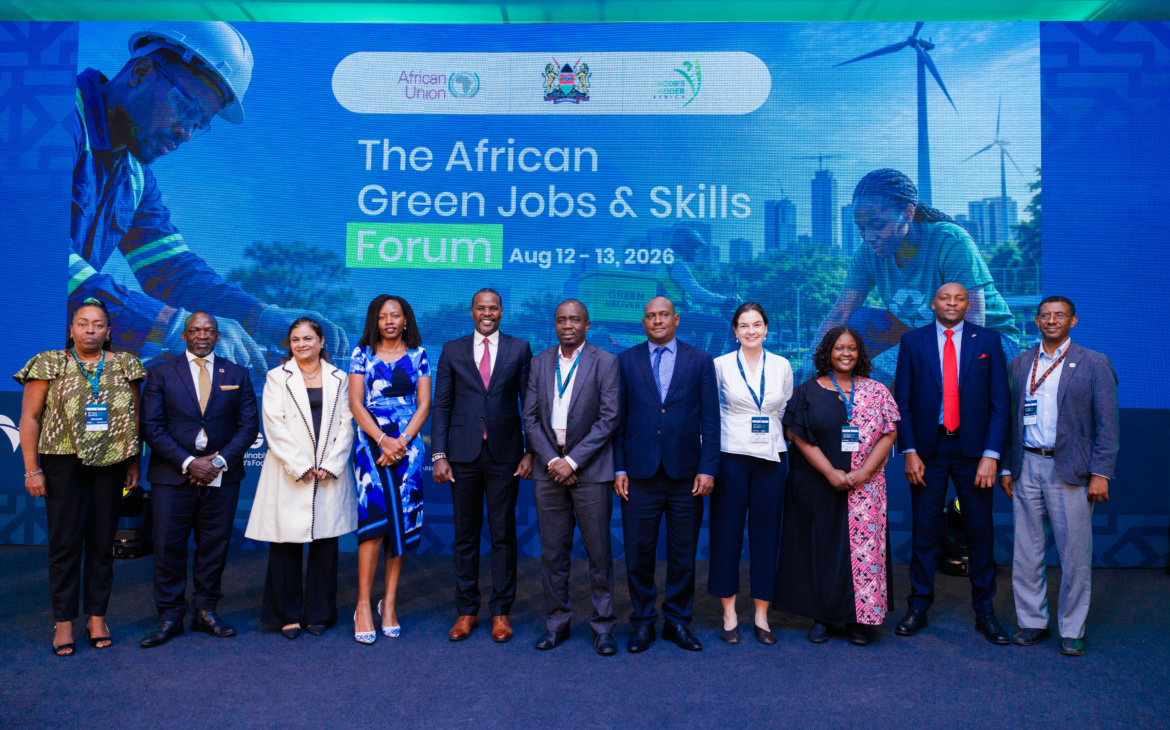
That mismatch, not a shortage of good intentions, was the real subject hovering over last week’s GreenWorks 4 Africa summit in Nairobi, even if the closing statements from the two-day forum spoke mostly in the language of collaboration and coordination.
The gap beneath the good news
The numbers explain why officials keep reaching for words like “coordinated” and “systems.” Sub-Saharan Africa needs to create 25 million new jobs every year for the next quarter-century to keep pace with its growing labour force, according to the World Bank’s 2025 Africa’s Pulse report, and the current economic model isn’t delivering them.
Roughly a fifth of the continent’s youth are not in employment, education, or training at all. Even among those who do make it through tertiary education, unemployment or inactivity runs as high as 30% in some North African economies, a sign that credentials alone aren’t solving the problem.
Green skills specifically are in short supply. Only about one in eight workers globally holds a recognised green skill, according to LinkedIn’s Global Green Skills Report, even as employers increasingly rank it above a university degree.
In Africa, only 9% of young people had completed tertiary education as of 2025, leaving most underprepared for a labour market that is shifting away from agriculture toward more specialised industry and service roles, including those the green transition is creating.
This is the gap the Nairobi summit was trying to name: plenty of green ambition, renewable energy pledges, climate finance commitments, continental strategies, but no reliable pipeline turning that ambition into employable people, and no reliable pipeline turning skilled people into viable enterprises.
What the summit actually proposed
Convened by the Pan-African NGO Jacob’s Ladder Africa alongside FSD-Africa, AGRA, GIZ-Kenya, and the Center for Global Development, GreenWorks 4 Africa closed on August 13 with a set of recommendations aimed squarely at that pipeline problem.
Delegates called for dual training and apprenticeship models with far greater involvement from employers, arguing that curricula divorced from what industry actually needs is part of why so many graduates remain jobless.
They pushed for wider recognition of prior learning, so that skills picked up informally, outside classrooms and certificates, count toward green job opportunities rather than shutting workers out of them.
And they backed the expansion of the Alliance for Greening Skills and Opportunities Africa, a platform meant to keep governments, employers, investors, and training institutions coordinating after the summit ends rather than working in parallel.
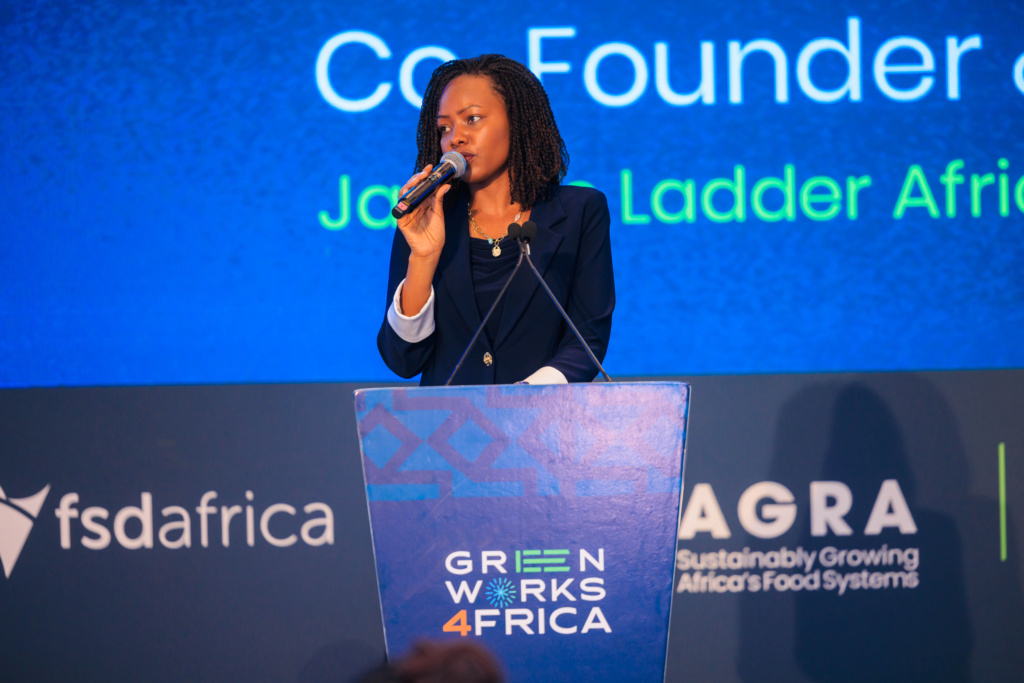
Sellah Bogonko, co-founder and CEO of Jacob’s Ladder Africa, framed the exercise as connective tissue rather than a new programme. “We must connect the dots that ensure that we are moving in the same direction, in a concerted manner and with the same effort,” she said.
This is crucial because it’s an implicit admission of what has gone wrong before: Africa doesn’t lack green-economy initiatives; it lacks alignment between them.
A February 2026 Green Skills Symposium convened by Jacob’s Ladder Africa and partners in Nairobi put the underlying stakes bluntly, without enterprise pathways for graduates to step into, skills training remains theoretical, and without jobs waiting at the end of it, the continent’s demographic momentum risks becoming economic instability rather than an asset.
A government under pressure to show it isn’t just talk
For Kenya’s government, the summit landed at a politically loaded moment. Principal Secretary for Environment and Climate Change Dr. Eng. Festus K. Ng’eno used his closing remarks to tie the green skills agenda directly to Vision 2060, the long-term development framework President William Ruto is now taking through national consultations as a successor to Vision 2030.
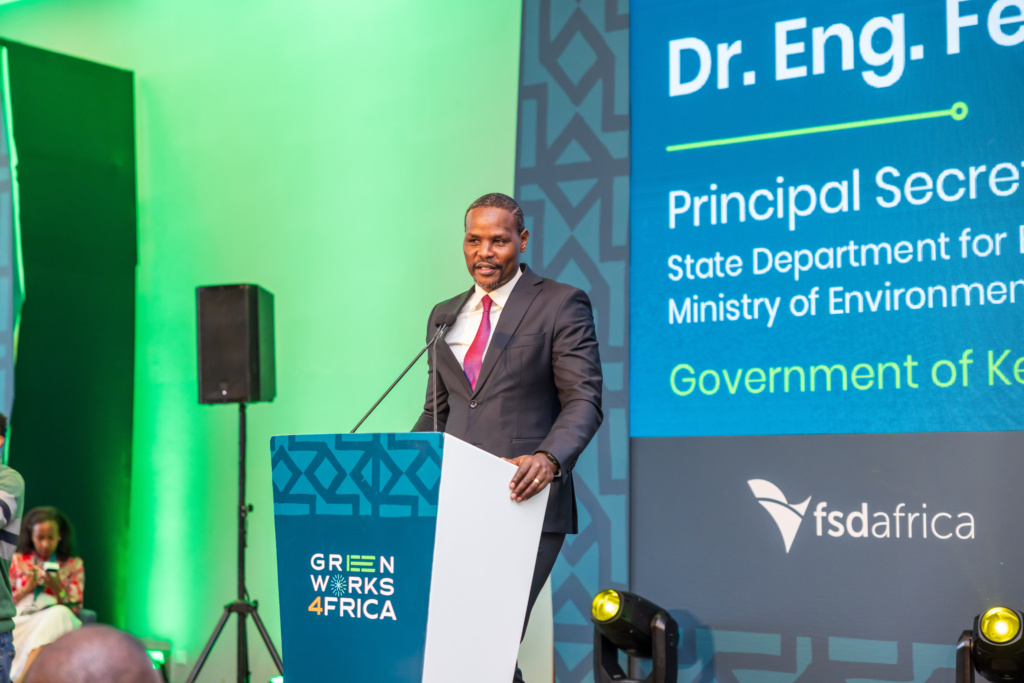
“Investing in green energy is investing in national development,” Ng’eno told delegates, adding that “governments across Africa are looking for models that work because our dignity and prosperity depend on it.”
The Vision 2060 framework itself sets out ambitions that would require exactly the kind of skilled workforce the summit was discussing: an upper-middle-income economy, a target GDP per capita of $15,000, and a net-zero carbon economy.
But Vision 2060 is also arriving under a cloud of skepticism rooted in Kenya’s own planning history. Vision 2030, the plan it supersedes, was substantially undermined by successive administrations abandoning predecessors’ priorities, a pattern critics have already warned could repeat itself, with opposition figures arguing the government should be focused on cost-of-living and debt pressures rather than a 34-year horizon.
Whether the green skills systems agreed to in Nairobi survive that same political churn, or the next election cycle, is an open question the summit’s communiqué does not address.
Coordination is not the same as delivery
None of this makes the summit’s recommendations wrong. Dual apprenticeships, recognition of prior learning, and demand-aligned curricula are all measures with a track record of narrowing skills mismatches elsewhere.
But they are also measures that development forums have called for before, in various guises, without the informal-employment and NEET numbers moving much.
The Alliance for Greening Skills and Opportunities Africa that delegates voted to expand grew out of a similar national platform in Kenya that, as of its most recent public update, was still finalising the baseline survey meant to establish how big the country’s green skills gap actually is, a reminder of how early-stage even the diagnostic work remains, let alone the delivery.
The Nairobi gathering was explicit that it wanted to be judged differently from a typical conference — as a step toward implementation rather than another round of dialogue.
Africa’s demographic reality gives that ambition real urgency: with the continent’s youth population still expanding, every year spent refining coordination frameworks is a year in which millions of young workers are making career decisions with or without a green pathway to follow.


