
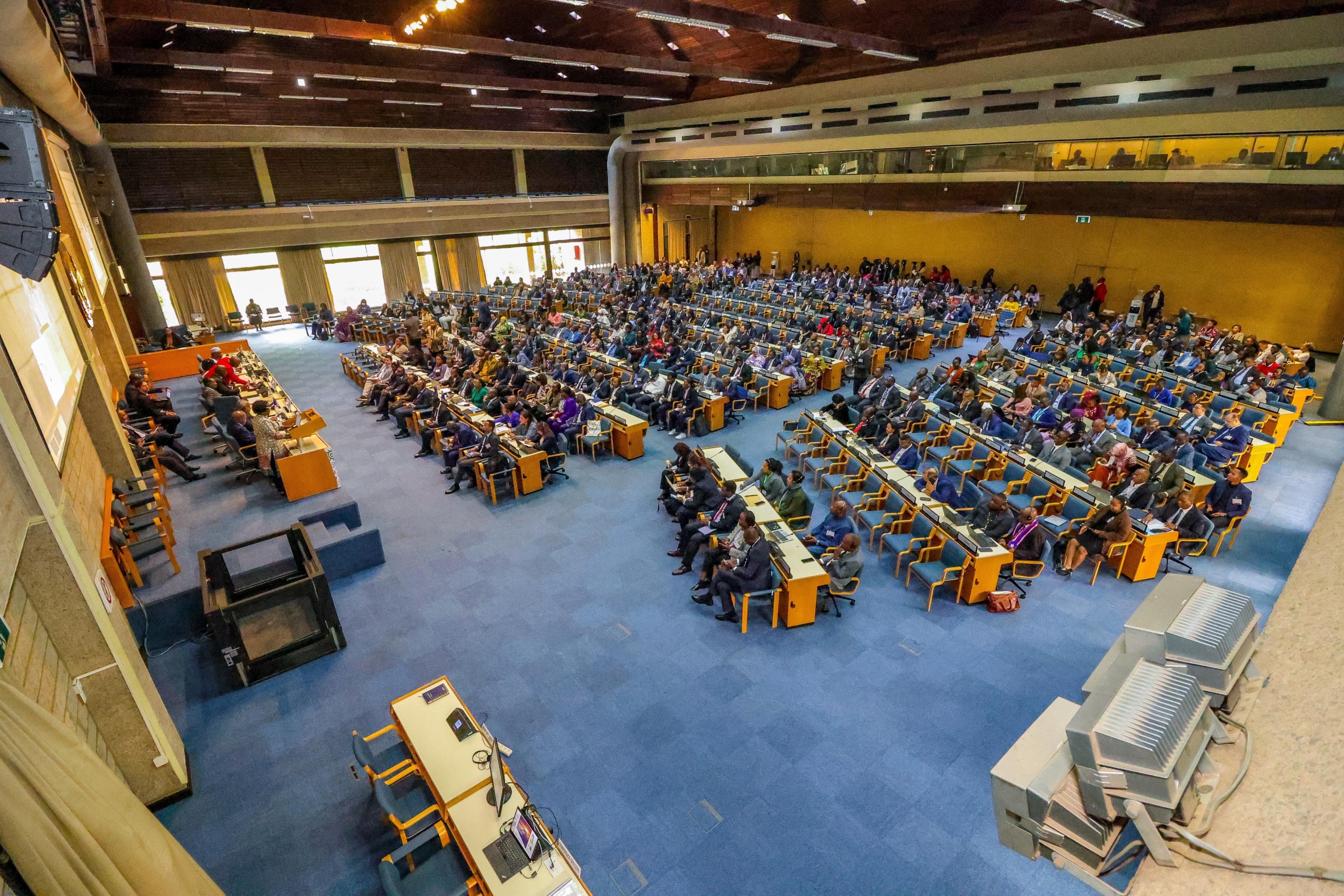
The 20th Ordinary Session of the African Ministerial Conference on the Environment (AMCEN20) has reignited momentum for a united African environmental agenda, emphasizing equitable financing, addressing historical injustices, and accelerating a just transition to sustainability.
Marking four decades since its inception, AMCEN20 stands as a milestone in Africa’s environmental policy evolution.
With 35 ministers and representatives from all 53 African countries present, the discussions acknowledged the continent’s compounded vulnerabilities, from droughts and floods to heatwaves, which are not only causing human and economic loss but also severely constraining sustainable development.
In his address during the opening plenary, Kenya’s Prime Cabinet Secretary Musalia Mudavadi emphasized the strategic importance of platforms like AMCEN in shaping Africa’s environmental narrative amid shifting global priorities.
“We face a global retreat in development finance, so let us remain resolute in shaping a greener, more sustainable Africa,” he said, calling for bold, actionable outcomes aligned with Agenda 2063 and the UN Sustainable Development Goals.

The AMCEN20 deliberations are anchored on four priority areas: climate change, pollution, biodiversity loss, and sustainable development. These are viewed as pillars of Africa’s green economy aspirations, grounded in the continent’s rich natural resources and demographic strength.
Kenya’s Cabinet Secretary for Environment, Debora Barasa, reaffirmed the country’s leadership in climate-resilient development, citing efforts such as a plastics ban and the rapid scale-up of clean energy.
“Climate change is not a distant threat, it is here and now. It is a public health emergency, an economic crisis, and an ecological tragedy rolled into one,” she said.
CS Barasa also highlighted key challenges facing the continent: limited access to climate finance, data and capacity gaps, weak enforcement of environmental laws, and growing conflicts over natural resources.
She called for strengthened regional cooperation and foresight to overcome recurring climate shocks, mounting debt burdens, and internal conflict.

As ministers discussed synergies between the three Rio Conventions, the UN Framework Convention on Climate Change (UNFCCC), the Convention on Biological Diversity (CBD), and the UN Convention to Combat Desertification (UNCCD), calls for coordinated implementation came to the fore.
UNCCD Executive Secretary Ibrahim Thiaw praised AMCEN’s long-standing role as the cornerstone of Africa’s environmental governance and policy formulation.
He urged negotiators to bridge fragmented approaches across treaties, pointing to overlaps in texts and mandates that could be unified.
“Over the last 70 years, Africa has lost more than 60% of its arable land, while the population has grown sixfold. That farmer facing land degradation, biodiversity loss, and water insecurity is dealing with a compounded crisis we must act now,” said Thiaw.
Echoing this urgency was UNEP Deputy Executive Director Elizabeth Mrema, who underscored the importance of adapting institutional responses to evolving challenges.
“Now more than ever, we must ensure AMCEN decisions translate into real, measurable impact on the ground,” she said, stressing the need for stronger implementation and monitoring.
As AMCEN20 continues, the expectations are high, not only for declarations, but for frameworks that can guide Africa through its environmental tipping points and into a decade of decisive climate leadership.

