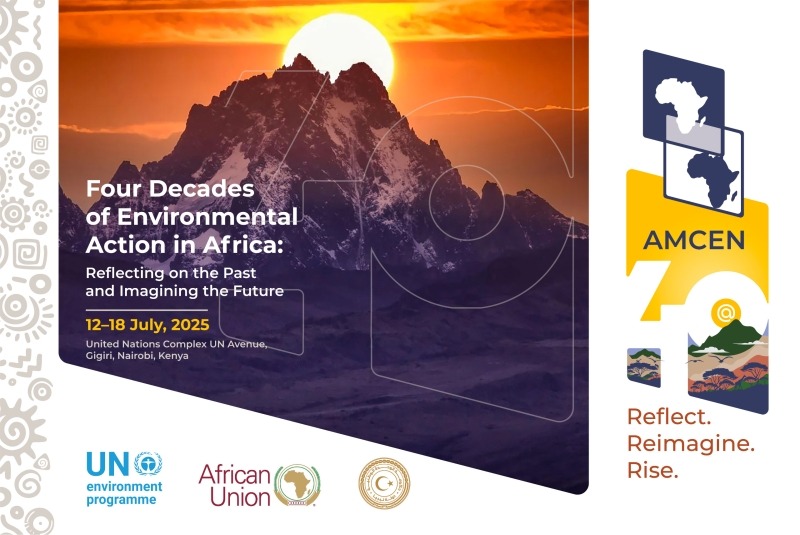
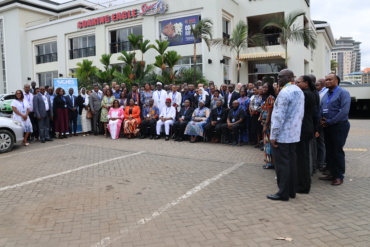
The 20th Ordinary Session of the African Ministerial Conference on the Environment (AMCEN-20), taking place from July 14 to 18, 2025, commemorates the 40th anniversary of AMCEN since its founding in 1985.
While hosted by the Government of Libya, this pioneering event is being convened in Nairobi, Kenya. The conference’s theme is “Four Decades of Environmental Action in Africa: Reflecting on the Past and Imagining the Future.”
The milestone underscores the continent’s resilience and the pressing need for enhanced, unified efforts to combat environmental degradation, freshwater ecosystem decline, pollution, and biodiversity loss.
Climate change disproportionately affects Africa, causing unprecedented droughts and floods that lead to severe social and economic impacts, including billions of dollars in GDP losses.
Geopolitical shifts, structural financial constraints, and persistent inflation further compound these challenges. AMCEN at forty signifies a renewed commitment to embracing homegrown solutions and aligning continental priorities with the global environmental agenda.
Notably, the delegates at the session have a duty to develop a unified African position ahead of key global environmental summits on climate change, biodiversity, chemicals, plastic pollution, and ocean governance.
Over the past four decades, AMCEN has elevated Africa’s voice in multilateral environmental agreements, advocating for context-sensitive solutions grounded in indigenous knowledge. African leaders have consistently issued bold declarations, positioning the continent as a thought leader on pressing environmental challenges, from floods that destroy livelihoods to droughts that decimate livestock.
As ministers convene at the UNEP headquarters in Nairobi, the continent seeks to present a clear and unified message of readiness to lead. This leadership, however, must be underpinned by honored commitments and equitable partnerships that genuinely benefit African communities.
Today, African ministers of the environment face a decisive moment. They must address the worsening poverty, conflict, and inequality driven by environmental pressures.
Scientific consensus from the Intergovernmental Panel on Climate Change (IPCC) underscores that halting emissions, phasing out fossil fuels, and restoring biodiversity are non-negotiable pathways forward.
The current AMCEN session is expected to tackle the continent’s energy poverty, the extractive resource model, and pressures on African mineral wealth. The conference aims to chart a bold path forward for sustainable development rooted in African realities.
According to the AMCEN Secretariat, the platform plays a vital role in ensuring Africa speaks with one voice and turns ambition into action.
Fatima Zahra Jihane El Gaouzi, Head of the Sustainable Environment Division at the African Union Commission, highlighted that consensus is crucial for elevating Africa’s green agenda and delivering tangible benefits to both communities and ecosystems.
She commended the enduring spirit of regional collaboration is essential for tackling transboundary ecological challenges.
Ministers are also urging a reaffirmation of their commitment to the bold stance taken in AMCEN Decision 19/2, which calls for a legally binding Global Plastics Treaty that addresses pollution across the full lifecycle of plastics. With challenges persisting during the Intergovernmental Negotiating Committee 5.2 sessions, unity and conviction will be key when talks resume in August.
AMCEN is also anticipated to guide holistic nature restoration approaches, such as rehabilitating degraded and deforested lands, safeguarding wetlands, and ensuring local communities take the lead in conservation efforts.
This year’s meeting comes just weeks after the Bonn climate talks, which shape the run-up to COP30 in Brazil. As such, outcomes from AMCEN-20 are expected to influence Africa’s positioning in key global forums, including the UN Climate Change Conference (UNFCCC COP 30), the Convention on International Trade in Endangered Species of Wild Fauna and Flora (CITES CoP 20), the Minamata Convention on Mercury (COP-6), the Ramsar Convention on Wetlands (Ramsar COP 15), the Montreal Protocol (MOP 37), and the seventh session of the UN Environment Assembly (UNEA-7).
Rose Mwebaza, Director and Regional Representative of UNEP Africa Office, noted that AMCEN-20 presents an opportunity to reimagine and strategize for a green and just future.
“Despite the growing urgency of climate emergencies, food insecurity, forced migration, and conflict, Africa will lead and utilize its knowledge to chart a resilient and hopeful path forward,” said Rose.
Author Profile

-
Seeker.
Inspire AFRIKA.
Latest entries
 Agriculture14 October 2026Africa’s Food Systems Future Depends on Listening to Farmers
 Weather Forecasts13 October 2026Rain and Rising Temperatures Forecast Across the Greater Horn of Africa
 Climate9 October 2026Beyond Negotiations: Africa Expects Concrete Outcomes from Antalya
 Animals7 October 2026In Kajiado’s Drylands, Collective Selling of Small Herds Is Changing the Livestock Trade