
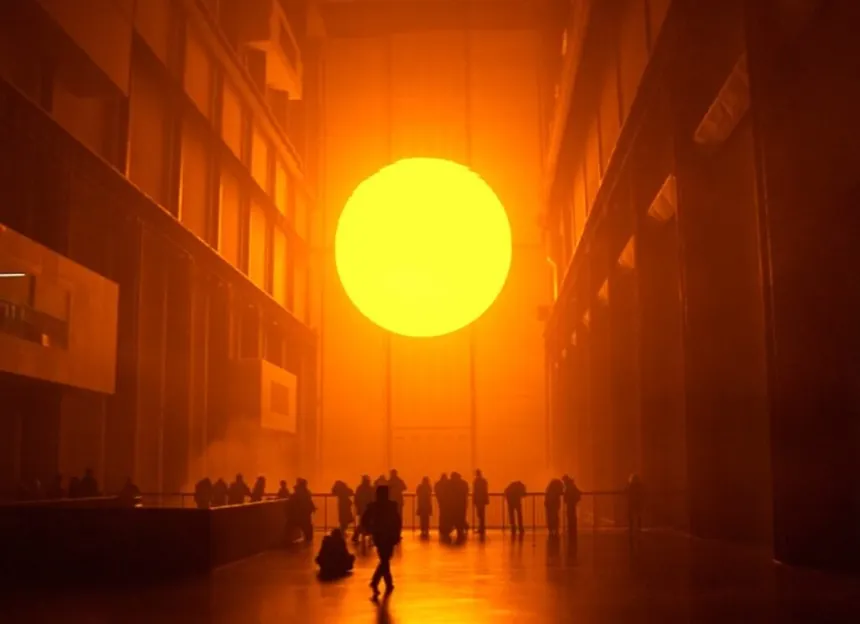
“Art can be a beacon of hope, lighting the way and compelling us to act,” John Chege said as we walked through the Nairobi Contemporary Art Institute, pausing before collectors’ pieces that shimmer with both beauty and urgency.
Art has always evoked our inner selves, stimulated curiosity, and prompted us to question our surroundings.
On World Art Day, observed annually on April 15 by UNESCO to celebrate artistic expression and its role in sustainable development, the natural world stands out as an enduring source of inspiration, threading from prehistoric cave paintings to today’s most vital works.
Yet in an era of raging wildfires, rising seas, and collapsing ecosystems, that once-untroubled relationship feels fractured. The radiant majesty of a Georgia O’Keeffe flower or the serene wilderness of a Thomas Cole landscape now reads like relics from another time.
Many contemporary artists have responded not with escapism but with activism, using their platforms to raise awareness, process ecological grief, and prototype more sustainable ways forward.
This shift is not without tension. Alongside hope, much climate art carries raw grief, anger, and a mourning for what is already lost. These emotions make the work visceral, transforming abstract data about emissions into something deeply human and urgent.
A powerful example is Olafur Eliasson’s Earth Perspectives (2020), a participatory series that reimagines human constructs like maps and globes by incorporating the viewpoints of plants, animals, and ecosystems.
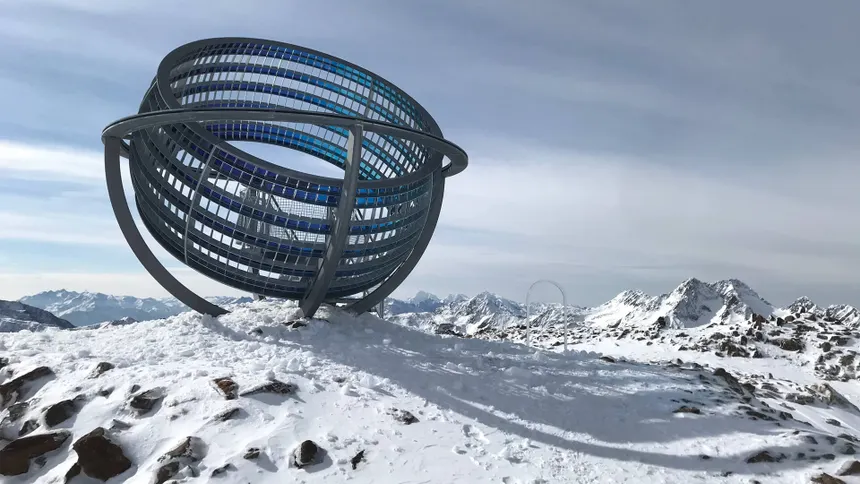
“It is important that we recognize these various perspectives and, together, celebrate their coexistence,” the artist has said. By making the invisible visible, Eliasson invites viewers to step outside anthropocentric thinking.
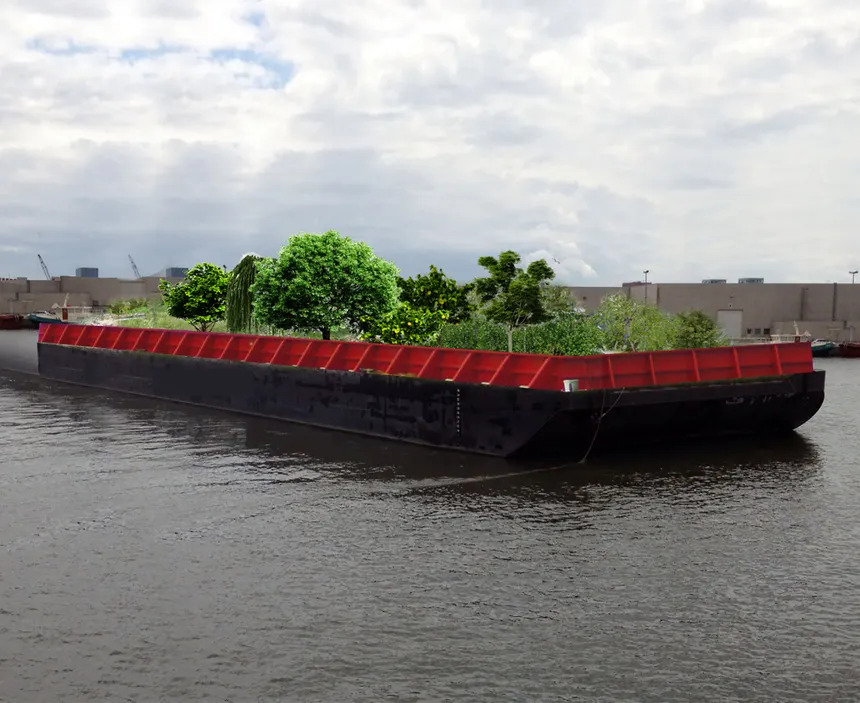
Closer to the ground, and closer to home, New York-based artist Mary Mattingly’s Swale (a floating edible food forest on a reclaimed barge) tackles food security, clean water, and public land use head-on.
Growing up in an agricultural town outside New York City, where drinking water was polluted, Mattingly developed a deep awareness of scarcity.
“Swale came out of a need to connect with and rely upon New York’s waterways and public land to better care for them, and by proximity, each other,” she explains on her website. The project challenges policies that restrict community gardening while fostering practical, communal care.
Globally, the biggest drivers of the crisis remain greenhouse gas emissions from transport and manufacturing.
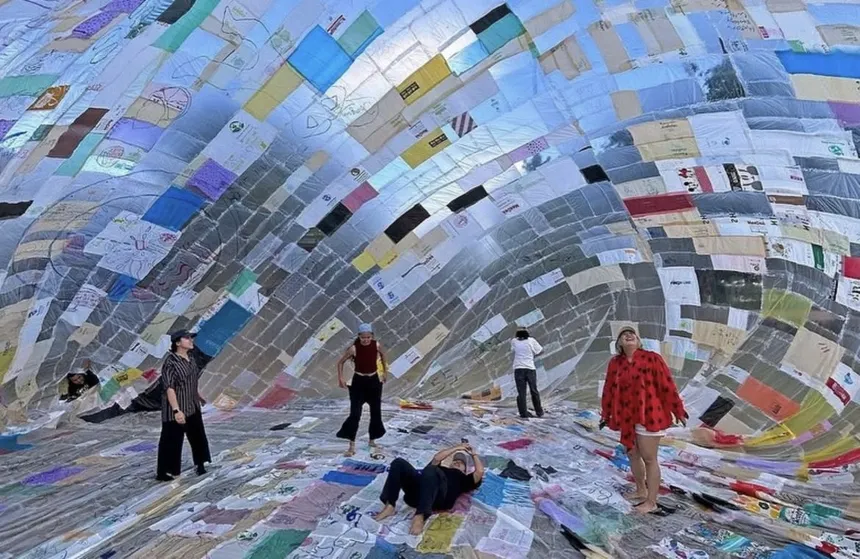
Argentinian artist Tomás Saraceno confronts these head-on through his ongoing Aerocene project (2015–present).
“How can we find a way to levitate, without any violence to the earth?” he asked in a 2018 profile. Working with an international, interdisciplinary collective, Saraceno has created floating, solar-powered museums stitched from recycled plastic bags (Museo Aero Solar, 2007–present) and, in 2015, achieved the longest fully solar-powered flight on record.
The vision is utopian, life in the atmosphere, free of borders and fossil fuels, yet it acknowledges that scaling such ideas will require systemic transformation beyond any single artwork.
Right here in Kenya, artists are grounding these global conversations in local realities. Nairobi-based sculptor Cyrus Kabiru, for instance, transforms discarded electronics and urban waste, often piled high near the city’s largest dumpsites, into vibrant, wearable sculptures like his signature C-Stunners.

By giving trash a second life, Kabiru directly confronts the pollution that fuels the climate emergency and reminds us that creative reuse is both possible and powerful in our own backyards.
In the end, these artists do more than document peril; they model resilience.
On World Art Day, as we stand amid Nairobi’s own creative scene, their work reminds us that art is not a luxury. It is a practical tool for reimagining how we live on a warming planet, one that can shift hearts, cultures, and, ultimately, collective action.
Author Profile

- How can we learn if we don't question?
Latest entries
 COP3115 October 2026Pacific Leaders Call for Urgent Climate Action Ahead of COP31
 Agriculture13 October 2026Can the buffalo fix Kenya’s milk problem? Farmers say start with the feed bill
 Events12 October 2026Cybersecurity in the Floriculture Industry
 Opinion & Analysis8 October 2026Why Africa Must Look to What Already Exists in Its Blue Economy


