
In the next two decades, one in every four new air travellers entering the global market is expected to come from Africa, hence a probable boom in the aviation industry. The continent’s population is projected to approach 2.5 billion by mid-century. It’s evident how the middle class is expanding, with rapid urbanization accelerating. Thus, it’s essential to note that trade under the African Continental Free Trade Area (AfCFTA) is gathering pace.
Yet, Africa today accounts for only 2–3% of global air traffic, despite representing nearly 18% of the world’s population. That imbalance captures both the opportunity and the risk.
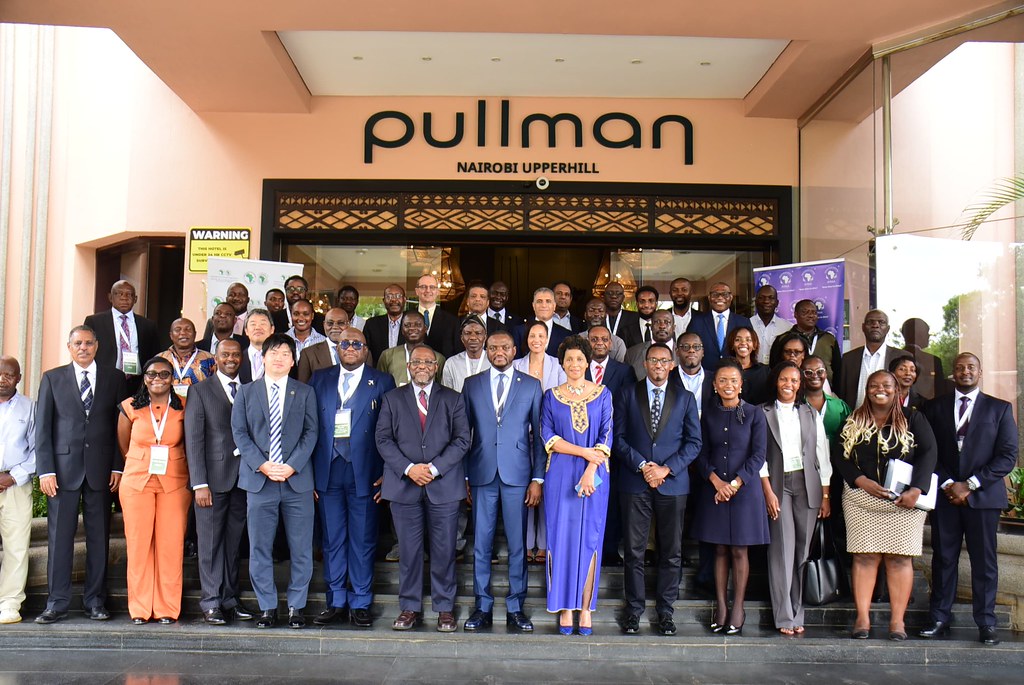
Marco Yamaguchi, Manager, Transport and Logistics Division, African Development Bank, commended AFRAA, government partners, airlines, financiers, and industry leaders for their presence at the workshop that would chart an eligible path forward for the aviation industry.
Marco pointed out that their presence sends a clear message that aviation is no longer just a sector conversation, but it is a development priority for Africa. “Aviation is, at its core, about connection; it connects farmers to markets, businesses to customers, tourists to destinations, and African countries to one another,” said Marco.
As demand surges, the continent faces a defining question: can it expand aviation capacity without locking itself into high-cost, carbon-intensive inefficiencies?
The African Development Bank (AfDB) believes the answer lies in restructuring the system itself. Through its newly launched Integrated Aviation Transformation Program (IATP), unveiled in partnership with the African Airlines Association (AFRAA), the Bank aims to mobilize more than $7 billion in financing while embedding sustainability at the core of Africa’s aviation modernization.
For Abderahmane Berthé, Secretary General of AFRAA, the starting point is clarity about the problem. “This gap is not due to lack of demand, it is due to structural constraints,” he said in his opening remarks at the Airlines, Capital & Connectivity Forum.

Financing Sustainability, Not Just Growth in Aviation
Those structural constraints are formidable: high cost of capital, high operating expenses, inflated risk perceptions, fragmented regulatory environments, and limited access to long-term financing.
Sustainability, in this context, extends beyond emissions targets. It is about building airlines that can survive, compete, and renew their fleets in a global industry increasingly shaped by climate commitments and investor scrutiny.
Globally, aviation has committed to net-zero emissions by 2050. For African carriers, many are operating older aircraft because of financing barriers; meeting that goal requires access to modern fleets.
New-generation aircraft can cut fuel burn and emissions by up to 20% while lowering maintenance costs. Yet aircraft acquisition remains capital-intensive, and African airlines have historically faced higher borrowing costs than peers in North America, Europe, or the Gulf.
At the center of the IATP is a blended-finance mechanism, the Aviation Finance & Connectivity Facility, designed to de-risk transactions and crowd in institutional investors. By lowering the cost of capital and aggregating demand, the program seeks to make fleet renewal financially viable rather than aspirational.
“Africa’s aviation future cannot be built by airlines alone, nor by governments alone,” Berthé said. “It requires public-private partnership at a continental scale, precisely what the AfDB IATP seeks to catalyse.”
This was reiterated by Marco Yamaguchi, emphasizing that IATP moves aviation in Africa
from aspiration to investment.
“This Forum is therefore not just a conference but a working platform.
We are here to connect with airlines and outline how the IATP can play a catalytic role in the growth and integration of the African market,” said Marco.

Marco added that, most importantly, the workshop is set to identify real partnerships and potential transactions where the Bank can play a role in concretely supporting the industry.
Closing the Structural Efficiency Gap in Aviation
Aircraft financing, however, is only one piece of a more complex puzzle. According to Captain George Kamal, Acting Managing Director and CEO of Kenya Airways, in his speech read by Hellen Mathuka, Chief Strategy and Innovations Officer, Kenya Airways, at the forum, African airlines are growing quickly.
Noting that Passenger traffic rose by more than 13% in 2024, with several months in 2025 outperforming the global average. Yet profitability remains thin.
Based on the International Air Transport Association (IATA) database, global average net margins hover near 4%. African carriers are projected to generate just 1–2%, roughly $1–2 profit per passenger, compared to nearly $8 globally.
“We are growing faster than many mature markets,” Kamal observed. “But we are not converting growth into returns at the same scale.”
That disconnect is rooted in fragmentation. “Unlike North America, Africa remains fragmented, with more than 50 markets, uneven liberalization, and limited consolidation,” Kamal said.

Unlike Europe, the continent does not yet operate under a fully seamless single aviation market. Unlike Gulf carriers, African airlines often lack competitive fuel pricing, scale efficiencies, and optimized hub infrastructure.
“Africa remains one of the most expensive regions globally in which to operate an airline,” he added. “Growth alone cannot offset structural inefficiency.”
These inefficiencies have environmental implications as well as financial ones. Fragmented markets reduce load factors and encourage circuitous routing. Outdated air navigation systems increase fuel burn. Inefficient ground operations extend taxi times. High-cost structures delay fleet renewal.
The IATP attempts to address these layers simultaneously. Beyond fleet financing, it includes investment windows for airport infrastructure, air navigation modernization, and cargo logistics. Improved airspace management and integrated hubs can shorten flight paths, reduce congestion, and lower emissions intensity.
Aligning aviation policy with industrial strategy could also unlock new opportunities in air cargo, particularly as Africa strengthens its role in perishables exports and critical minerals.
Sustainability, Kamal suggested in his speech, could become a strategic advantage. “Africa has the renewable energy potential to become a competitive producer of Sustainable Aviation Fuel rather than a price taker,” he said.

The stakes extend beyond airlines. Aviation contributes roughly $75 billion to Africa’s GDP and supports more than 8 million jobs, according to IATA. It underpins trade corridors, tourism ecosystems, and regional integration.
“This is not an auxiliary industry. It is infrastructure for development,” Kamal emphasized
Demand fundamentals are robust. Passenger numbers are projected to more than double by 2043. “Demand is not emerging. Demand is here,” Kamal said
However, it’s notable that demographic advantage alone does not guarantee durable prosperity.
“Africa does not lack aviation potential; it needs structural changes in aligned financing, coordinated policies implementation, and integrated markets and industries,” Berthé concluded
The Integrated Aviation Transformation Program represents an attempt to align those moving parts, capital with climate standards, infrastructure with trade policy, and growth with efficiency.
Whether Africa’s expanding skies become a model of climate-smart development will depend not just on ambition, but on disciplined execution across the continent’s fragmented aviation landscape.


