Brazil is taking a decisive step toward reshaping its urban climate future. With more than 5,570 municipalities, many already grappling with flooding, heat stress, and fragile waste systems, the country has unveiled an ambitious plan to turn local governments into the engine of climate implementation.
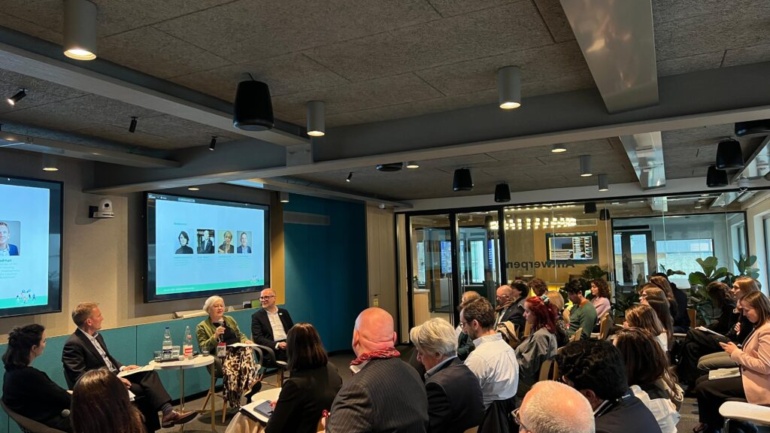
Backed by the Brazilian Government, Bloomberg Philanthropies, C40 Cities, and the Global Covenant of Mayors for Climate & Energy (GCoM), a new multilevel climate initiative will support 50 Brazilian cities in developing bankable climate projects by 2027.
At its heart are two urgent priorities: sustainable transport and low-methane waste solutions. The effort will also extend deep into the Amazon, where 10 municipalities will receive direct assistance to craft their first Climate Action Plans.
The programme is rooted in the Brazilian spirit of mutirão, a collaborative mobilization of communities toward a shared goal, translated here into a governance model where national institutions, city networks, finance partners, and technical experts build climate solutions together, not in silos.
For Michael R. Bloomberg, UN Special Envoy on Climate Ambition and Solutions and founder of Bloomberg Philanthropies, the initiative reinforces a central truth of the climate era: cities are proving that implementation is not just possible, it is scalable when evidence and political will align.
“Mayors and governors are showing the world that cities and states can lead the way when it comes to fighting climate change,” Bloomberg said. “This investment will unlock new opportunities for leaders, in Brazil and around the world, as they partner with national governments, scale data-driven, proven solutions that cut emissions, and build a stronger and healthier world.”
Where climate hits hardest: inside Brazil’s cities
Brazil’s urban centres are economic powerhouses, home to most of the population, yet they are also where climate risks are most acutely felt. From heat islands and transit emissions to overflowing landfills and climate-induced displacement, cities are under pressure to adapt even as they grow.
Jader Barbalho Filho, Brazil’s Minister of Cities, framed the announcement not only as a climate necessity but a political inflection point ahead of COP30, which Brazil will host in Belém.
“Cities are where the effects of climate change are felt the most. Cities are where we can make the greatest advances in resilience,” he said. “This program will help us, at COP30, to leave a lasting legacy of decarbonization and urban adaptation to the effects of climate change.”

Through the initiative, municipalities will receive structured support to design emissions-reducing transport systems, methane-mitigating waste projects, financing mechanisms, and climate governance models that connect directly to federal policy and funding channels. Officials say the goal is simple: prepare cities not just to plan, but to build and finance at scale.
Making city projects bankable, fundable, and global
To bridge the long-standing gap between project design and investment, the coalition will help cities prepare infrastructure plans that meet technical and financing standards, enabling them to attract both national and international capital.
Andy Deacon, Co-Managing Director of the Global Covenant of Mayors for Climate & Energy, said the blueprint emerging from Brazil could inform global climate implementation models.
“This effort demonstrates how multilevel governance can deliver large-scale climate outcomes,” Deacon said. “By working closely with federal institutions and city networks, we will ensure that local projects become more investment-ready and the lessons learned can be shared globally.”
The emphasis on transport and methane reduction also carries significant emissions stakes. Urban transport remains one of the fastest-growing sources of carbon in Latin America, while waste landfills rival the energy sector in methane leakage, one of the most potent greenhouse gases.

For C40 Cities Executive Director Mark Watts, the opportunity is not only environmental but developmental, reshaping urban life itself.
“Brazil’s mayors have ambition and vision, and are showing the world how local action drives national and global goals,” Watts said. “This investment will accelerate delivery, from deploying e-buses to cutting methane from waste whilst improving people’s daily lives.”
From Rio to the Amazon: climate leadership from the ground up
Among Brazil’s most vocal climate city leaders is Rio de Janeiro Mayor Eduardo Paes, who also serves as President of the Brazilian National Front of Mayors (FNP), the body steering national coordination of the initiative.
The timing of the initiative carries geopolitical weight. Brazil enters COP30 not only as host, but as an emerging voice on multilevel climate governance. The programme reinforces its leadership under the Coalition for High Ambition Multilevel Partnerships (CHAMP), an agreement launched at COP28 to integrate subnational climate action into national climate strategies.
CHAMP now includes 77 countries plus the European Union. Earlier today, Brazil was announced as its inaugural Co-Chair alongside Germany, cementing its role at the forefront of national-local climate cooperation
Paes emphasized that the partnership builds on more than a decade of subnational collaboration with Bloomberg Philanthropies.
“For more than a decade, Rio has been proud to work alongside Bloomberg Philanthropies and Mike Bloomberg to show how cities can lead on climate,” he said. “This new investment to empower our cities and states will help us scale what works, share lessons across Brazil, and turn city-led innovation into national and global progress.”
Blueprint for scale: What success will look like
Through the partnership, Brazil will deploy a series of structural climate governance and financing tools, including:
- A national AI-enabled climate data platform covering emissions, vulnerability, and risk profiles for all 5,570+ municipalities
- 20 investment-ready urban mitigation projects centred on clean transport and waste systems
- First-ever climate strategies for 10 Amazon municipalities
- A national peer-learning pipeline involving 100+ cities
- Climate budgeting models piloted in five municipalities
- Stronger alignment between local, state, and federal climate finance pipelines
Author Profile

-
Seeker.
Inspire AFRIKA.
Latest entries
 Corporate15 October 2026Water, Sanitation and Digital Learning at the Centre of Garissa School Upgrade
 Agriculture14 October 2026Africa’s Food Systems Future Depends on Listening to Farmers
 Weather Forecasts13 October 2026Rain and Rising Temperatures Forecast Across the Greater Horn of Africa
 Climate9 October 2026Beyond Negotiations: Africa Expects Concrete Outcomes from Antalya