
As the Our Ocean Conference drew to a close, civil society groups from across Africa and beyond issued a sharp warning over what they describe as the growing normalization of risky marine geoengineering technologies under the banner of climate action.
At the center of the concern is the accelerating push for marine carbon dioxide removal (mCDR), a set of controversial technologies designed to capture and store carbon in ocean ecosystems. Campaigners say new announcements made during the conference point to an expanding global effort to scale up experimentation in the oceans despite unresolved scientific, ecological and governance concerns.
Among the announcements attracting attention was the launch of an African Marine CDR Roadmap by the Ocean Climate Innovation Hub Kenya, alongside a major funding commitment by the Carbon to Sea Initiative to expand research into ocean alkalinity enhancement.
Civil society organizations argue that marine geoengineering technologies are increasingly being promoted without clear evidence that captured carbon can be stored safely or permanently, while the ecological consequences remain uncertain.
Amos Nkpeebo of Ghana’s FIDEP Foundation warned that the growing enthusiasm around marine carbon removal is deeply tied to financial and political interests.
“The growing enthusiasm for mCDR is not occurring in a political vacuum,” he said. “As financial interests, carbon markets, and commercial actors move rapidly into the sector, Africa must carefully examine who benefits, who bears the risks, and who ultimately controls the future governance of ocean-based climate interventions.”
Nkpeebo argued that Africa should not merely react to proposals developed elsewhere, but instead advance its own governance approach grounded in precaution, ecological stewardship and democratic participation.
Concerns raised by campaigners go beyond governance. Environmental groups fear that expanding field experiments could transform oceans, particularly in the Global South, into testing grounds for unproven technologies whose impacts may be irreversible.
Scientists and activists caution that marine geoengineering interventions could alter ocean chemistry, disrupt nutrient cycles and threaten marine biodiversity, with direct consequences for coastal communities and fishing livelihoods.
Kwami Kpondzo of the Global Forest Coalition and Centre pour la Justice Environnementale-Togo described the growing push for ocean-based carbon market schemes as another form of exploitation targeting vulnerable communities and ecosystems.
“The relentless attacks on the ocean through the development of carbon market schemes constitute crimes against marine life, marine ecosystems and the coastal communities and peoples who depend on the ocean,” he said. “As another form of colonialism, the blue economy is expanding and taking control of our ocean and of the people living and depending on the ocean.”
Kpondzo added that fisherfolk, Indigenous peoples and coastal communities are already struggling with rising sea temperatures, flooding and coastal erosion, warning that deploying “dangerous and destructive technologies” would only deepen existing climate vulnerabilities.
“Africa rejects all forms of geoengineering including marine geoengineering. Our continent is not a laboratory for dangerous technologies,” he said.
Amid the growing debate, civil society groups welcomed remarks by Kenya’s Cabinet Secretary for Mining, Blue Economy and Maritime Affairs supporting a moratorium or precautionary pause on deep-sea mining.
Campaigners say the same precautionary principles being applied to deep-sea mining should also guide decisions on marine geoengineering.
Dr. Mfoniso Xael of the Health of Mother Earth Foundation warned against reducing oceans into spaces for carbon storage and technological experimentation.
“As discussions on marine geoengineering gather momentum, there is a growing risk that oceans become viewed primarily as sites for carbon storage and technological experimentation rather than as living ecosystems and global commons that sustain millions of people,” Xael said.
“The ocean cannot be treated as a new frontier for speculative climate schemes or commercial interests, but must be protected as a shared commons for present and future generations.”
Indigenous groups also raised concerns over the implications of geoengineering for traditional knowledge systems and Indigenous rights.
Aakaluk Adrienne Blatchford of the Indigenous Environmental Network described marine geoengineering as “a continuation of colonization and exploitation of Indigenous Peoples,” arguing that Indigenous stewardship practices already offer pathways for ecological restoration without resorting to risky technological interventions.
“Geoengineering, also known as climate mitigation with the use of technology, is not the answer,” she said.
Environmental organizations are now calling on governments to block outdoor marine geoengineering experiments and strengthen international safeguards governing ocean interventions.
Campaigners pointed to existing international frameworks, including the de facto moratorium on geoengineering reaffirmed in 2024 and restrictions under the London Convention and London Protocol, warning that efforts to fast-track marine geoengineering could undermine global agreements aimed at protecting ocean ecosystems.
Mary Church of the Center for International Environmental Law (CIEL) said the ocean remains one of humanity’s most important natural defenses against climate breakdown and should not be subjected to high-risk experimentation.
“The ocean is our greatest ally in the fight against climate breakdown, not a laboratory for risky geoengineering,” she said.
Church warned that highly speculative marine carbon removal technologies, many driven by voluntary carbon markets, risk diverting political attention and resources away from proven climate solutions while exposing marine ecosystems to potentially irreversible harm.
“States must act now and uphold precaution, halt the proliferation of open ocean geoengineering experiments, and reject the normalization of these dangerous and unproven technologies,” she added.
Author Profile

-
Seeker.
Inspire AFRIKA.
Latest entries
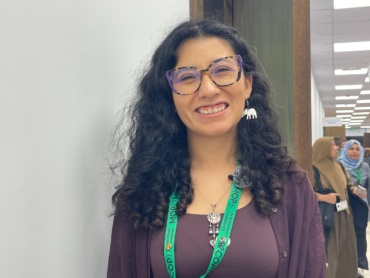 Biodiversity26 October 2026Beyond Biodiversity Finance, A Justice Gap Governments Must Confront
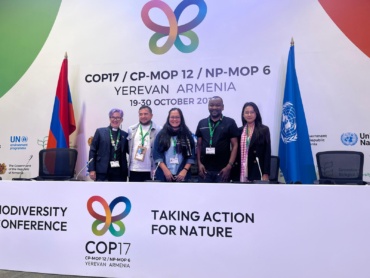 Biodiversity24 October 2026Faith Leaders and Civil Society Call for Stronger Partnerships to Restore Nature
 Biodiversity23 October 2026Inside Kobe’s Grassroots Effort to Train the Next Generation of Biodiversity Leaders
 Animals23 October 2026As COP17 Meets, World’s Rarest Great Ape Faces a Make-or-Break Test in Indonesia