
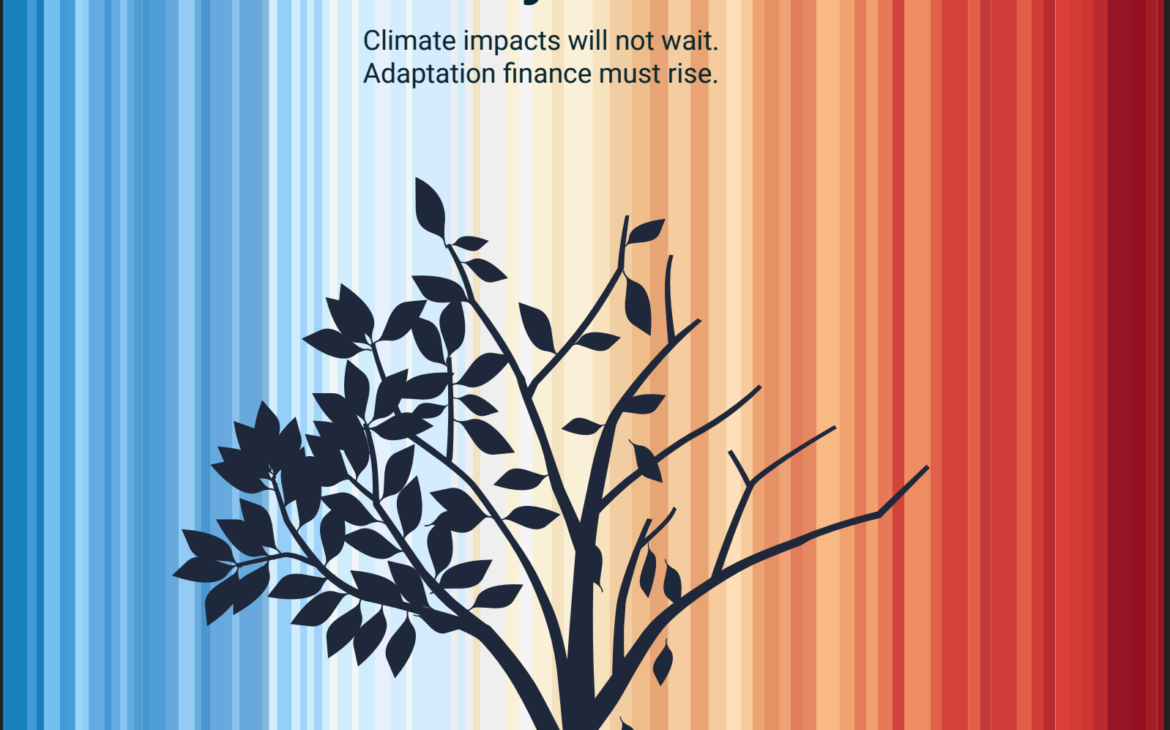
UNEP warns that even a tripling of international adaptation finance by 2035 would meet less than a third of developing countries’ projected needs.
As global temperatures edge towards and beyond the 1.5°C threshold, developing countries face a growing challenge in preparing for intensifying climate impacts. Yet the financial resources required to strengthen resilience are increasing too slowly, leaving vulnerable economies exposed to mounting risks.
Released in Nairobi on November 4, the report estimates that international public adaptation finance from developed to developing countries reached between US$28.2 billion and US$31.7 billion in 2024, representing an increase of just US$1 billion from the previous year.
This is considerably below the estimated US$305 billion developing countries will need annually by 2035 to respond to worsening climate impacts.
The financing gap raises concerns for countries already struggling with prolonged droughts, flooding, water insecurity and climate-related disruptions to agriculture and livelihoods. For many, adaptation requires substantial investment in resilient infrastructure, early warning systems, climate-smart agriculture and water management, resources that domestic budgets alone may struggle to provide.
“The world is not ready to adapt to current climatic conditions, never mind what overshoot of 1.5°C will bring,” said UNEP Executive Director Inger Andersen.
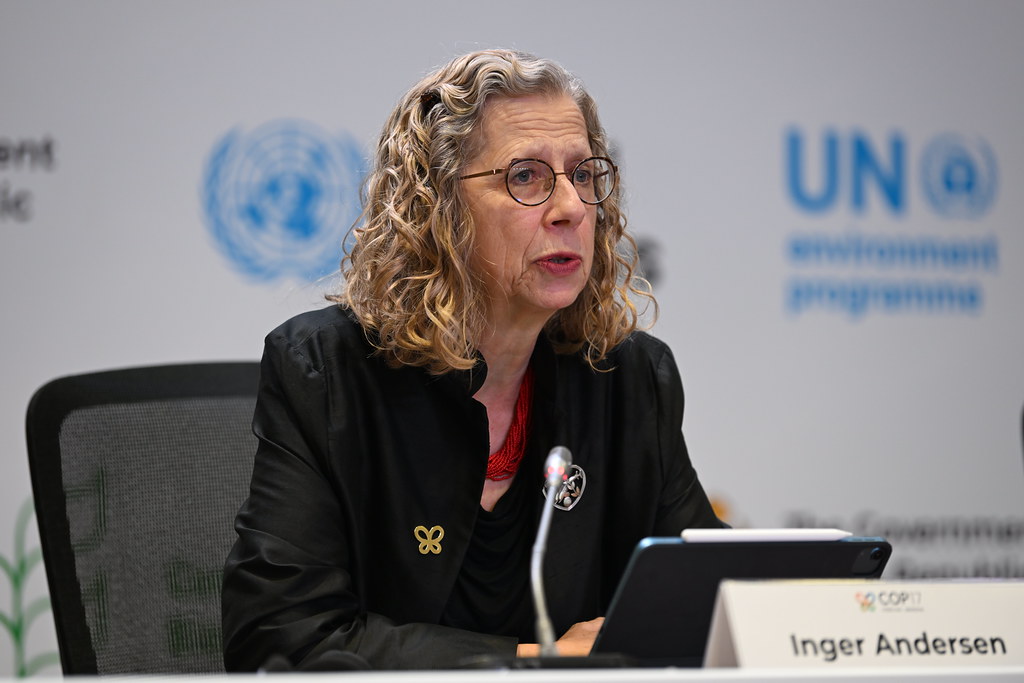
She called on countries to intensify efforts towards achieving the COP30 Global Mutirão aspiration of tripling adaptation finance by 2035, while acknowledging that significantly greater investment would be necessary to protect lives and economies.
A widening financing gap
At COP30, countries called for efforts to at least triple international adaptation finance by 2035. Depending on the baseline used, this could raise annual flows to between US$85 billion and US$120 billion.
However, UNEP estimates that even if this ambition is achieved, the funding would cover only 20 to 29 per cent of developing countries’ projected adaptation needs by 2035, when adjusted for inflation.
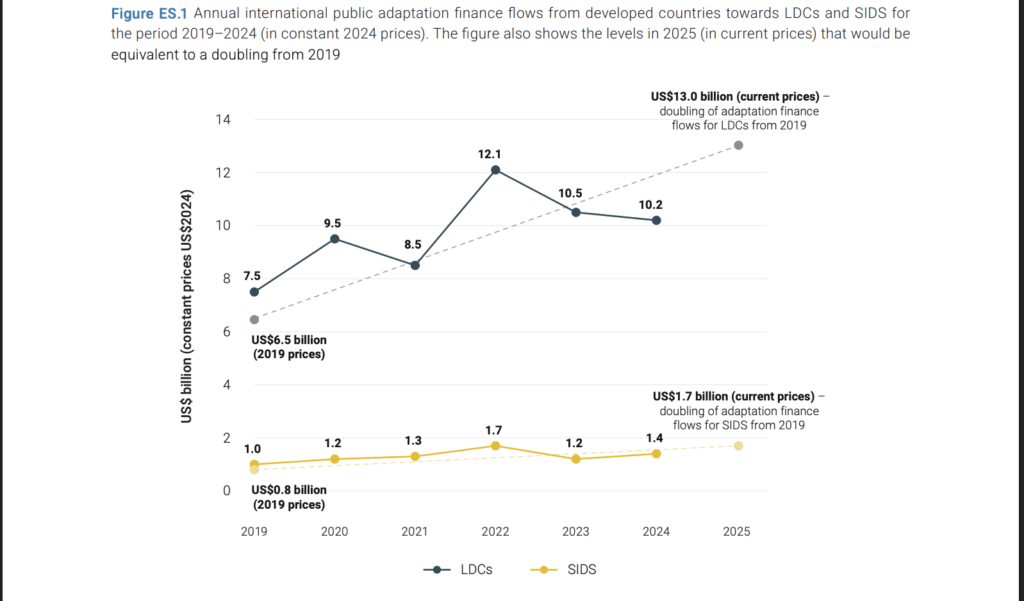
The situation is particularly concerning for least developed countries (LDCs) and small island developing states (SIDS), which face heightened exposure to climate risks. Although finance to these countries increased in real terms between 2019 and 2024, flows have declined from their 2022 peak.
Tripling adaptation finance to LDCs and SIDS could cover between 49 and 83 per cent of their respective needs, highlighting the importance of directing resources towards countries facing the greatest vulnerabilities.
There are some positive developments. Financial flows between developing countries, through multilateral development banks and direct South-South cooperation, increased from US$3.8 billion in 2019 to US$9.6 billion in 2024.
Private adaptation finance is also growing, although much of it serves private-sector needs or is ultimately financed by developing countries themselves. UNEP estimates that it could reduce the funding gap for more public-oriented adaptation activities by only 15 to 20 per cent.
Beyond finance, implementation matters
While additional funding is essential, UNEP cautions that financial commitments alone cannot deliver effective adaptation without strong institutions to translate policies into action.
Governments are strengthening climate change framework laws, improving coordination across sectors and levels of government, establishing platforms for policy learning and developing mechanisms to mobilise and manage climate finance.
These institutional arrangements are critical to ensuring that adaptation priorities translate into practical interventions that protect communities, livelihoods and infrastructure.

The report also highlights the growing burden of climate-related losses and damages, particularly in developing countries where limited resources and institutional capacity complicate recovery.
The first funding round of the Fund for Responding to Loss and Damage attracted requests worth US$2.8 billion against an initial funding envelope of US$342 million, demonstrating the substantial unmet demand for support.
UNEP calls for stronger assessment capacity, predictable financial and technical assistance, simpler access procedures and meaningful participation by affected communities in shaping responses.
For Africa, where climate vulnerability intersects with development and economic challenges, the findings reinforce the importance of making adaptation finance accessible, predictable and sufficient.
As countries look towards COP31 in Türkiye, the challenge is to move beyond financing aspirations towards commitments that translate into tangible protection for vulnerable populations.
With climate impacts intensifying, the cost of delayed adaptation will increasingly extend beyond financial losses to livelihoods, development gains and human well-being.
Author Profile

-
Seeker.
Inspire AFRIKA.
Latest entries
 Adaptation27 November 2026Agbor James Ayamba’s Case for Community-Led Conservation in COP17
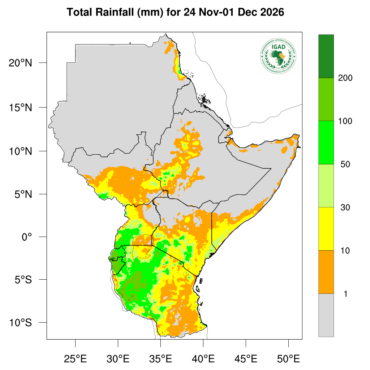 Weather Forecasts26 November 2026Rwanda, Burundi Face Widespread Flooding Risks as East Africa Records Uneven Rainfall
 Energy25 November 2026Kenya Teams Up with Fossil Fuel Treaty Initiative to Chart a Fair Exit from Fossil Fuels
 Fisheries25 November 2026ARBEC III: Bridging Science, Investment and Livelihoods in Africa’s Blue Economy


