
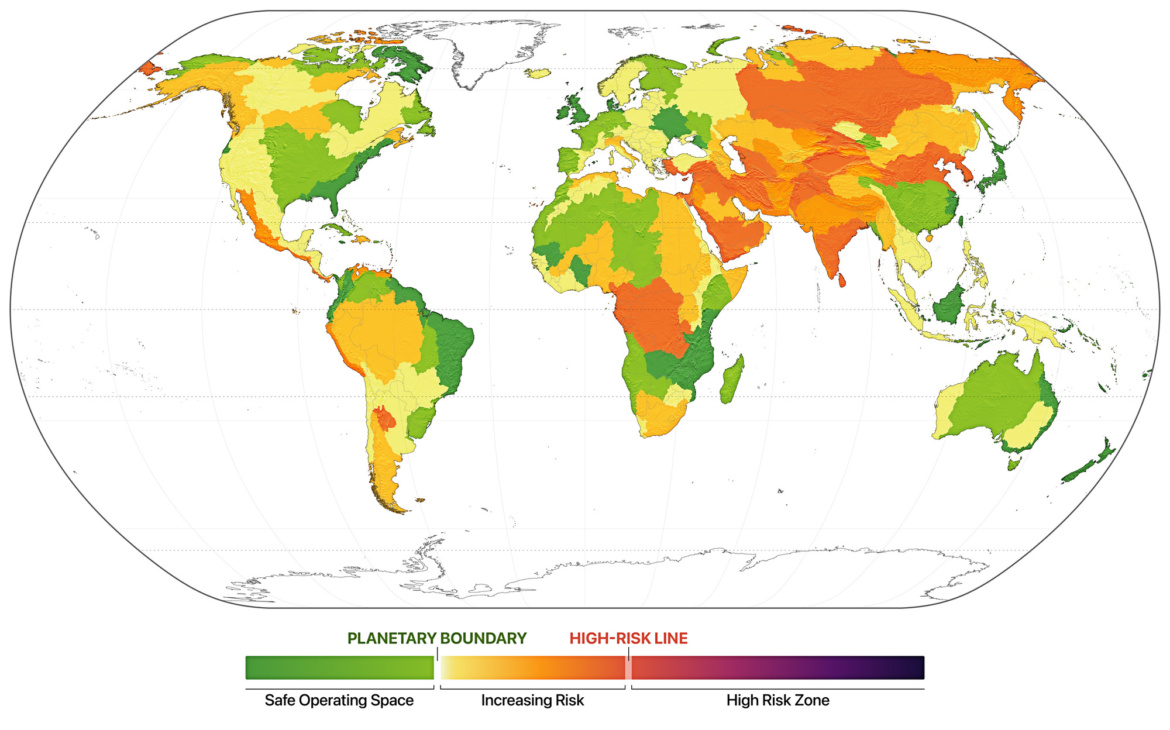
Climate change and unsustainable land and water use are rapidly disrupting the Earth’s freshwater cycle, leading to more frequent droughts and floods and pushing freshwater systems further beyond safe planetary limits, according to a new study published in Nature Communications.
Led by researchers from the University of Eastern Finland, with contributions from the Potsdam Institute for Climate Impact Research (PIK), the study provides an updated assessment of the planetary boundary for freshwater change and identifies the major drivers behind its accelerating deterioration.
The findings show that climate change, combined with large-scale land and water use, is moving the global freshwater cycle further away from a stable state. Scientists warn that the freshwater boundary has already been breached, threatening the cycle’s ability to support critical climate and ecological processes.
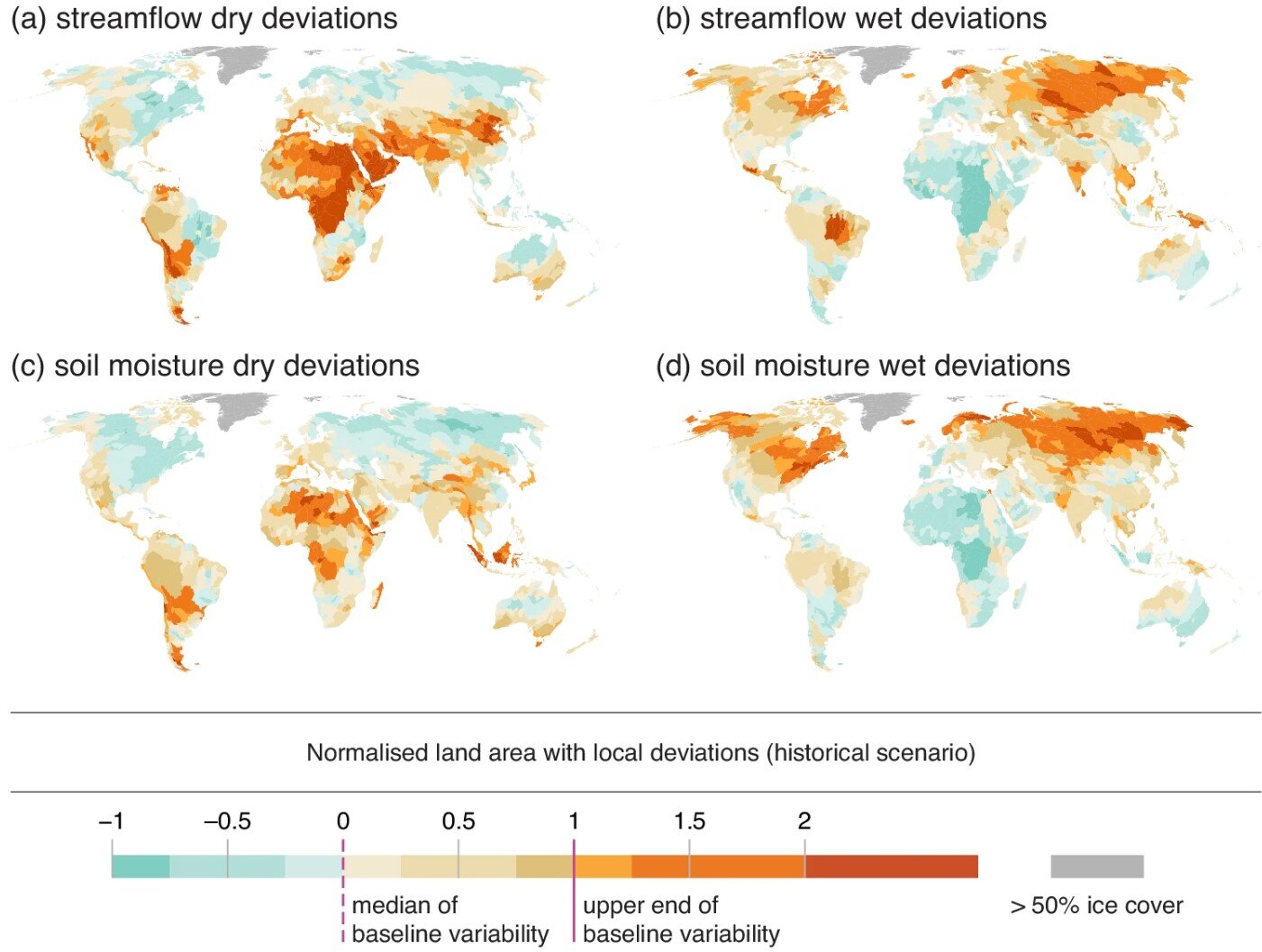
Using data from 1901 to 2019 and an ensemble of global hydrological models, researchers examined changes in both “blue water” found in rivers, lakes, and groundwater and “green water” stored in soils—the analysis distinguished between the impacts of direct human activities and those driven by climate change.
The study found that dry and wet extremes now occur about twice as often as they did in the early 20th century for both blue and green water systems.
“Changes in the freshwater cycle have been speeding up in recent decades, and projections indicate that this trend is likely to intensify further,” said lead author Vili Virkki of the University of Eastern Finland.
“When the freshwater cycle changes faster than the environment can adapt, the risks of adverse impacts increase.”
Regional patterns differ significantly. Increasing dryness is becoming more common across many tropical and subtropical regions, while wetter-than-normal conditions are occurring more frequently in northern boreal areas, contributing to floods and prolonged heavy rainfall events.
The researchers identified climate change as the dominant global driver of these changes and the primary factor behind the continued transgression of the freshwater planetary boundary. While wetter conditions are largely linked to climate factors, land and water use practices are intensifying drought conditions in many regions.
“The results clearly show that focusing only on blue water does not provide a sufficiently holistic picture of water cycle change and its potential impacts,” said co-author Sofie te Wierik of the Netherlands Environmental Assessment Agency.
The study also found that in some regions, including parts of India and Central Asia, climate change may slightly increase seasonal water availability. However, these gains are being outweighed by pressures from land and water use, which are contributing to increasingly dry conditions.
The findings carry significant implications for water security, food production, biodiversity conservation and climate resilience, particularly in regions already vulnerable to extreme weather.
According to the researchers, restoring the freshwater cycle to safer limits will require coordinated action on climate change, land management and water use, alongside a better understanding of how planetary boundaries interact.
The study adds to growing evidence that climate change is reshaping the global water cycle in ways that could undermine ecosystems, agriculture and human livelihoods unless emissions are reduced and freshwater resources are managed more sustainably.
Author Profile

-
Seeker.
Inspire AFRIKA.
Latest entries
 Biodiversity23 October 2026Inside Kobe’s Grassroots Effort to Train the Next Generation of Biodiversity Leaders
 Animals23 October 2026As COP17 Meets, World’s Rarest Great Ape Faces a Make-or-Break Test in Indonesia
 Biodiversity22 October 2026One in Five Tropical Biodiversity Sites Overlapped by Mining Concessions, COP17 Report Finds
 Biodiversity21 October 2026COP17 Opens in Armenia with Global Biodiversity Progress Under Scrutiny


