
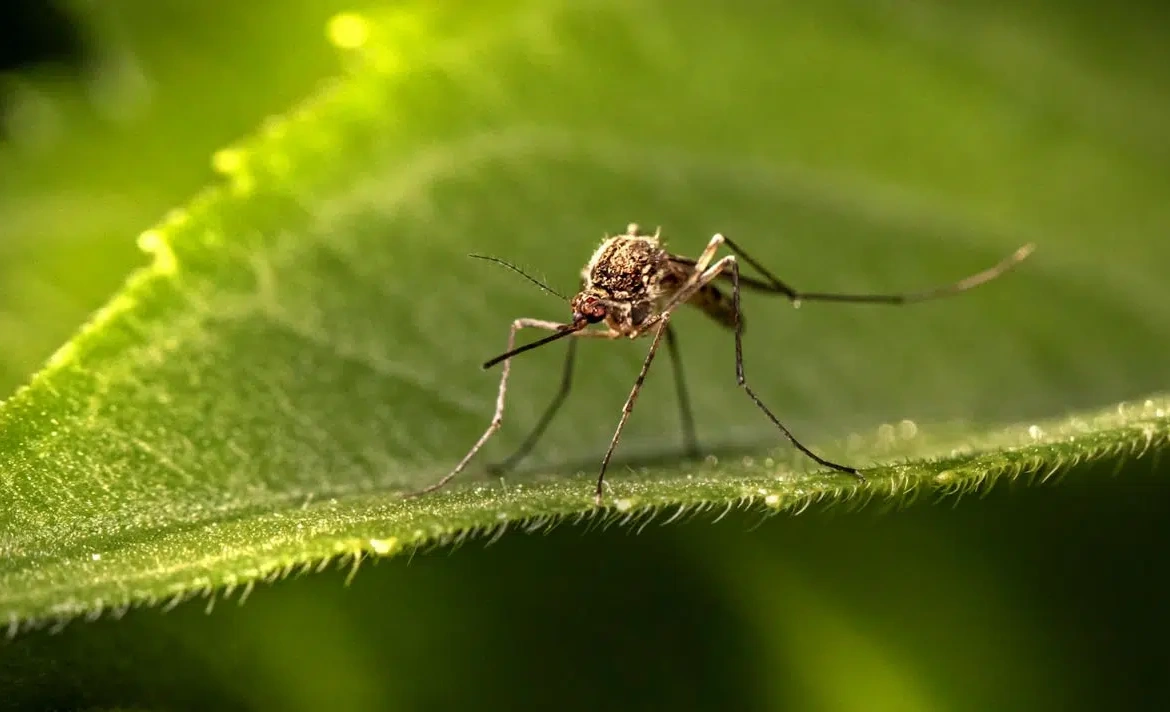
For decades, malaria has remained one of Africa’s deadliest diseases, claiming hundreds of thousands of lives each year, most of them young children. Now scientists say climate change is not simply making the disease worse; it is changing where it strikes, exposing communities that have historically faced little malaria to growing health risks.
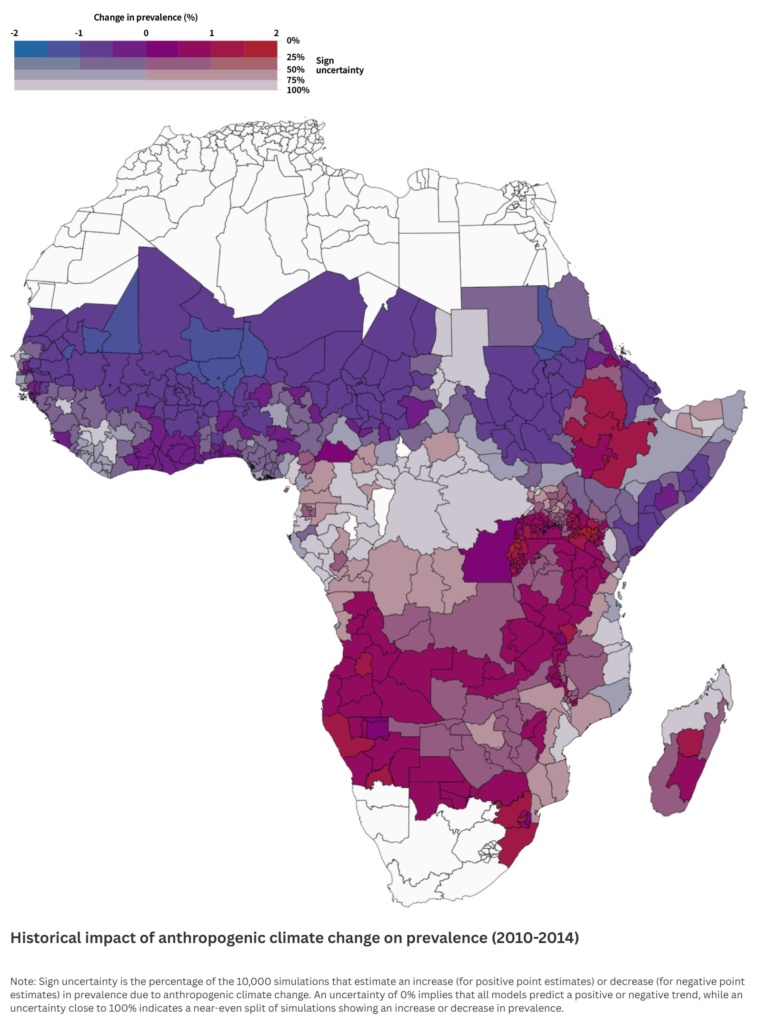
A new study published in Nature has found that human-caused climate change has already increased childhood malaria across sub-Saharan Africa by about one additional case for every 1,000 children aged between two and 10 years. While the overall increase appears modest, researchers say it masks a significant geographical shift, with malaria declining in some of Africa’s hottest regions while expanding into cooler highland and southern areas where health systems are less prepared.
The findings help settle a scientific debate that has persisted for decades over whether climate change has influenced malaria transmission. Using more than 50,000 geolocated blood surveys collected across sub-Saharan Africa over more than a century, researchers reconstructed how changing temperatures have affected malaria prevalence while accounting for factors such as healthcare access, economic development and population growth.
“Climate change isn’t just making malaria worse or better, it’s moving it,” said Tamma Carleton, Faculty Head of Research for the Climate Impact Lab and Assistant Professor at the University of California, Berkeley.
“Whether a place sees elevated malaria risks or reduced burdens under climate change depends on how hot it is today. We see relief in the current hotspots and new risk nearly everywhere else.”
The study found that warming temperatures have gradually made parts of East Africa’s highlands and southern Africa more suitable for mosquitoes that transmit malaria. Historically, cooler temperatures limited transmission in these regions, but researchers say that protective barrier is weakening.
In contrast, some of today’s malaria hotspots across West Africa may gradually become too hot for optimal mosquito survival. Researchers estimate climate change has already prevented several malaria cases in parts of West Africa by pushing temperatures beyond the range where mosquitoes and malaria parasites thrive most effectively.
A Case Study of Changing Patterns in Kenya and Ethiopia
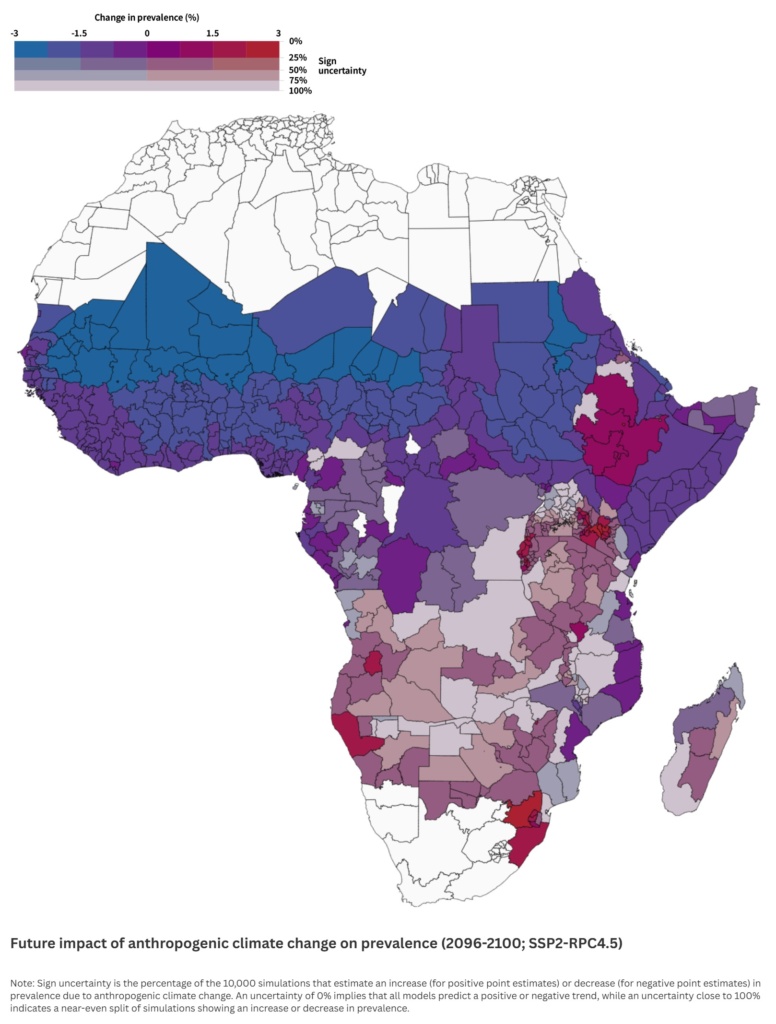
Christopher Trisos, co-author of the study and Director of the Climate Risk Lab at the African Climate and Development Initiative at the University of Cape Town, points out that human-caused climate change has already contributed to increasing malaria in the highlands of both countries.
“Future climate change is projected to cause further increases in malaria in these regions. Kenya and Ethiopia and their global health partners must start adapting their health systems for this increase in risk.”
Based on the researchers, by the end of the century, malaria prevalence could rise by as much as 20 percent in parts of the Rift Valley and coastal southern Africa under an intermediate emissions scenario. Meanwhile, limiting global warming to below 2°C could prevent around five excess malaria cases for every 1,000 children in southern Africa and even more across East Africa’s highlands.
“Governments, health systems and communities must adapt to the evolving malaria threat,” Trisos added.
Beyond reducing greenhouse gas emissions, the researchers argue that adaptation will be equally important because many of the regions facing rising malaria risk have relatively little experience controlling the disease.
“That means getting ready now to implement more aggressive anti-malaria programmes in cooler regions of sub-Saharan Africa where malaria risk is growing and which can be less experienced at tackling it. Inclusive economic development and global health financing of effective surveillance, disease control and better healthcare will be crucial,” said Trisos.
For Kenyan clinicians, the findings reinforce concerns that climate change is becoming an immediate public health issue rather than a distant environmental threat.
Dr Victor Mwaka Wauye, an Internal Medicine Specialist and Consultant Physician at Longisa County Referral Hospital in Bomet, said healthcare systems should prepare for changing disease patterns before they overwhelm vulnerable communities.
“As a physician, I see how devastating malaria can be for children and families. Climate change is changing where we should expect the disease to occur, particularly in cooler parts of Kenya where health systems and communities may not have faced the same burden before. We must anticipate these changes by strengthening surveillance, investing in resilient health services and ensuring every child has timely access to prevention, diagnosis and treatment. Preparing for tomorrow’s malaria burden starts with acting today.”
Consultant paediatrician Dr Reign Mwendwa echoed those concerns, warning that children living in Kenya’s cooler and highland regions could increasingly face once uncommon malaria infections.
“This study is an alarming reminder that climate change is already reshaping health risks for children across Africa. As the climate changes, we must strengthen disease surveillance, invest in resilient health systems and ensure communities have access to prevention, diagnosis and treatment. At the same time, reducing greenhouse gas emissions remains essential to limiting future warming and protecting children’s health.”
Despite the changing climate, researchers stress that malaria is far from an inevitable consequence of rising temperatures. The study found that malaria elimination programmes, including mosquito control, surveillance, access to healthcare and improved treatment, have already offset climate-driven impacts by almost 200-fold, demonstrating that effective public health interventions remain the strongest defence against the disease.
“Malaria was one of the first health outcomes linked to climate change, but it’s taken a quarter century to be sure which direction things are headed,” said Colin Carlson, Assistant Professor of Epidemiology at Yale University.
“The big story here is the opportunity for action. Malaria elimination within a generation is not only possible, but one of the best ways to protect frontline populations from climate change.”
For policymakers across Africa, the study offers a clear message: climate change is reshaping the continent’s disease landscape. While some of today’s malaria hotspots may eventually experience declining transmission, millions of children living in cooler regions of East and Southern Africa could face growing exposure unless countries invest now in climate-resilient health systems, stronger surveillance and sustained malaria control programmes that evolve alongside a warming world.
Author Profile

-
Seeker.
Inspire AFRIKA.
Latest entries
 Agriculture14 October 2026Africa’s Food Systems Future Depends on Listening to Farmers
 Weather Forecasts13 October 2026Rain and Rising Temperatures Forecast Across the Greater Horn of Africa
 Climate9 October 2026Beyond Negotiations: Africa Expects Concrete Outcomes from Antalya
 Animals7 October 2026In Kajiado’s Drylands, Collective Selling of Small Herds Is Changing the Livestock Trade


