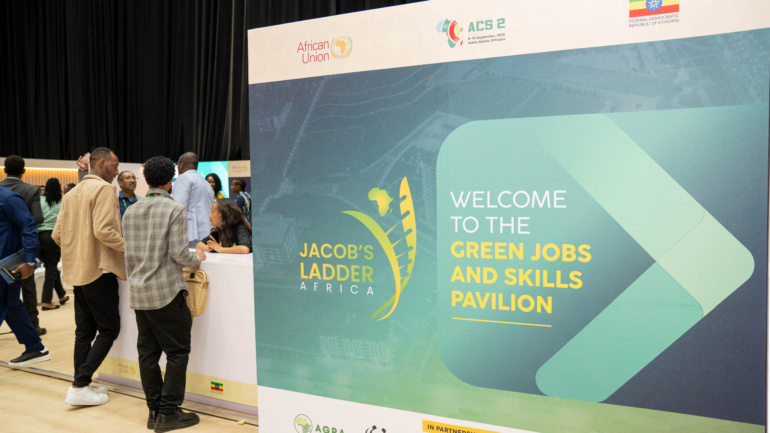
The seventh session of the Open-ended Committee of Permanent Representatives (OECPR-7) opened this week with a demanding mandate: negotiating 19 resolutions and decisions that will guide global environmental action for the next biennium.
What unfolded on the first day offered a clear picture of both the scale of the agenda and the political balancing act required to advance it. The seventh session of the United Nations Environmental Assembly(UNEA-7) this year is set to revolve around the theme of “Advancing Sustainable Solutions for a Resilient Planet,” focusing on solutions to global triple planetary challenges.
Chair Sultan Hajiyev of Azerbaijan set the tone early, urging delegates to embrace collaboration in the face of complexity. “A single leaf provides no shade,” he reminded them, signalling that progress would hinge on collective compromise rather than individual positions.
His message was timely as it reflected how OECPR-7 is the technical engine room of the UN Environment Assembly, and the outcome of its deliberations will determine how far UNEA-7 can push the global environmental agenda.
UN Environment Programme Executive Director Inger Andersen reinforced this point, describing the OECPR as “the engine under the hood of the UN Environment Assembly that drives its success.” Yet her assessment of the wider context was stark.

She warned that the world remains off-track in addressing the interconnected crises of climate change, pollution, and biodiversity loss, even as UNEA-7 rallies around the theme of “Advancing Sustainable Solutions for a Resilient Planet.” The gap between ambition and implementation loomed over the negotiations that followed.
Delegates first confronted concerns about the structure of the week’s work. Smaller delegations questioned the feasibility of handling multiple parallel sessions and potential late-night negotiations.
The Bureau had previously proposed extending daily deliberations to 10:00 pm to ensure all resolutions are fully considered, citing lessons from OECPR-6. However, many delegations pushed back, arguing that late-night extensions should not be pre-set and must be agreed upon by consensus.
After debate, the Committee removed the automatic late-night slot, with Chair Hajiyev reminding delegates that while the Bureau provides guidance, “proposals remain subject to change.” This procedural decision set the stage for what would become a lengthy day of clustered negotiations.

The substantive work began with Cluster A, where delegates examined two resolutions linked to nature and climate: the global response to massive Sargassum seaweed blooms and the protection of karst ecosystems.
Discussions dug into the climate-induced drivers of Sargassum surges, an issue now affecting coastlines, economies, and marine environments, as well as the unique value of karst landscapes for water systems, biodiversity, and resilience. With several technical details still unresolved, delegates agreed to move into informal consultations to refine language on future actions and scientific cooperation.
Cluster B opened with a first reading of proposals on strengthening coherence across multilateral environmental agreements and enhancing the environmental sustainability of artificial intelligence systems.
As governments race to understand AI’s resource demands, from energy use to material inputs, the discussion signaled growing recognition that digital systems must be governed with environmental limits in mind.
The evening sessions advanced into Clusters C and D, where delegates considered resolutions on antimicrobial resistance, an escalating environmental and public health threat, and draft decisions on the modalities governing future UNEA sessions.

These discussions, though technical, will shape how effectively UNEA functions in the coming years, influencing everything from scheduling to transparency to member-state engagement.
Towards nightfall, OECPR-7 had worked across all four clusters: nature and climate; governance and law; circular economy, chemicals, waste, and pollution; and strategic and budgetary matters.
The breadth of topics was imperative for the central role of the OECPR in filtering complex issues before they reach ministers. Every bracket removed and every compromise made in these rooms will determine the strength, ambition, and coherence of the resolutions presented to UNEA-7.
For now, what stands out is the sheer volume of work ahead and the willingness of delegates to push through a marathon schedule.
If the calls for unity at the opening session are heeded, OECPR-7 could lay the groundwork for a UNEA that is both more responsive and more ambitious. If not, the “engine under the hood” risks stalling at a moment when the world can least afford it.
Author Profile

-
Seeker.
Inspire AFRIKA.
Latest entries
 Corporate15 October 2026Water, Sanitation and Digital Learning at the Centre of Garissa School Upgrade
 Agriculture14 October 2026Africa’s Food Systems Future Depends on Listening to Farmers
 Weather Forecasts13 October 2026Rain and Rising Temperatures Forecast Across the Greater Horn of Africa
 Climate9 October 2026Beyond Negotiations: Africa Expects Concrete Outcomes from Antalya