
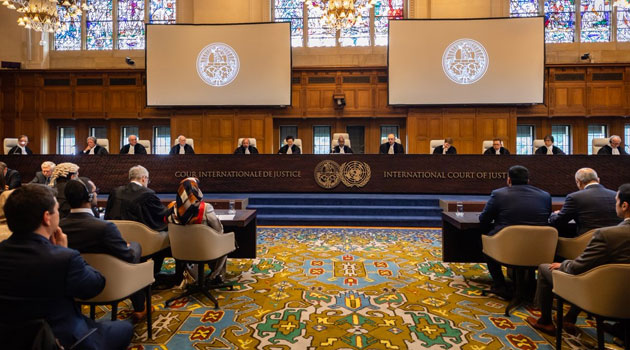
The growing wave of climate litigation is reshaping how energy policy is defined and enforced globally, with courts playing an increasingly central role in climate governance.
Advisory proceedings at the International Court of Justice (ICJ) and the International Tribunal for the Law of the Sea (ITLOS) are setting legal benchmarks that influence how countries regulate emissions, approve projects, and manage natural resources.
For Africa, the stakes are high. Although the continent contributes less than 4% of global emissions, it faces mounting pressure to align with legal standards largely shaped outside the region, raising concerns about implications for industrialisation, energy access, and investment.
In response, the African Energy Chamber (AEC) has applied to intervene in a landmark advisory case before the African Court on Human and Peoples’ Rights. The Chamber is seeking amicus curiae status in proceedings brought by the Pan African Lawyers Union, which aims to clarify state obligations on climate change under the African Charter.
According to NJ Ayuk, AEC Executive Chairman, if Africa leaves its energy future to outside courts, we risk seeing policies designed for other continents applied here.
The case reflects a broader expansion of climate jurisprudence. Earlier rulings, including Social and Economic Rights Action Center v. Nigeria and Ivorian League of Human Rights v. Côte d’Ivoire, established environmental protection as a legal duty while affirming socioeconomic rights.
At the international level, ICJ and ITLOS advisory opinions reinforce the obligation of states to prevent environmental harm through stronger oversight and regulation.
These legal shifts are already influencing financing decisions. Banks and insurers are increasingly cautious about funding high-emission projects due to legal and reputational risks. Standard Chartered, for instance, declined to finance the East African Crude Oil Pipeline following sustained civil society pressure.
“Climate litigation is not just a regulatory challenge; it affects financing for our oil and gas sector. Banks are retreating, discoveries can’t reach FID, and projects that could fuel our energy ambitions remain stalled,” said NJ Ayuk.

As a result, access to capital for upstream oil and gas projects is tightening. In Nigeria, some marginal fields remain undeveloped despite proven reserves, while refinery expansion plans struggle to attract funding. African-led solutions such as the Africa Energy Bank are emerging to address these gaps, reflecting changing financing dynamics.
The constraints are affecting the continent’s ability to expand its energy supply. Projects face delays, regulatory uncertainty, and the growing risk of becoming stranded assets. Even gas-to-power and downstream investments, critical for domestic energy needs, are not immune to these pressures, despite support from institutions like Afreximbank.
Meanwhile, courts are taking a more active role in shaping outcomes. In South Africa, recent rulings, alongside the Climate Change Act (2024), show how judicial scrutiny of energy projects is intensifying, particularly around environmental compliance.
Beyond finance, climate litigation is also shifting geopolitics. African countries are increasingly using legal arguments to push for climate finance, debt relief, and technology transfer, framing climate harm as a matter of legal responsibility.
The AEC maintains that its intervention is aimed at ensuring African priorities are reflected in evolving legal standards, advocating for a balance between environmental protection and development, especially in a region where over 600 million people lack electricity.
“Africa must turn this challenge into an opportunity to define standards that protect the planet while ensuring our people, our resources, and our growth are not left behind,” added Ayuk.
The rise of climate litigation signals a shift from political negotiation to legal enforcement. For Africa, the challenge is clear: engage in shaping these frameworks or risk adapting to standards set elsewhere, with far-reaching consequences for energy security and economic growth.
Author Profile

-
Seeker.
Inspire AFRIKA.
Latest entries
 Corporate15 October 2026Water, Sanitation and Digital Learning at the Centre of Garissa School Upgrade
 Agriculture14 October 2026Africa’s Food Systems Future Depends on Listening to Farmers
 Weather Forecasts13 October 2026Rain and Rising Temperatures Forecast Across the Greater Horn of Africa
 Climate9 October 2026Beyond Negotiations: Africa Expects Concrete Outcomes from Antalya


