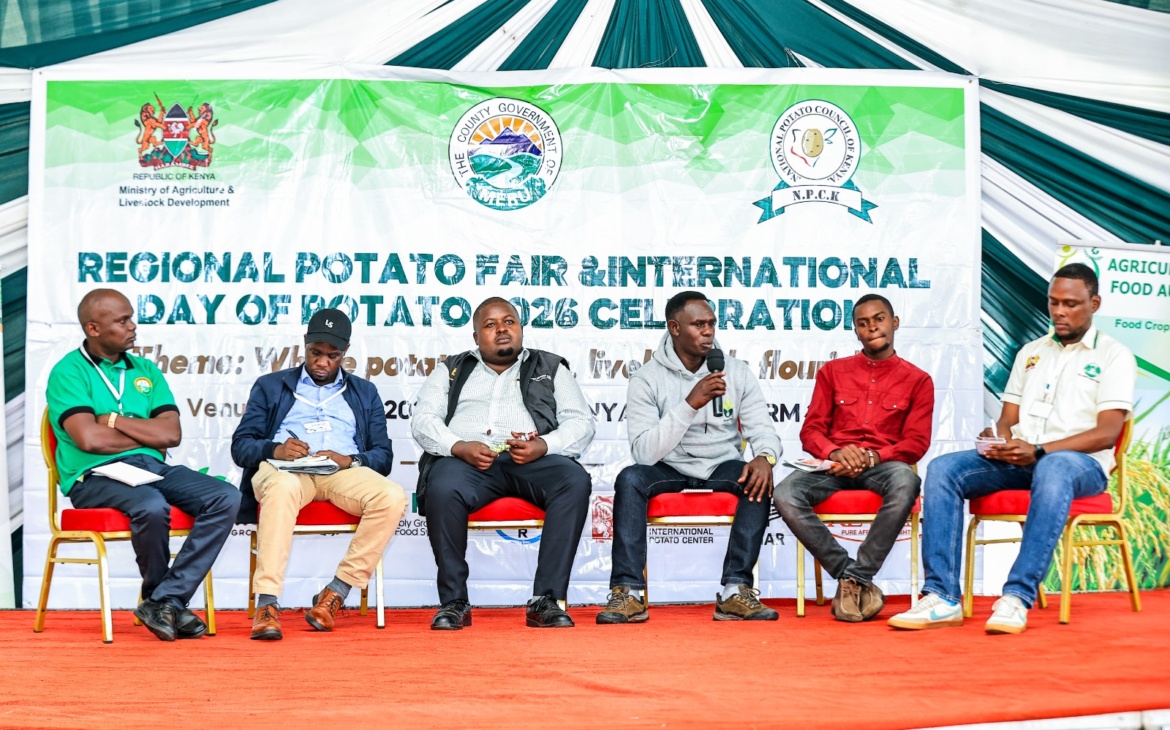
As hundreds of farmers gathered in Timau, Meru County, to mark the International Day of Potato 2026, the conversations extended far beyond yields and harvests.
Amid field demonstrations, technology exhibitions, and discussions on market reforms, one message stood out: the future of Kenya’s potato sector will depend on its ability to adapt to a changing climate while embracing innovation.
Held under the theme “Where potatoes grow, livelihoods flourish,” the Regional Potato Fair and International Day of Potato celebrations brought together more than 1,200 participants, including farmers, researchers, government officials, development partners and private sector players.
While the event celebrated the achievements of a crop that contributes over KES 70 billion annually to Kenya’s economy, stakeholders were equally focused on addressing the challenges threatening its future.
Potatoes are Kenya’s second most important food and cash crop after maize, supporting more than 1.3 million smallholder farmers and sustaining over 3.5 million livelihoods across the value chain.
Yet despite its significance, the sector continues to grapple with seed shortages, declining productivity, post-harvest losses and increasing climate-related risks.
For many stakeholders, climate-smart agriculture is emerging as a critical pathway to safeguarding both farmer incomes and national food security.
Speaking on behalf of the Principal Secretary for Agriculture, Dr. Calistus Efukho highlighted the strategic role of potatoes in advancing food security and economic transformation while calling for greater investment in technologies capable of strengthening resilience.
He pointed to innovations such as Rooted Apical Cuttings (RAC), aeroponics and hybrid true potato seed as important solutions to the persistent shortage of quality planting materials. He also emphasized the need for increased investment in climate-smart agriculture and digital platforms alongside implementation of the National Potato Master Plan (2026–2036).
The emphasis on improved seed systems reflects a growing recognition that climate resilience begins with the seed itself. Quality seed potatoes can significantly improve productivity, disease resistance and resource-use efficiency, helping farmers produce more even under increasingly unpredictable weather conditions.
According to the National Potato Council of Kenya (NPCK), the widespread use of recycled seed remains one of the major barriers to higher productivity. Recycled seed often carries diseases and results in declining yields, leaving farmers more vulnerable to climate shocks and rising production costs.
NPCK Chief Executive Officer Wachira Kaguongo underscored the importance of strengthening certified seed systems and accelerating the adoption of emerging propagation technologies.

He highlighted the potential of innovations such as Rooted Apical Cuttings, aeroponics and hybrid true potato seed to transform the sector and improve access to quality planting materials for farmers across the country.
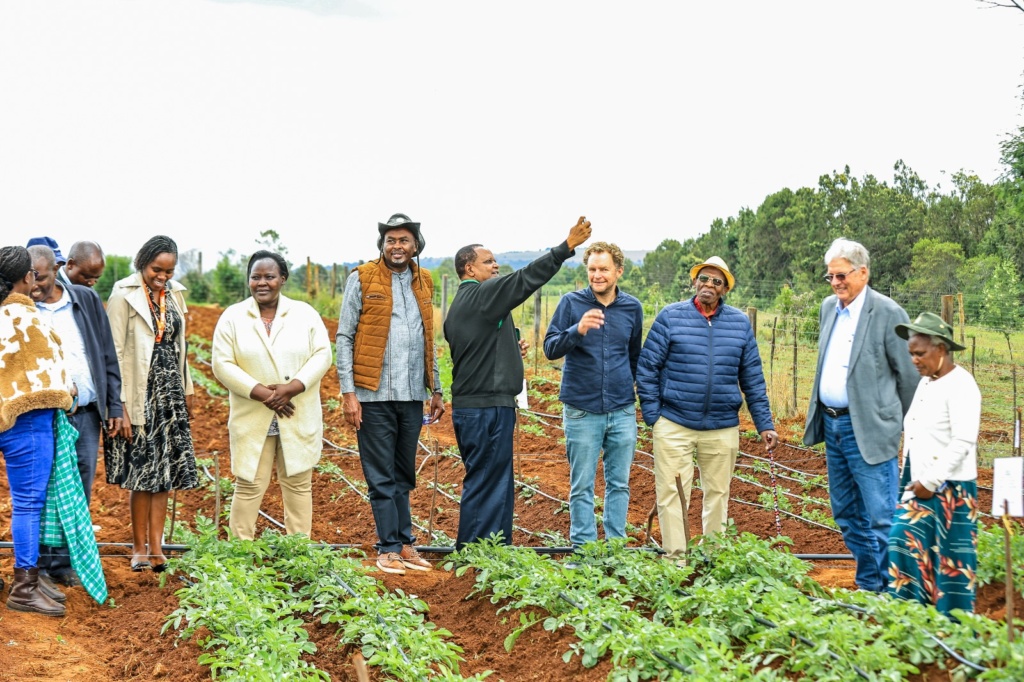
The role of technology in modern potato farming was evident throughout the Timau event. Farmers participated in demonstrations showcasing drone-based crop management, digital agriculture platforms and climate-smart production systems designed to improve efficiency while reducing environmental impact.
Digital tools such as Viazi Soko and the FreshCrop Farmers Portal were highlighted as important mechanisms for connecting farmers to markets, improving access to information and strengthening transparency across the value chain. Such platforms are increasingly becoming critical in helping farmers make informed production decisions amid changing climatic conditions.
Climate adaptation, however, extends beyond production technologies. Stakeholders repeatedly emphasized the importance of building more resilient market systems capable of reducing losses and improving returns for producers.
Meru County Chief Officer Isaiah Baituti noted that high production costs, post-harvest losses and market exploitation continue to undermine the sector’s full potential.
He emphasized that stronger extension services and greater collaboration among stakeholders would be essential in addressing these challenges and improving farmer livelihoods.
Post-harvest losses remain a significant concern, particularly as climate variability increases production risks. Without adequate storage infrastructure and organized marketing systems, farmers often experience substantial losses and unstable prices, reducing incentives to invest in improved technologies.
The push for stronger value chains is therefore becoming an important component of climate resilience. Stakeholders discussed ongoing efforts to enforce standardized packaging regulations, strengthen farmer organizations and support County Aggregation and Industrial Parks (CAIPs) as mechanisms for reducing losses and stabilizing markets.
The private sector also has a critical role to play.
Dr. Kimani Rugendo, Managing Director of Kevian Kenya Ltd, urged farmers to adopt certified seed potatoes and commercial farming practices, warning against the continued use of recycled seed. He also raised concerns about the increasing conversion of agricultural land for non-agricultural development, describing it as the growth of a “jungle of concretes.”
His remarks highlighted another emerging challenge facing agricultural production: the shrinking availability of productive farmland amid rapid urbanization and land-use change.
At the global level, Kenya is positioning itself as a leader in potato innovation and climate-smart agriculture. During the event, stakeholders also highlighted preparations for the 13th World Potato Congress scheduled for October 2026 in Naivasha, the first time the prestigious gathering will be hosted in Sub-Saharan Africa.
World Potato Congress President Dr. Peter VanderZaag commended Kenya’s progress in seed innovation and encouraged wider adoption of technologies such as Rooted Apical Cuttings and aeroponics to address global seed shortages and strengthen food security systems.
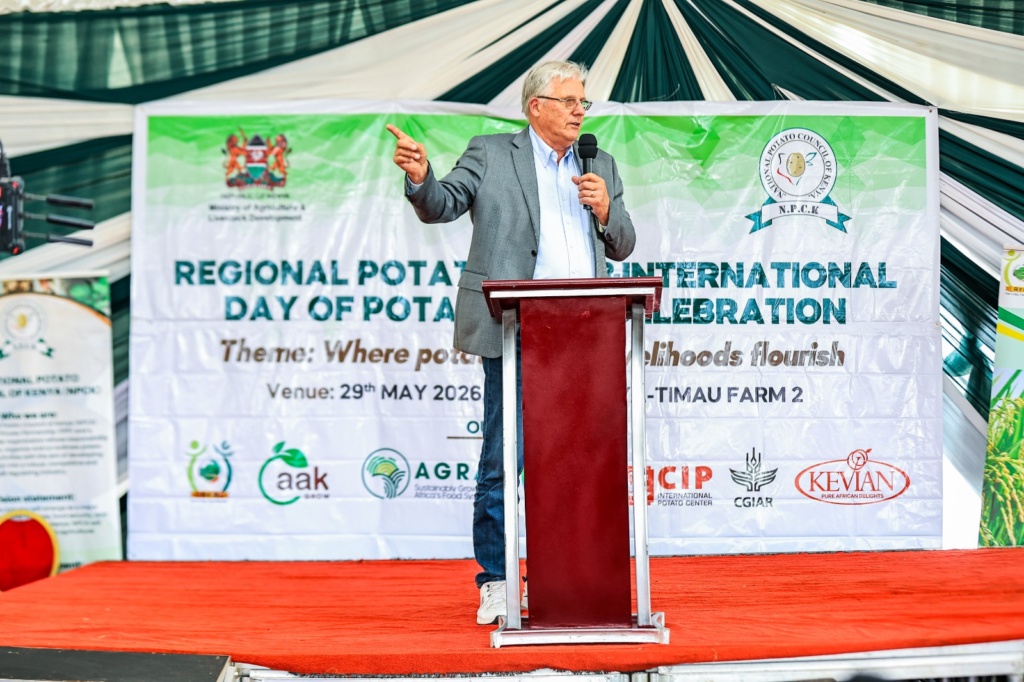
The congress is expected to provide a platform for knowledge exchange, investment mobilization and international collaboration at a time when food systems worldwide are under increasing pressure from climate change.
As the celebrations in Timau concluded, stakeholders delivered a unified message: securing the future of Kenya’s potato sector will require more than increased production. It will depend on stronger seed systems, climate-smart technologies, better market organization, enhanced farmer capacity and sustained investment across the value chain.
For a crop that feeds millions and supports rural livelihoods across the country, the stakes could hardly be higher. As climate pressures intensify, the innovations showcased during the International Day of Potato may prove critical not only to the future of potato farming, but also to Kenya’s broader food security ambitions.
Read Also: Kenya’s Floriculture Industry Showcases Global Strength as IFTEX 2026 Opens in Nairobi
Author Profile

- How can we learn if we don't question?
Latest entries
 Opinion & Analysis8 October 2026Why Africa Must Look to What Already Exists in Its Blue Economy
 Agriculture5 October 2026The Search for a Smarter Way to Feed Crops
 Events30 September 2026The Goat, the Market and the Dryland: Heifer International’s Push for Livestock Resilience
 Agriculture30 September 2026Digital Tools for Export-Ready Farming in Kenya