
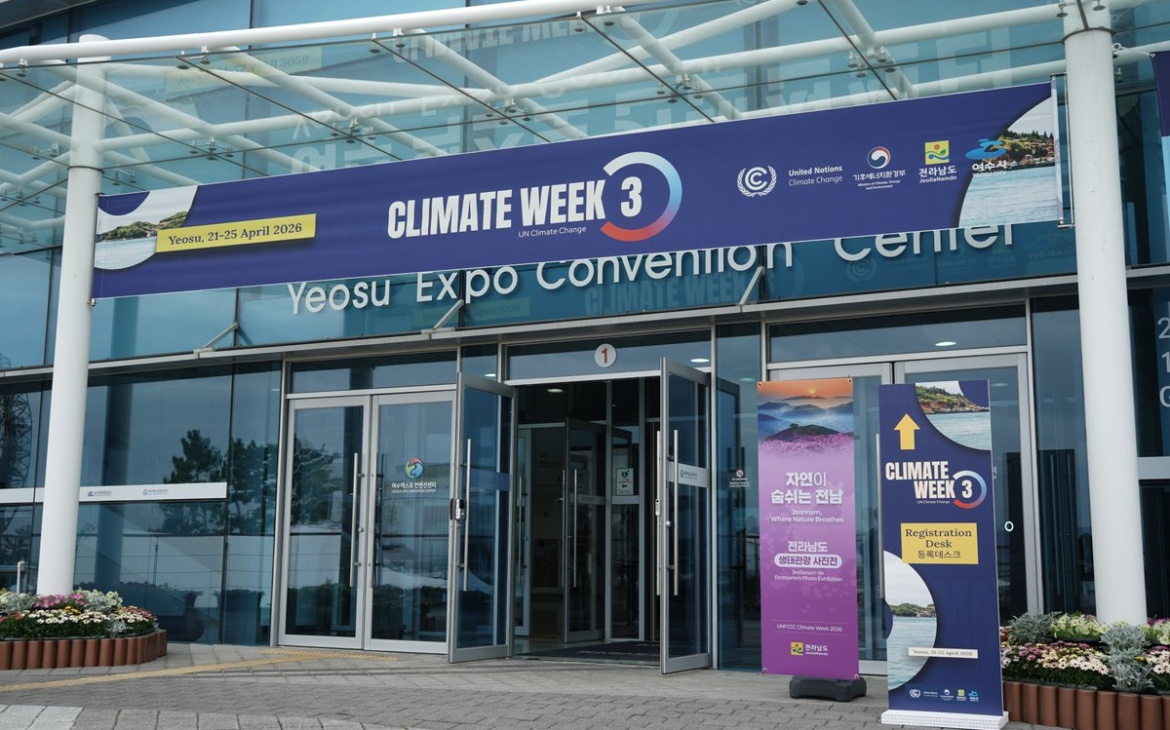
In a coastal Korean city once defined by an oil refinery explosion, global leaders gathered this week for Climate Week 3 (CW3) to argue that the age of fossil fuels is not just ending; it is fast becoming a liability.
Delegates arriving in Yeosu for the UNFCCC’s third Climate Week of 2026 (CW3) were greeted by a harbour skyline that now reads like an accidental metaphor. The city, host of the 2012 World Expo, sits at the edge of a peninsula shaped by heavy industry.
However, the conversation has focused almost entirely on what comes next inside the Yeosu Expo Convention Centre, where over 150 nations convened from April 21–25.
Energy dominated the agenda, which was just an eligible maneuver considering the current global energy looming crisis. Across plenary halls, side events, and sectoral labs running in parallel with Korea’s Green Transformation Week, branded K-GX, speaker after speaker returned to a single argument: the energy transition is no longer a climate ambition. It is a matter of national security.
The framing was perhaps nowhere more pointed than in remarks by United Nations Framework Convention on Climate Change (UNFCCC) Executive Secretary Simon Stiell, who addressed the K-GX opening via video.
“Clean energy is the antidote to fossil fuel cost chaos,” he said, “because it is cheaper, safer, and faster to market.” He went further, invoking the geopolitical disruptions that have rattled energy markets in recent years.
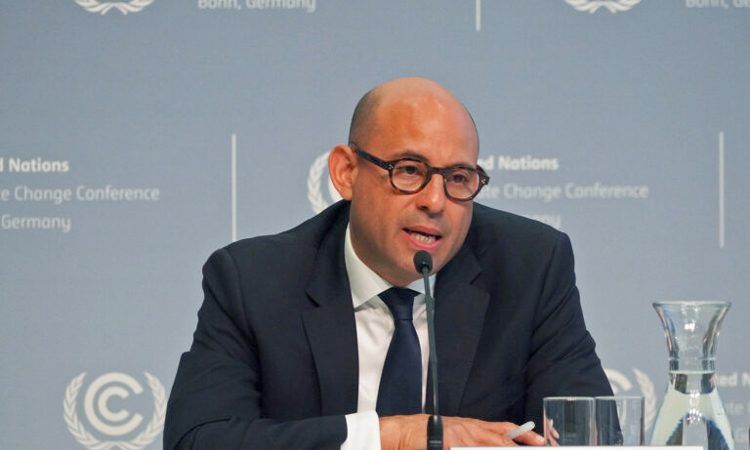
“Wars don’t disrupt the supply of sunlight for solar power, and wind power does not depend on vulnerable shipping straits. Renewables allow governments to regain control of their economies and their national security.”
It was a line that resonated in a region still adjusting to the reverberations of conflict-driven energy price spikes. Stiell cast the current moment not as a crisis but as an opening: “The current crisis will create massive opportunities for energy and construction firms to build clean infrastructure across Asia, the global shift to clean energy can drive a multi-generational economic boom for the Republic of Korea.”
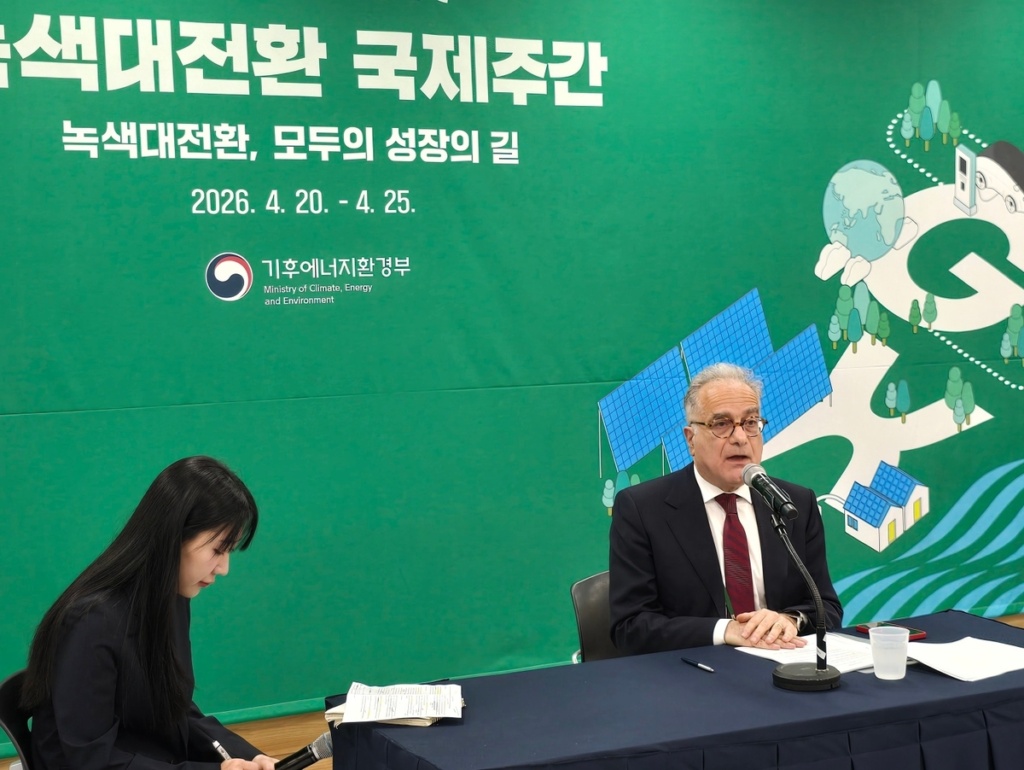
South Korea’s Minister of Climate, Energy and Environment, Kim Sung-hwan, echoed the urgency with a competitive edge. “Green transformation is not a matter of choice, but a path we must take,” he told delegates, outlining the country’s ambition to move beyond fossil fuel-based systems.
He offered a blunter warning for those who delay: “If we hesitate, China will capture all the green industries; that is the reality.”
The EU Ambassador to Seoul, Ugo Astuto, reinforced the argument from a European vantage point shaped by years of dependence on Russian gas.
“As long as we rely on imported fossil fuels, we remain very vulnerable to volatility and external pressure,” he said. “The energy transition is also important in terms of energy security.”
Reflections on Wind, Grids, and the AI Problem
On April 22, a side event co-organised by the Global Wind Energy Council (GWEC) and the Global Renewables Alliance brought together policymakers and industry figures for an Asia-Pacific energy security roundtable.
The occasion doubled as the regional launch of the Global Wind Report 2026, which documented record growth in wind installations in 2025 and highlighted Asia’s coastlines as one of the most significant untapped offshore frontiers globally.
Speakers described wind as a “strategic pillar of energy security,” a phrase that would have sounded rhetorical a decade ago but now sits comfortably alongside concepts like food sovereignty and industrial resilience.
The K-GX programme during Climate Week 3 also made space for a less expected energy conversation: artificial intelligence. A dedicated dialogue on AI-era energy strategy drew participation from technology and industrial firms, including Naver, GE Vernova, and Schneider Electric, alongside The Climate Group.
The central tension was stark, as AI infrastructure scales, so does its electricity demand, placing new strain on grids already under pressure from electrification.
For some participants at Climate Week 3, the concern is no longer abstract. Data centres powering AI systems are already emerging as major energy consumers, raising the risk that rapid digital expansion could outpace clean energy deployment.
How governments and grid operators manage this surge, without locking in new fossil fuel capacity, is quickly becoming one of the defining energy policy challenges of the decade.
Transport electrification received parallel attention, with discussions focused on how EV uptake, charging infrastructure, and grid integration can be sequenced to reinforce, rather than undermine, renewable energy gains.
Climate Week 3 Eyes Turning Commitments Into Action
The Implementation Forum on April 23–24, the main open-access component of Climate Week 3, was built around what organisers described as a “from dialogue to delivery” ethos.
Events convened under COP31 Presidency banners focused on green industrialisation and what was framed as “powering the real economy” through energy and industrial transformation.
Türkiye, which holds the COP31 Presidency, was represented across several of the energy sessions, including the April 22 roundtable.
A subnational energy transition forum, held on the opening day with Korea’s Solutions for Our Climate (SFOC), brought together local government practitioners to work through practical tools: budget mechanisms, blended finance structures, grid upgrade sequencing, and multi-stakeholder governance.
It was the kind of session that rarely generates headlines but remains essential. The gap between national commitments and local delivery continues to be one of the most persistent structural weaknesses in climate implementation.
Minister Kim, speaking at the K-GX closing ceremony, used the geography of Yeosu itself to underline the point.
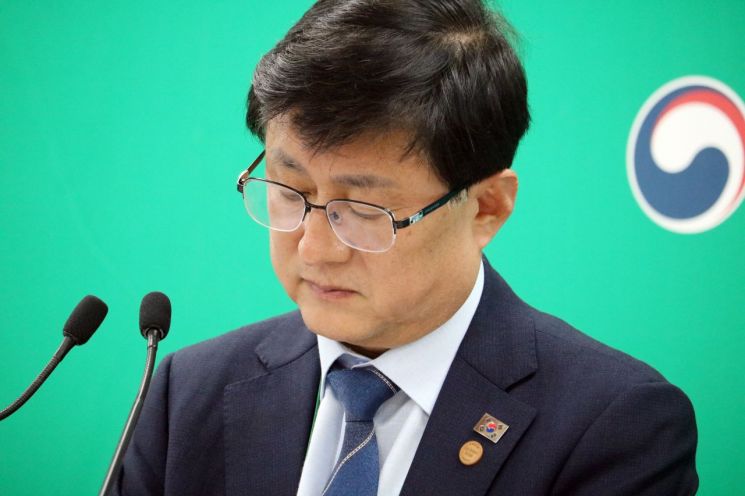
“Just as the breakwater connecting the Yeosu Expo site and Odongdo Island became a bridge,” he said, “the Green Alliance will become a solid bridge connecting Korean companies to the global market.”
The Bigger Picture
Climate Week 3 sits as a bridge moment between last year’s COP30 in Belém and COP31, which Türkiye will host later in 2026. These interstitial gatherings exist to prevent a familiar pattern, where commitments made in plenary dissipate between COPs for lack of coordination and follow-through.
What distinguished the energy discussions in Yeosu was not just their urgency, but their framing. Traditional climate arguments, emissions reductions, temperature targets, and carbon budgets were still present, but increasingly accompanied by the language of competitiveness, resilience, and strategic independence.
For governments across the Asia-Pacific, still calibrating their transition amid industrial pressures and volatile energy markets, that reframing may prove more durable than any emissions pledge.
Back at the harbour, where tankers and industrial infrastructure still define the skyline, the contrast is hard to ignore. Inside the conference halls, the future is being argued in terms of grids, wind corridors, and clean industrial growth. Outside, the legacy system remains firmly in place.
Bridging that divide, between ambition and infrastructure, between commitment and delivery, is the real test that now lies ahead.
Author Profile

-
Seeker.
Inspire AFRIKA.
Latest entries
 Corporate15 October 2026Water, Sanitation and Digital Learning at the Centre of Garissa School Upgrade
 Agriculture14 October 2026Africa’s Food Systems Future Depends on Listening to Farmers
 Weather Forecasts13 October 2026Rain and Rising Temperatures Forecast Across the Greater Horn of Africa
 Climate9 October 2026Beyond Negotiations: Africa Expects Concrete Outcomes from Antalya


