
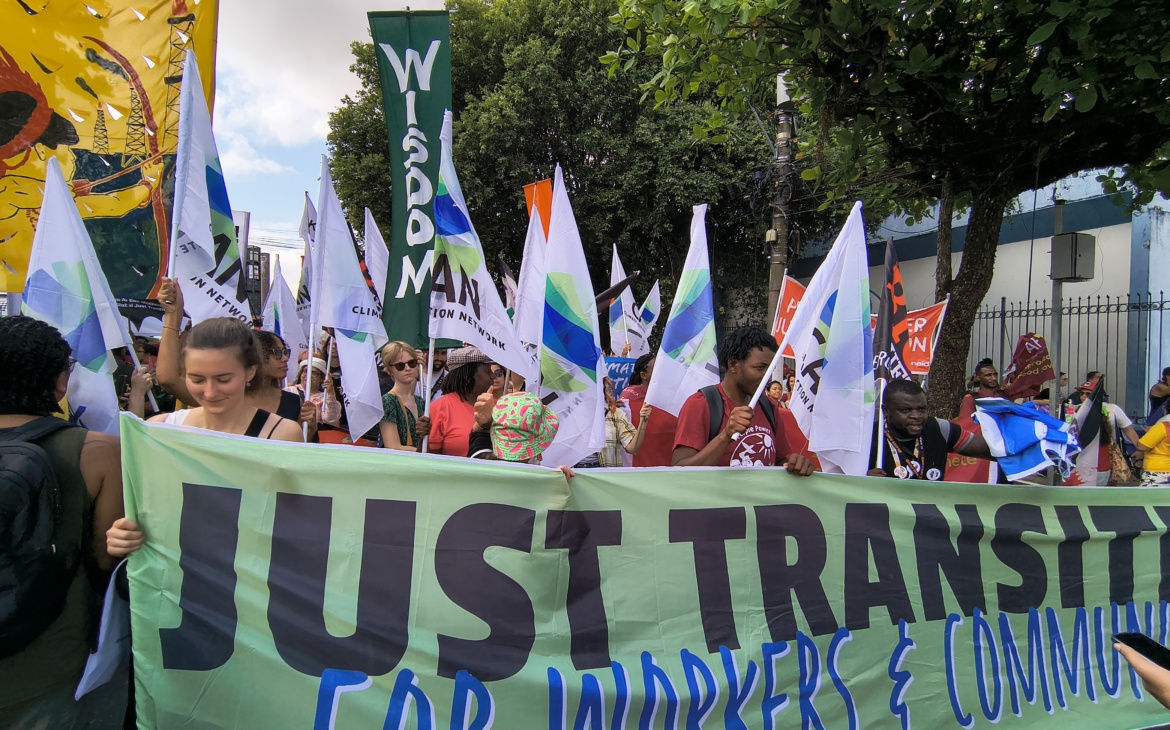
A new civil-society report, Inequity, Inequality, Inaction, delivers a blunt warning ahead of COP30: global climate cooperation is faltering because political power remains in the hands of elites and fossil fuel interests.
The latest Civil Society Equity Review report, endorsed by over 350 civil society organisations, groups and social movements from around the world, including CIDSE, was released on 12 November, at a side event during COP30 in Belém .
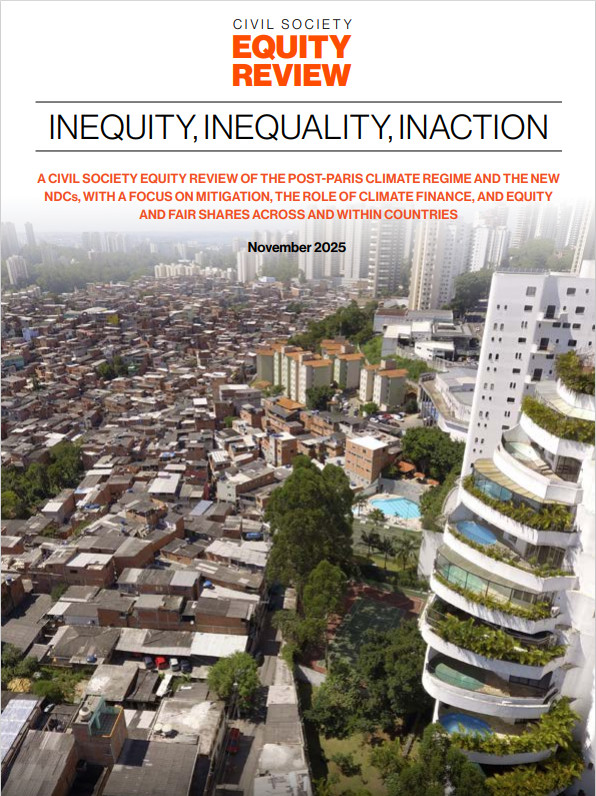
It assesses the ambition and fairness of the new round of NDCs submitted by Parties ahead of COP30; reviews the last 10 years of Civil Society Equity Reviews, and explains why and how international fairness and inequality within countries are linked.
The report gives a reflection of the three decades after Rio and ten years after the Paris Agreement, governments are still protecting profits over people, and the world is running out of time.
The report shows that wealthy countries have failed to cut emissions in line with science, even as they expand oil and gas and fall short on climate finance. Further details how there has been a failure in providing the public funds needed for a global transition, the financial system continues to push developing countries deeper into debt.
Meanwhile, many Global South countries are closer to doing their fair share but remain constrained by a lack of support.
This lack of collective efforts has caused an imbalance that is undermining trust, as witnessed last year in Baku with the collapse of the 1.3 trillion USD ambition in the New Collective Quantified Goal (NCQG). This tension is widening the gap between Global South demands for real public finance and the token pledges offered.
With climate impacts accelerating, COP30 in Belém has been looked up to as a turning point, a place to rebuild cooperation, deliver fair shares, and keep the Paris goals alive.
The human cost of inequality
The report warns that inequality within and between countries is deepening the crisis as some nations have their economies on the line.
Wealthy individuals and corporations can insulate themselves from climate shocks while shifting the burden of disasters and transition costs onto workers and strained public services.
This “elite capture” of politics, especially by fossil fuel lobbies, is stalling progress of the just energy transition as envisioned and fuelling more injustice.
“This is not a clash between ambition and justice,” said Tasneem Essop, Executive Director of Climate Action Network International. “They are the same. But both are being strangled by elite capture and fossil lies. Belém must break that grip and reset cooperation on fair shares.”
Hemantha Withanage of Friends of the Earth International added that despite facing harsher impacts, most Global South countries are pledging close to or even above their fair share. “What is stark is the role of elites in perpetuating disastrous inaction,” he said. “We must confront power, privilege, and historical injustice.”
The report highlights how fossil fuels deepen disparities, locking poorer nations into dependency from production to end produce getting imported back at higher prices. To break this inequlaity circle, the transition from fossil fuels remains the only avenue.
Alex Rafalowicz, Executive Director of the Fossil Fuel Treaty Initiative, said: “Fossil fuels drive inequality in every sense. Wealthy countries have expanded extraction while starving vulnerable countries of financing. The path forward is clear: fair-share funding and an equitable phaseout.”
That call is echoed by Niranjali Amerasinghe of ActionAid USA, who noted that climate finance, a pillar of the Paris Agreement, is collapsing. “Rich developed countries, especially the United States, have not delivered their fair share. Without finance, the entire structure of international climate cooperation falls apart.”
What COP30 must deliver
The report points to three breakthroughs needed in Belém to restore trust and revive ambition:
1. Fair-shares NDCs – combining real commitments on finance with a clear, global fossil fuel phaseout.
2. A finance reset – shifting from debt and loans to large-scale public, grant-based support, including debt cancellation and new global taxation tools.
3. Just transition frameworks – centering workers, women, youth, and Indigenous peoples, backed by progressive taxation, strengthened democracies, and protection of essential public services.
For many advocates, this is about structural change, not tweaks. “The climate crisis is a justice crisis,” said Mariana Paoli of Christian Aid. “Without a radical shift in the global economy and financial system, climate action will continue to fall short.”
Mark Lutes of WWF warned that global conflicts and rising authoritarianism threaten to displace cooperation. “A principled equitable approach is more important than ever,” he said.
Looking back at a decade of missed opportunities, Tom Athanasiou from the Climate Equity Reference Project put it bluntly: wealthy countries had the means to finance a global just transition but chose not to. “This really is now the time of consequences,” he said. “The wealthy could easily afford it. They would hardly notice the cost.”
The message is clear: climate failure is not inevitable. It’s a political choice shaped by inequality and concentrated power. COP30 offers an opening to reset global cooperation, but only if governments confront the forces blocking progress and commit to fair shares.
As the world gathers in Belém, the question is no longer whether solutions exist. It’s whether governments will finally choose people over profits.
Author Profile

-
Seeker.
Inspire AFRIKA.
Latest entries
 Agriculture14 October 2026Africa’s Food Systems Future Depends on Listening to Farmers
 Weather Forecasts13 October 2026Rain and Rising Temperatures Forecast Across the Greater Horn of Africa
 Climate9 October 2026Beyond Negotiations: Africa Expects Concrete Outcomes from Antalya
 Animals7 October 2026In Kajiado’s Drylands, Collective Selling of Small Herds Is Changing the Livestock Trade


