
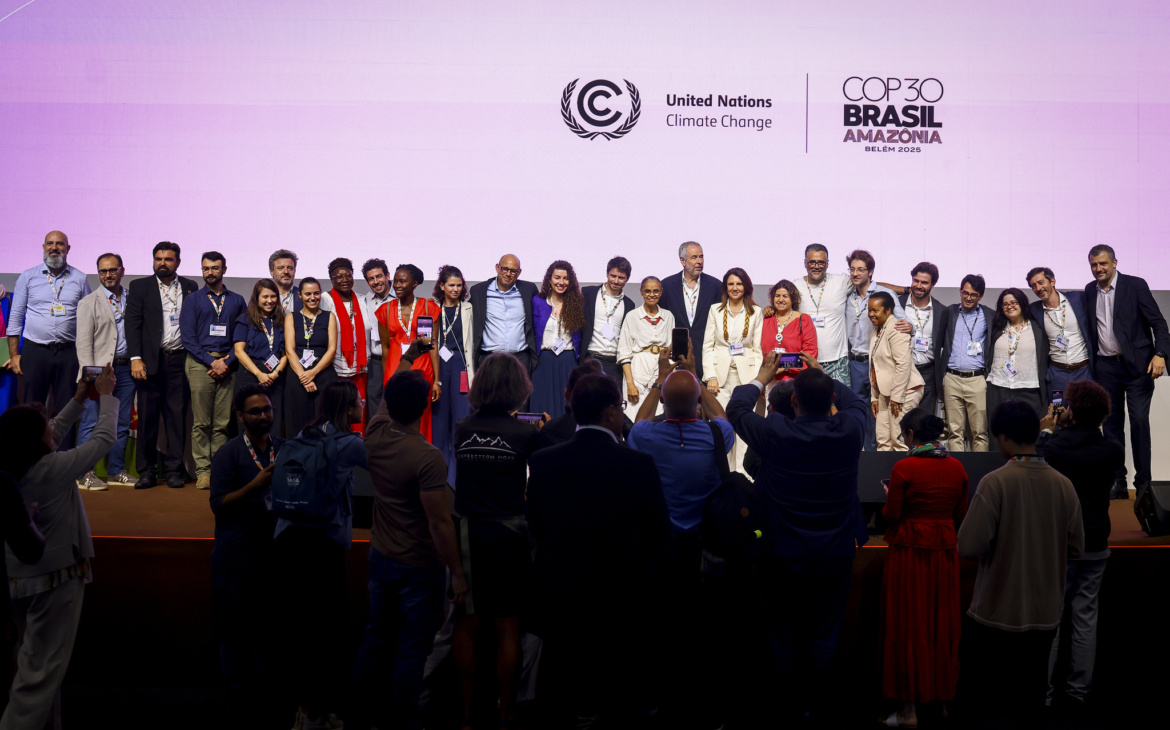
COP30 concluded in Belém on 22 November 2025 with a mixed outcome: negotiators secured meaningful progress on climate finance and adaptation, yet fell short of agreeing on a credible global pathway to phase out fossil fuels.
The final accord quickly dubbed the “Belém Package” emerged after a dramatic venue fire and marathon overnight negotiations, capturing both the resolve of delegates and the deep geopolitical rifts shaping climate diplomacy.
With the United States absent under President Trump, the balance of power shifted noticeably, forcing other regional blocs to step in and navigate the diplomatic vacuum.
Finance and Adaptation: Tangible Progress
Climate finance was the most decisive outcome. Countries reaffirmed at least $1.3 trillion annually by 2035 from all sources (public, private, and innovative finance), and agreed to triple adaptation finance to $120 billion annually by 2035, with a doubling by 2025.
Delegates also operationalized the Loss & Damage Fund, though without new long-term commitments.
For many, these decisions signaled renewed multilateral coordination. UNGA President Annalena Baerbock praised the progress, noting, “Real finance, flowing fast and fair, is central to that proof. Climate action and social justice are inseparable.”
UNFCCC chief Simon Stiell echoed that sentiment, stating, “The old polluting economy is running out of road, but disinformation is trying to keep it alive.”
COP30 also advanced adaptation by agreeing on metrics for the Global Goal on Adaptation and adopting the Belém Health Action Plan, alongside stronger gender-responsive and Indigenous inclusion measures.
Fossil Fuels: The Major Sticking Point
Where COP30 faltered was on fossil fuels. Efforts by more than 80 countries to secure a binding phase-out roadmap were blocked by major producers, resulting in a final text that merely repeats COP28’s weaker “transitioning away” language.
Frustration was evident. Vanuatu’s climate minister Ralph Regenvanu lamented: “About eighty countries have put the red line on any mention of fossil fuels, this UN process, this COP.”
Colombian President Gustavo Petro was even more direct: “Life on the planet is only possible if we separate ourselves from oil, coal, & natural gas as energy sources.”
In response to the stalled negotiations, Brazil and Colombia, backed by 90+ countries, announced a voluntary fossil fuel transition roadmap outside the UNFCCC. While welcomed as a political signal, it lacks the binding weight many consider essential.
Divided Reactions and Growing Tensions
Civil society and vulnerable nations voiced strong disappointment. Harjeet Singh called it “a devastating failure of political will,” while Nikki Reisch argued that “a Fossil Fuel Treaty is the roadmap the world needs.”
Power Shift Africa director Mohamed Adow described the outcome as “baby steps in a sprint we are already losing,” warning that “for Africa, every delayed tonne of emissions is measured in lives and livelihoods.”
Activists highlighted the presence of roughly 1,600 fossil fuel lobbyists, raising concerns about influence on the final text.
Others maintained a measure of optimism. Former U.S. Vice President Al Gore noted that petrostates can “veto diplomatic language, but they can’t veto real-world action.”
What Comes Next
Despite its flaws, COP30 launched several forward-looking initiatives, including a Just Transition Mechanism and the Tropical Forests Forever Fund, though both depend heavily on future financing.
The real test now shifts to 2026, with new NDCs due and a global fossil fuel summit co-led by Colombia and the Netherlands. Whether voluntary roadmaps evolve into binding commitments remains the central question.


