
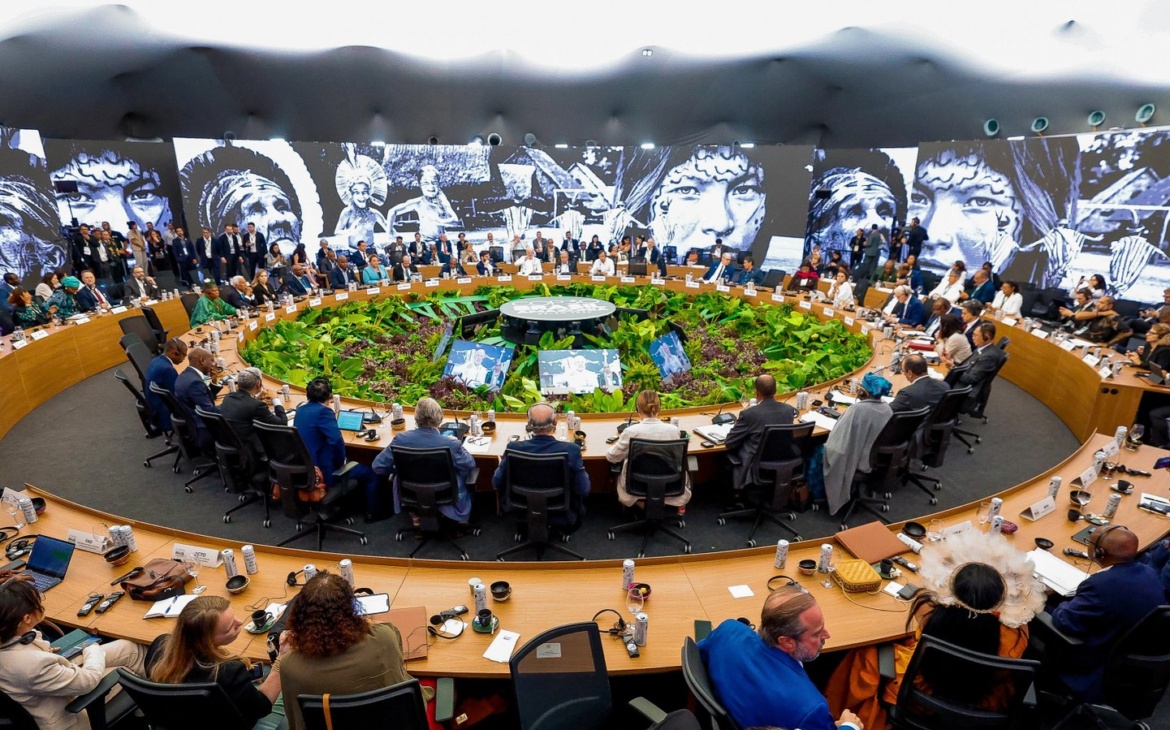
As part of the Intergovernmental Land Tenure Commitment, at COP30 in Belém, Brazil, nine tropical countries, including African nations such as the Democratic Republic of Congo (DRC), Ghana, and Tanzania, jointly pledged to recognize and secure 160 million hectares (approximately 395 million acres) of Indigenous Peoples’, Afro-descendant, and local communities’ lands and territories by 2030.
This initiative is complemented by a parallel Forest and Land Tenure Pledge securing US$1.8 billion in funding through 2030 from philanthropies and donor nations to bolster land and forest rights for these communities, ensuring conservation finance flows directly to Indigenous and local stewards.
Commenting on the landmark, Sonia Guajajara, Brazil’s Minister of Indigenous Peoples, said, “The goal is to recognize and secure a predefined amount of land or territories managed by Indigenous peoples and local communities by 2030.”
This land tenure effort directly ties into broader forest conservation under the Tropical Forests Forever Facility (TFFF), launched at COP30’s Leaders’ Summit on November 6, 2025, with endorsements from 53 countries.
Additionally, it received over US$5.5 billion in initial commitments toward a $125 billion goal to reward tropical nations for maintaining forest standing, addressing deforestation, and climate mitigation.
The TFFF uses innovative bond investments with returns to fund conservation, but it has faced pushback from African stakeholders.
The African Group at COP30 rejected the TFFF on November 17, 2025, arguing it poses “grave risks” to Africa’s biodiverse and climate-vulnerable forests by prioritizing investor interests over community rights and potentially enabling green colonialism.
Despite reservations, experts argue that the Intergovernmental Land Tenure Commitment initiative accelerates land tenure recognition, strengthens governance systems, and supports rights-based conservation in tropical forest countries.
Author Profile

- How can we learn if we don't question?
Latest entries
 Opinion & Analysis8 October 2026Why Africa Must Look to What Already Exists in Its Blue Economy
 Agriculture5 October 2026The Search for a Smarter Way to Feed Crops
 Events30 September 2026The Goat, the Market and the Dryland: Heifer International’s Push for Livestock Resilience
 Agriculture30 September 2026Digital Tools for Export-Ready Farming in Kenya


