When rains fell in Neno District, the river didn’t just rise, but cut off a community from essential amenities. That meant missing school, skipping hospital visits, and losing income. However, thanks to a community-led initiative, catalyzed by a CorpsAfrica volunteer, the situation changed this past season.
In the village of Tundudze, Fanny Kamowa, a mother of school-going children, witnessed the impact of the bridge on the community and says, “Previously, heavy rain would have prevented children from crossing the river and attending classes the next morning. Now, thanks to the bridge, all the children were able to go to school as usual.”
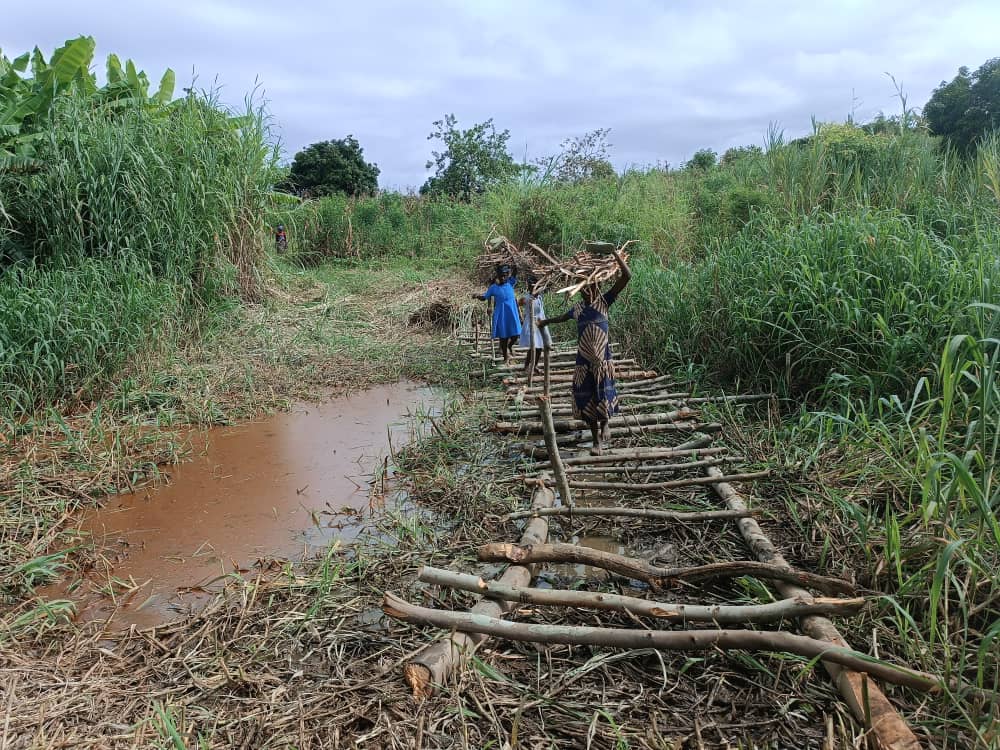
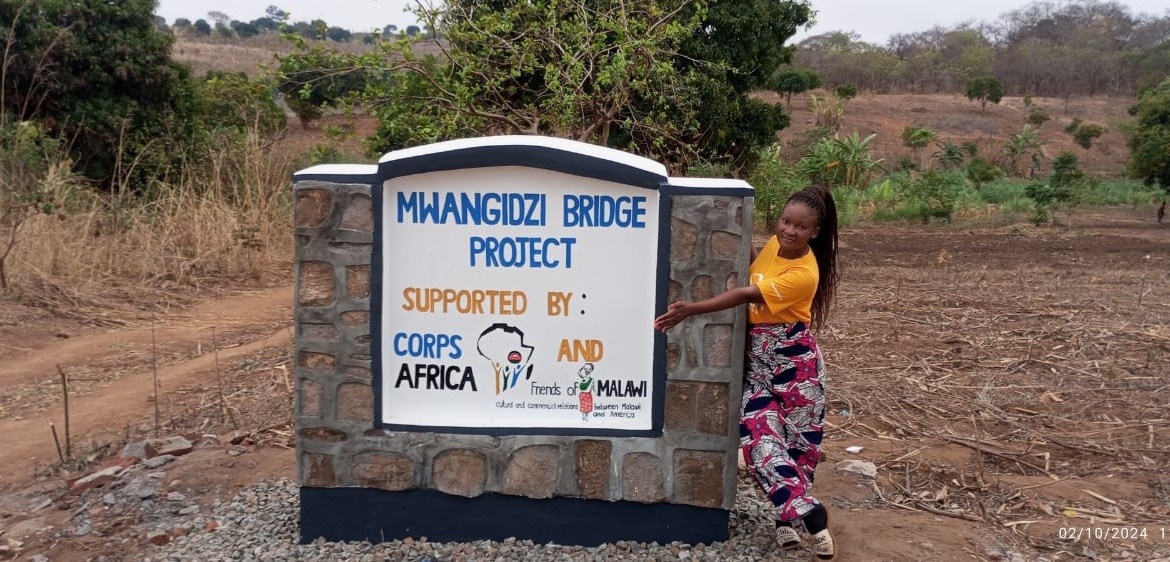
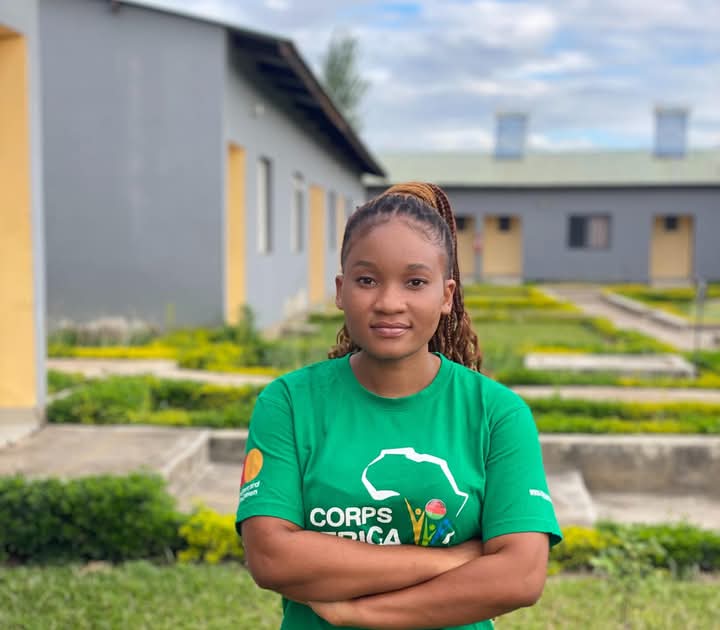
The bridge, a 21-metre climate-resilient structure benefiting eight flood-prone villages, is a result of a community initiative that spanned months, led by Sheira Kasinja, a 2023 CorpsAfrica volunteer and Public Administration graduate from the University of Malawi.
“It was my first real job, I was shy at first,” Sheira recalls. “But over time, I learned to make big decisions, to lead, and to listen. The community had the vision. I just helped them build it.” She says that the project was her first dive into grassroots development, local politics, and climate resilience.
The geography of the Neno district makes it prone to flooding. Extreme weather events like heavy rainfall mean that flash floods occasionally affect the lives of the communities.
“In previous years, we faced significant challenges crossing the river because we had no bridge. During the rainy season, the river would swell and become dangerous, making it difficult or impossible to,” says Fanny Kamowa.
CorpsAfrica’s Model
CorpsAfrica focuses on community-led development to empower and make an impact in communities across Africa. When Sheira was posted to Tundudze, she says that her training from CorpsAfrica guided her volunteerism journey.
“I led by empathy-building conversation to understand the community and establish rapport,” she says. Community mapping to know their greatest resources and vulnerabilities, and narrow down to their greatest need.
“We understand that what the community is proposing is their greatest need. If they lead it, they will ensure that their vision is realized,” she adds.
She further adds that volunteers are catalysts for positive change, working with the communities to find a solution.
Emphasizing the power of grassroots leadership and sustainability, Sheira says, “We give them the picture that they don’t have to give up and identify the ease of addressing a challenge by finding resources, and implementing the solution. This sets a precedent, and they can do the same in the future on their own.”
The Bridge as a Climate Adaptation Tool
Without any background in structural engineering, Sheira confesses that the project initially proved herculean, but resilience prevailed.
“Initially, we had budgeted for a 12-meter bridge and had mobilized resources for the same. But upon consulting an expert, we were informed that depending on the span of the river and recent weather extremes, a suitable bridge would measure 21 meters,” she says.
“To choose this project, we utilized the Innovators Campus approach,” says Fanny Kamowa.
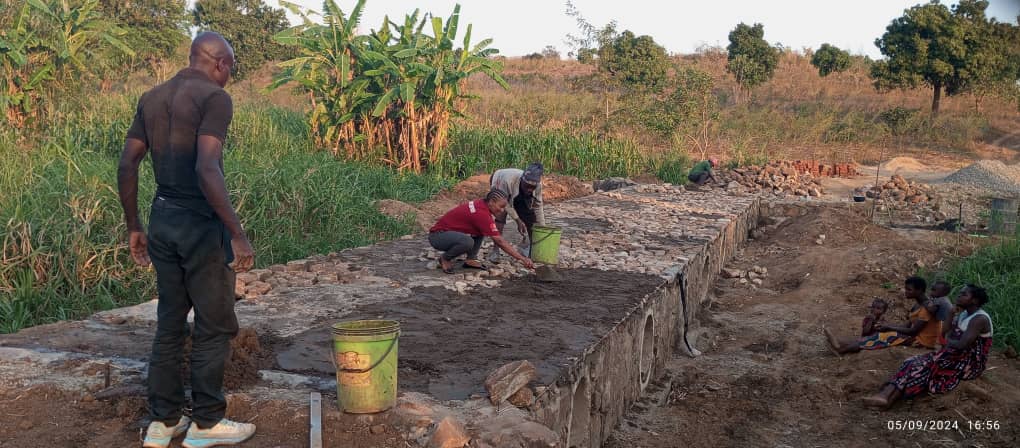
Fanny says, all community members contributed 25% of the total project budget — 10% in cash and 15% in quarry stones and sand.
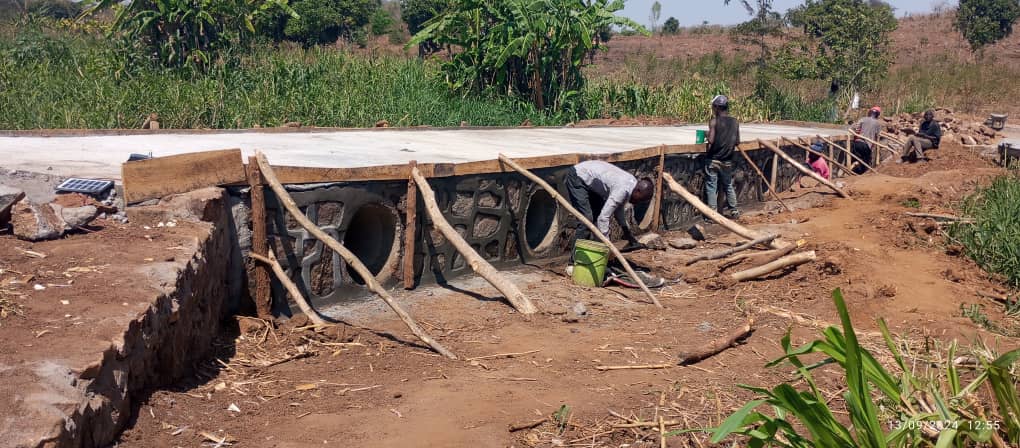
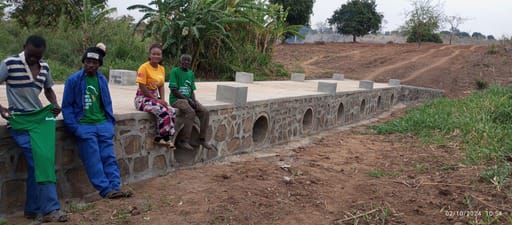
“Every day during construction, two project team members and Sheira were on site, supervising all activities to ensure they met the community’s expectations until the Mwangidzi Bridge was completed,” she adds, emphasizing that the right design was done.
Since the completion of the bridge, Fanny says their lives have changed drastically.
“We can now go to the local health centre for medical care, our children can attend school, and we can access our farms and markets,” she says. The bridge is impacting 720 people directly and over 1500 others from the surrounding eight villages.
To ensure the maintenance of the bridge and start other resilient development initiatives, the community employs a local funding system and pools together farm harvests from all households.
“We continuously ensure that the bridge is well maintained, and we impose penalties on anyone found damaging this essential community structure,” says Fanny Kamowa.
She further adds that they believe they can assist other communities facing similar challenges.
“We are confident we can help them build durable bridges like ours,” she says.
According to Sheira, sub-Saharan countries need to invest in climate-resilient infrastructure. “By leveraging the power of localized adaptation over top-down aid, we can achieve agent infrastructural needs,” she says.
She further adds that empowering youth volunteers in climate action provides an invaluable tool in the race to save the planet through adaptation, emphasizing that culturally rooted, participatory development ensures the right projects are executed and objectives achieved.
“We learned that we can be independent and help others, too,” says Fanny.
Read Also: Youth, Climate and Community in the Eyes of CorpsAfrica Alumni