
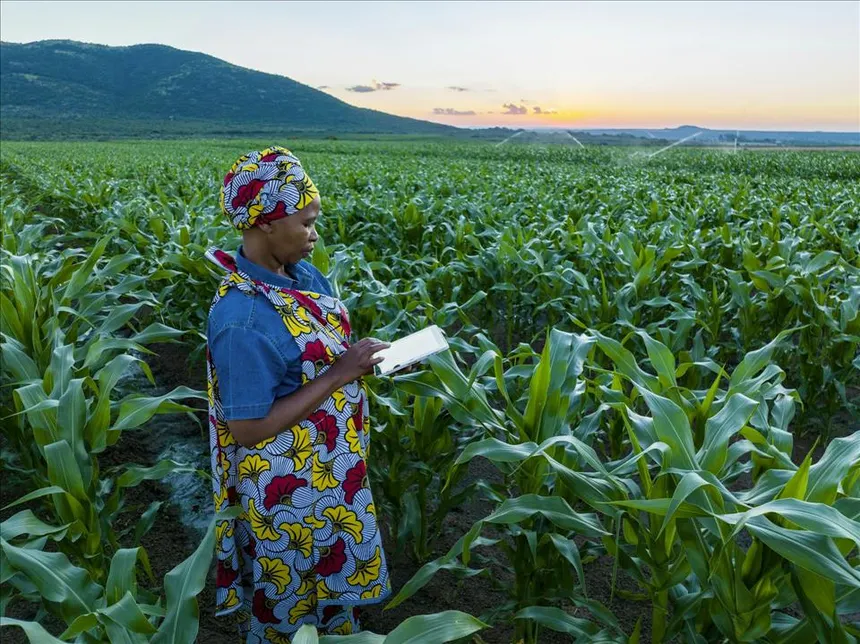
Why is technology becoming unavoidable in agriculture today? A question that has had farmers and experts alike networking to come up with relevant technological solutions to the many challenges affecting the sector.
Speaking to Charles Amunga, CEO of Monarky Concepts, he highlighted how the sector has grown and revolutionized over the past decade.
“Information is a valuable tool in agriculture, and as such, farmers must have the right tool of trade at their fingertips,” he says.
To help farmers make timely decisions based on the data from their farm, Monarky Concepts is developing a Phone App.
But beyond the tools themselves lies a deeper shift: the face of agriculture is changing. Increasingly, it is the youth, and especially Gen Z, who are driving this transformation. They are not only the developers behind the apps, but also the new generation of agronomists, farm managers, and entrepreneurs making agriculture “cool” again through digital innovation.
For farmers, the challenges are familiar: rising input costs, declining soil fertility, and the sting of market rejection when produce fails to meet export standards. Yet technology combined with organic practices is showing a path forward.

As Amunga explained, “If you continue using the chemical fertilizer, the production goes down. But with organic fertilizer, you’re able to stabilize the soils, bring in the organisms, and release nutrients locked in the soil.”
Data-driven decisions, from soil analysis to traceable input sourcing, reduce waste, lift yields, and ultimately boost profitability. Exporters, too, gain confidence when traceability is guaranteed: “When exporters know that you got your inputs from us, they have no challenge. They can export to whatever market you want,” he explains. The formula is becoming clear: sustainability plus digital intelligence equals resilient farms and stronger market positioning.
As data and digital tools transform farming, one truth remains unchanged: agriculture is still rooted in the land. “Agriculture remains agrarian. It’s still in the soil. We just need to make sure we are using the soil optimally,” Amunga said. This balance between tradition and innovation is the frontier of Kenyan farming.
Technology can analyze soil health, guide fertilizer use, and ensure compliance with export standards, but it cannot replace the farmer’s eye or the instinct honed through seasons of experience. The real future lies in integration, where smartphones and soil analysis walk hand in hand with organic practices, local wisdom, and sustainable land management.
The question, then, is not whether technology will replace farming, but how it will enhance it. Will the next decade of Kenyan agriculture be remembered as the moment when soil met software, and changed the game?
Author Profile

- How can we learn if we don't question?
Latest entries
 Oceans22 October 2026Seamounts Under Threat: Can Governments Turn Ocean Promises into Protection?
 Events21 October 2026New Guide Links Animal Welfare to Biodiversity and Human Health
 COP1717 October 2026The World Has a Plan to Save Nature. Can It Deliver by 2030?
 Agriculture16 October 2026“There Is No Shortcut”: A Kiambu Grower’s Decade in Mushrooms


