Five years ago, on the semi-arid slopes of Mua in Machakos County, a group of women and young people decided that climate action should not wait to be delivered to them; it should grow from their own hands, thus a huge embrace of farming despite the stereotypes.
That idea became the Greening Mua Environmental Initiative (GMEI), a community-based organisation working across Kitanga, Kaseve and Kyasila. Its work brings together reforestation, agroforestry, agribusiness, water and sanitation, and clean energy as part of a broader effort to strengthen livelihoods and community resilience.
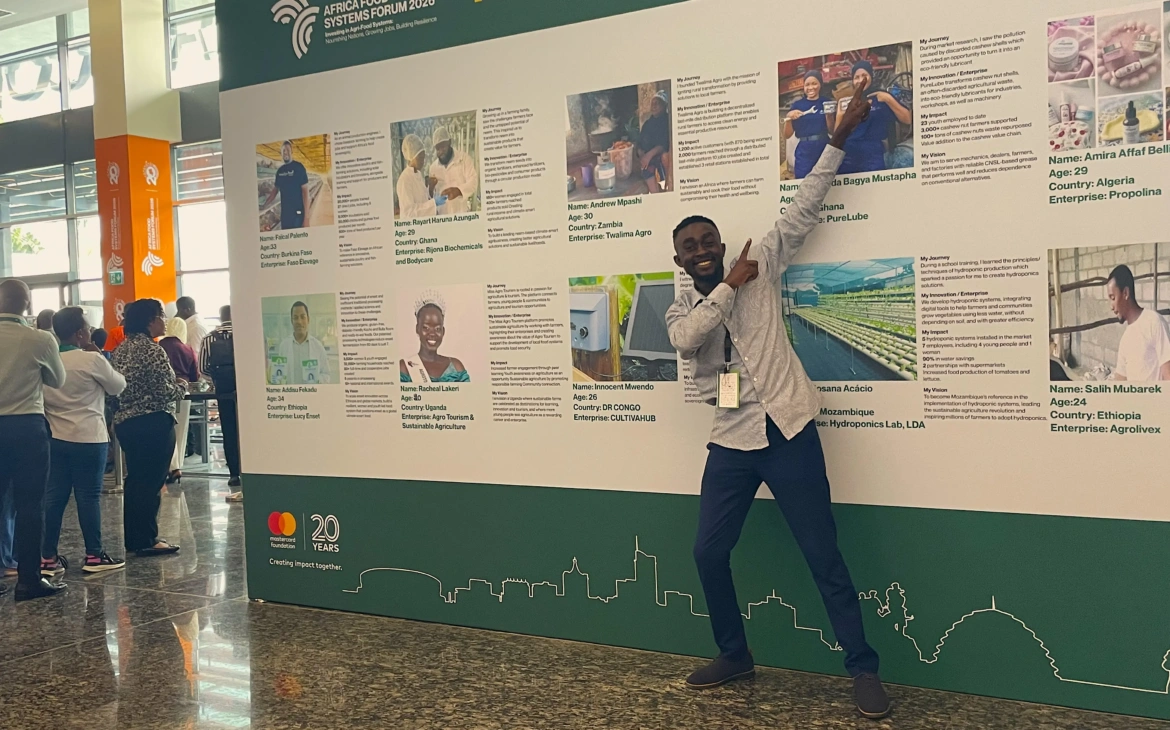
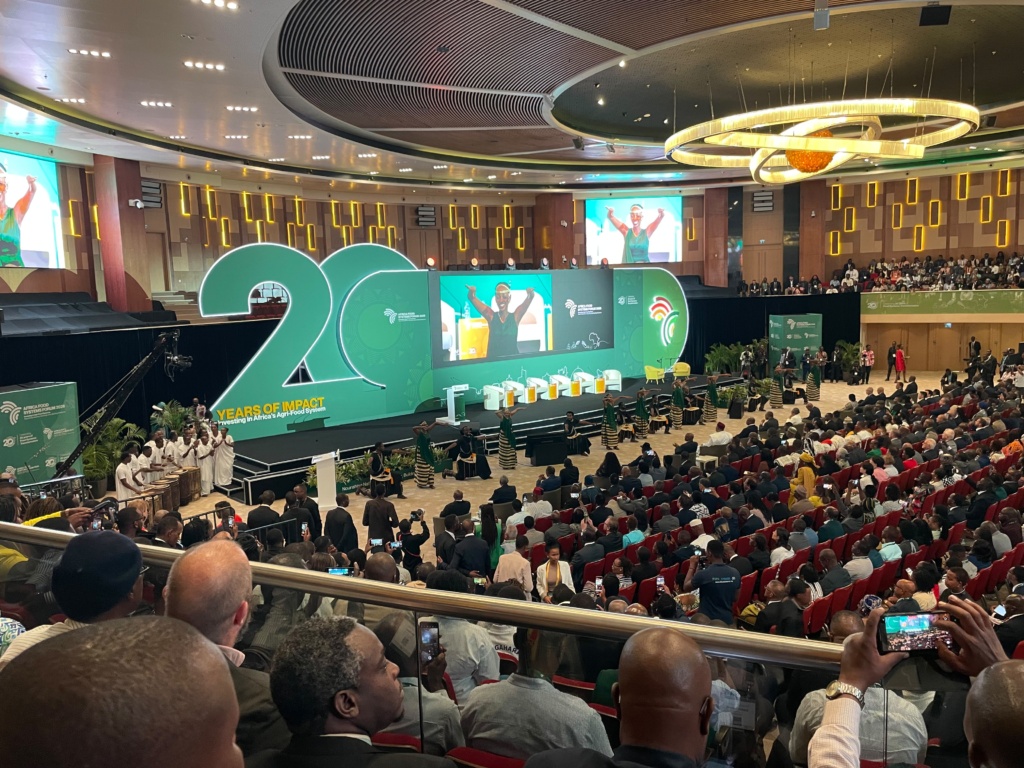
This September, Muindi Maingi, who leads GMEI, travelled from Mua to Kigali for the 2026 Africa Food Systems Forum (AFSF).
He arrived carrying more than the experience of a community organisation. He brought lessons from farmers living with unpredictable rainfall, young people looking for opportunities in agriculture, and communities trying to make climate resilience part of everyday life.
From Mua to the Forum Floor
Maingi almost missed the opening of the Forum after a delayed flight, but arrived in time for a moment that stayed with him: a keynote by Rwandan President Paul Kagame during the Youth Town Hall and Council of the Wise exchange.
A session whose weight remains symbolic, as per reflections from our African tradition, a passing over of knowledge from the elders to a younger generation of leaders.
Maingi recalls Kagame urging participants to first look within and start by addressing challenges of the self. Further adding that one should list and categorise their problems before deciding which ones they could realistically address, a problem-solving approach he says he intends to take back to farmers in Machakos.
For him, however, the value of the Forum was not limited to any single speech or session. It was the range of people gathered in one place, researchers, financiers, policymakers, development organisations and, importantly, young farmers working directly with the soil.
“I love farmers, people who touch soil, people who work with soil,” he says.
That connection shaped some of his conversations in Kigali, where he says he established new partnerships and shared experiences from his work with the IGAD Regional Youth Coalition on Climate and Climate Resilient Agri-Food Systems.
Maingi describes a shift he has observed within the coalition in recent years: from an emphasis on short-term emergency responses towards approaches that can help communities manage climate risks over time. These include climate-smart agriculture, financial services, early warning systems and continued advisory support.
For him, young people have an important role in that transition, not only as beneficiaries of programmes, but as people bringing their own knowledge, innovations and technical skills while also learning from those with more experience.
“Mentorship is a key thing I’ll take back to people in Machakos,” Maingi says.
That emphasis on mentorship and partnership is rooted in the work GMEI has already been doing at the community level.
The climate question sits at the centre of that work since Machakos experiences a bimodal rainfall pattern, with the long rains generally occurring between March and May and the short rains between October and December. However, rainfall variability and dry spells can make farming increasingly difficult, particularly for households whose livelihoods depend heavily on rain-fed agriculture.
GMEI’s response has therefore extended beyond planting trees to reforestation and agroforestry work supporting soil conservation and the wider farm environment, while agribusiness, water and sanitation, and clean-energy activities connect environmental action to household needs and livelihoods.
It is this integrated approach, linking the environment, livelihoods and community ownership, that Maingi carried into conversations about scaling climate-resilient food systems across the region.
Farming as Inheritance
For Maingi, the conversation ultimately comes back to how Africa sees farming and the people who farm.
He does not describe agriculture as a fallback option or something young people turn to when other opportunities fail. Instead, he sees farming as an economic activity, a source of nourishment and knowledge, and something that can be passed from one generation to another.
“Farming is money. Farming is green gold. Farming is mental health. Farming is nourishing. And the best thing of it, farming is transferable,” he says.
For Maingi, that inheritance is also connected to Africa’s wider development. A growing population needs food, and food systems need people willing and able to produce, process, distribute and invest in food.
His message to young people is therefore less about waiting for opportunities and more about building relationships, seeking mentorship and working collectively.
“I can be a farmer. I can be a fourth-generation farmer and turn my great-grandchildren into farmers. That’s the beauty of farming.”
The AFS Forum, he says, gave him a wider room in which to have those conversations. An opportunity to which he credits AGRA and IGAD for facilitating his sponsorship to attend, describing the opportunity as “a blessing” not only for him but his peers and team back home.
Even though the value of the trip will ultimately be measured away from the Forum floor, in whether the connections made in Kigali develop into partnerships, whether mentorship reaches young people and farmers in Machakos, and whether lessons from a continental gathering can strengthen the community-led work already taking root in Mua.
For Maingi, the journey from Mua to Kigali was therefore not simply about attending a major food-systems gathering. It was about bringing a local experience into a continental conversation, and returning home with ideas that can be put to work.