An Australian-led draft decision has reopened the debate over an immediate transition away from fossil fuels, exposing divisions between climate ambition, development priorities and the future of global energy as COP31 heads into week two. The draft goes ahead to expose COP31’s biggest divide.
The publication of the first draft of a proposed COP31 cover decision on 16 November has brought one of the most difficult questions in international climate negotiations back into focus: how far are governments prepared to go in committing to an end to fossil fuel dependence?
The 18-page document, containing approximately 144 paragraphs, places a stronger fossil fuel transition proposal before nearly 200 countries gathered in Antalya, Türkiye. However, its release has also exposed the political divisions that could determine whether the language survives into the conference’s outcome.
Among its most consequential proposals is a call for “accelerated action to phase out fossil fuels, including through the immediate transition away from fossil fuels in energy systems.”
The proposal goes beyond reaffirming the commitment made at COP28 in Dubai, where countries agreed to transition away from fossil fuels in energy systems in a just, orderly and equitable manner.
It also welcomes the Brazil-led global roadmaps developed around COP30, which seek to guide the transition away from fossil fuels and address deforestation.
However, the COP31 presidency has been careful not to present the document as an agreed position. In an accompanying note, it states that the draft is “not intended to reflect consensus”, explaining that it was developed to accommodate the breadth of views expressed by parties during consultations.
The note further clarifies that every element remains open to discussion, including whether a cover decision should be adopted at all.
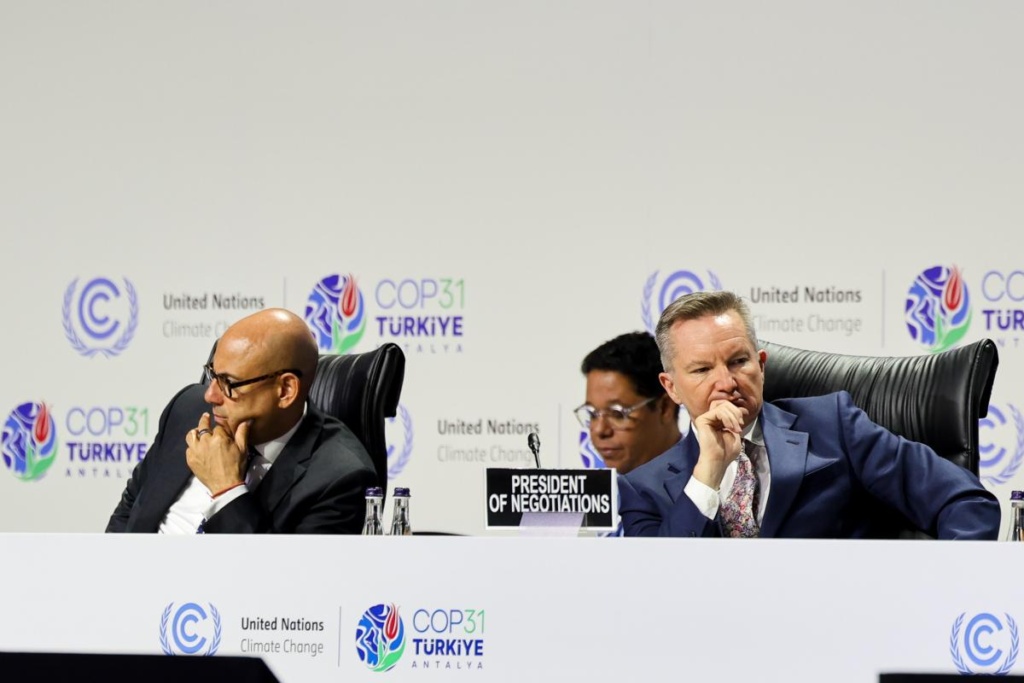
Chris Bowen, Australia’s Climate Change and Energy Minister and President of Negotiations, has described the document as a deliberate attempt to bring competing positions into the open rather than present countries with a near-final agreement.
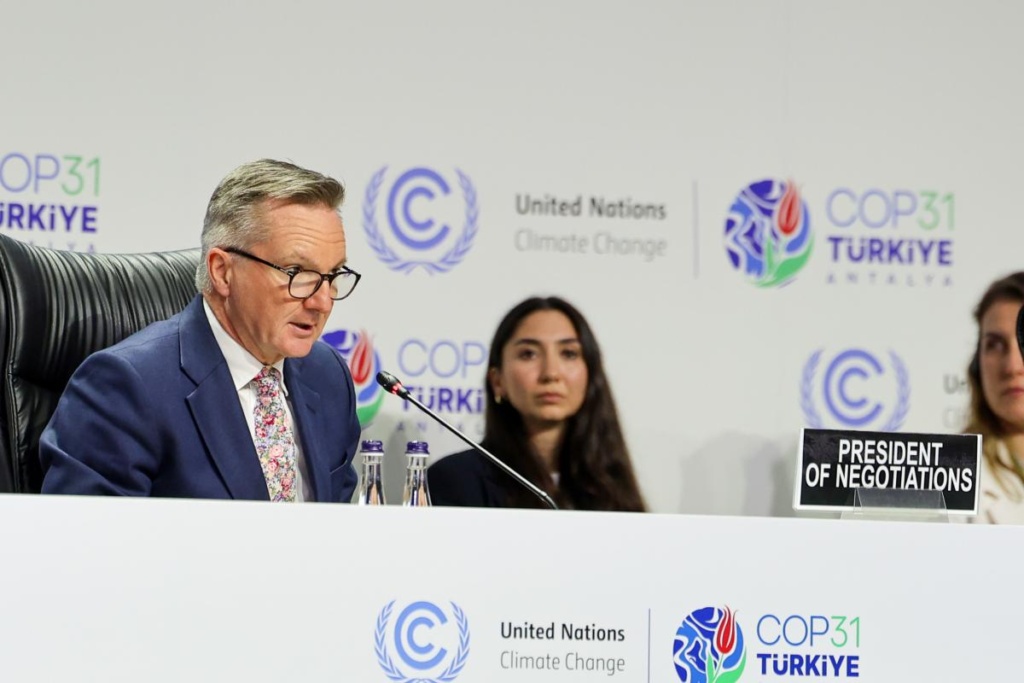
“There are elements in this draft that not all parties will agree on,” Bowen said, acknowledging that the text was intended to stimulate discussion.
He further defended the inclusion of fossil fuel language, saying: “Is it appropriate that there’s a conversation about fossil fuels in the draft? Absolutely.”
For the presidency, the immediate task is to establish where countries can find common ground. For climate advocates, however, the more pressing concern is whether the ambition reflected in the opening draft will withstand the political negotiations ahead.
Resistance exposes the politics of the transition
Despite the stronger language, the draft faces resistance from countries that remain uncomfortable with international commitments that could prescribe how their energy systems should evolve.
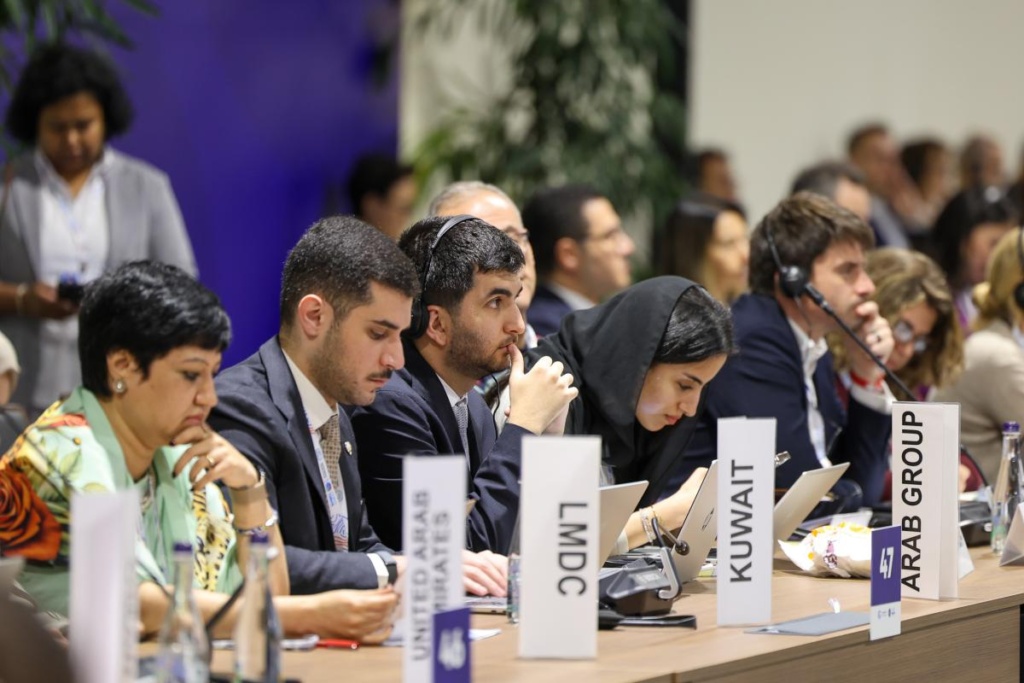
The Arab Group, led by Saudi Arabia, has opposed references to the Brazilian fossil fuel transition roadmap and language that introduces sector-specific targets or top-down energy pathways. Its position reflects a wider concern among some developing countries that global climate decisions should not impose additional constraints on national development choices, particularly where financial and technological support remains inadequate.
Russia has also objected to elements concerning the 1.5°C temperature overshoot, electrification and methane reductions. Meanwhile, the Like-Minded Developing Countries (LMDCs), a negotiating coalition that includes major emerging economies, have resisted additional sectoral targets and fuel-specific commitments.
These disagreements extend beyond the wording of the fossil fuel paragraphs. Some governments are questioning whether the conference needs a cover decision in the first place, arguing that its mandate and place within the UN climate process require further clarification.
The resistance is significant because a cover decision requires consensus. Even if the presidency retains the strongest language in subsequent drafts, its inclusion in the opening document does not guarantee its adoption.
Bowen has acknowledged that the text will change as negotiations progress. The presidency’s approach is to begin with a broad collection of proposals before narrowing the document towards areas where agreement is possible.
For Mohamed Adow, Director of Power Shift Africa, the draft captures both the possibilities and weaknesses of the negotiations.
Describing it as “an overgrown garden”, he observed: “There are lots of encouraging green shoots, but there are also a lot of weeds that need to be pulled out.”
The disagreement also raises a difficult question about responsibility. Countries with economies heavily dependent on fossil fuel production argue against being singled out, while climate advocates maintain that a credible transition requires meaningful action from both producers and consumers.
Bowen himself resisted placing greater responsibility on exporting countries alone.
“There are two types of countries in the world, fossil fuel exporters and fossil fuel importers, and we’re all in it together,” he said.
His position is particularly notable given Australia’s status as one of the world’s major coal producers. Although Bowen acknowledged that declining global fossil fuel consumption would affect Australian exports, he declined to commit the country to phasing out those exports.
This illustrates the tension at the heart of the negotiations: governments may acknowledge the need to reduce fossil fuel use while remaining reluctant to make commitments that directly affect established economic interests.
Climate finance and electrification complicate the debate
For developing countries, the transition away from fossil fuels cannot be separated from the question of who pays for it.
The draft’s fossil fuel provisions are accompanied by proposals on electrification and adaptation finance, both of which could have significant implications for countries facing energy access challenges and growing climate impacts.
One of the proposals reflects Türkiye’s ambition to increase electricity’s share of global final energy consumption to 35 per cent by 2035. The proposed target is intended to accelerate electrification, although its implementation would depend on national circumstances.
For Africa, where access to reliable and affordable electricity remains a development priority, expanding electrification presents an opportunity to advance industrialisation, improve livelihoods and reduce dependence on polluting energy sources.
However, increasing electricity consumption alone does not guarantee a clean energy transition. The source of that electricity matters. Expanding electrification through fossil fuel-powered generation could reproduce existing emissions challenges rather than address them.
Andreas Sieber, Head of Political Strategy at 350.org, warned that the draft does not sufficiently safeguard renewable-based electrification.
“Renewable electrification must bring energy access to those that need it; it should not be a Trojan horse for meeting the needs of energy-guzzling data centres,” he said.
His concern points to an important distinction between increasing electricity consumption and ensuring that new energy systems are affordable, renewable-powered and accessible to communities that remain underserved.
The proposed adaptation finance commitment is another important element of the draft. It calls for developed countries to increase adaptation finance to at least $120 billion annually by 2035, building on the earlier commitment to triple adaptation finance.
For climate-vulnerable developing countries, the proposal offers a potential step towards addressing the growing cost of preparing for floods, droughts, rising temperatures and other climate-related risks.
Yet the proposed figure remains contested. Developing countries have repeatedly called for predictable, accessible and adequate climate finance, arguing that existing commitments have not matched the scale of their needs.
Siphesihle Mvundla of South Africa’s environmental justice organisation groundWork captured the wider financing inequality when he said: “Climate action roadmaps without climate finance lead nowhere.”
He added that “the global south is spending 225 times more repaying debt than they receive in climate finance from the very countries who owe them a climate debt.”
The concern is particularly relevant to African countries, many of which face mounting debt obligations alongside increasing demands for investment in climate adaptation, renewable energy and resilient infrastructure.
Adow also welcomed the draft’s attempt to strengthen the adaptation finance commitment, noting that if retained, the language would suggest that countries were beginning to listen to the needs of vulnerable populations.
However, the underlying question remains whether financial commitments will translate into accessible resources capable of supporting developing countries through the transition.

A difficult path towards consensus
Beyond fossil fuels and finance, the draft also addresses the scientific and political implications of temporarily exceeding the 1.5°C temperature threshold established under the Paris Agreement.
Its references to limiting the magnitude and duration of temperature overshoot have become another point of disagreement, with some countries resisting language they consider politically sensitive.
The debate matters because the 1.5°C threshold is not simply a diplomatic ambition, as it represents a critical temperature limit beyond which climate risks become increasingly severe. The longer global temperatures remain above that threshold, the greater the challenges associated with returning to safer levels.
The draft therefore attempts to address both the immediate need to reduce emissions and the longer-term question of responding to a warming world.
However, campaigners are concerned that the negotiations could produce language that acknowledges the climate crisis without establishing a credible process for implementing the commitments already made.
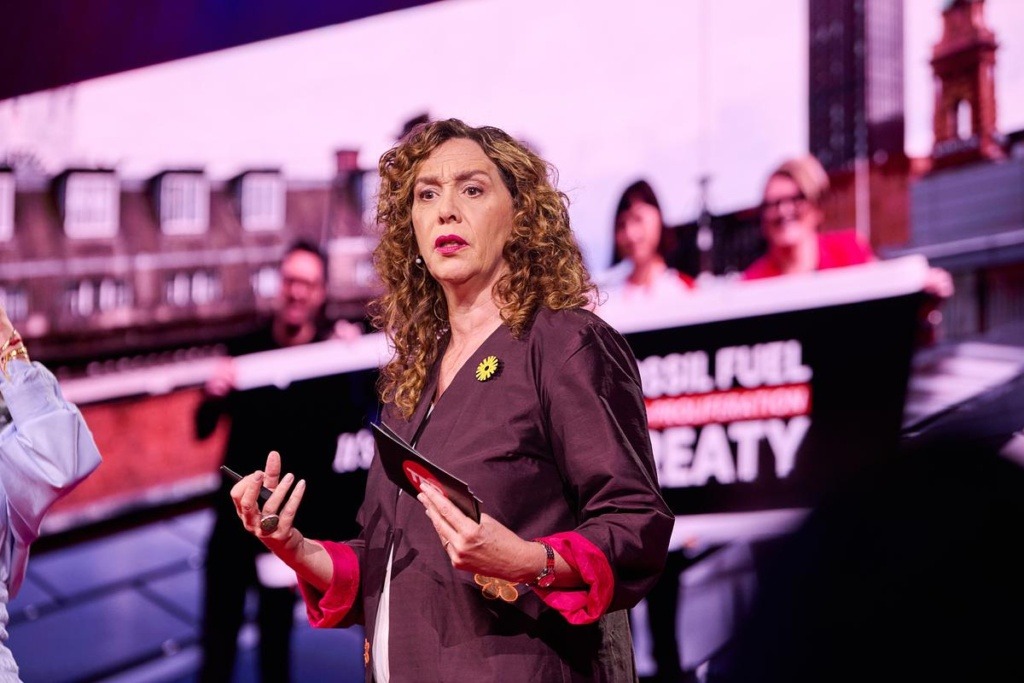
Her criticism reflects the wider concern among campaigners that countries could leave COP31 Antalya with another political statement but no meaningful mechanism for accelerating the transition.
Ultimately, the coming days will determine whether the presidency can turn its expansive opening document into a negotiated outcome that addresses the competing priorities of countries.
The draft is expected to undergo further revisions as ministers take over the negotiations. Its strongest provisions could be diluted, particularly those calling for an immediate transition away from fossil fuels. Others may disappear altogether if governments fail to reach consensus.
For Africa and other developing regions, the outcome will carry implications beyond the wording of a climate declaration. The continent needs an energy transition that expands access, supports industrial development and creates economic opportunities without deepening existing inequalities. That requires not only a commitment to move away from fossil fuels but also predictable finance, technology transfer and support for countries with limited resources.
COP31 has therefore presented negotiators with a familiar but increasingly urgent challenge: reconciling the speed of climate action with the realities of development and the responsibility of those with the greatest capacity to support the transition.
Whether the final decision delivers meaningful progress or another diluted political compromise will depend on what governments are prepared to concede in the remaining days of negotiations.
For now, the fossil fuel phase-out debate is firmly back on the table. Whether it remains there when COP31 concludes is the question Antalya will answer.
Author Profile

-
Seeker.
Inspire AFRIKA.
Latest entries
 Agriculture18 November 2026Who Controls Eastern Africa Farmers Seeds? A Growing Push to Reclaim Food Sovereignty
 Agriculture17 November 2026Eastern Africa Farmers Gather in Nairobi to Advance Indigenous Seed Sovereignty
 Adaptation17 November 2026Africa Pushes for Climate Adaptation Finance as Global Resilience Commitments Face Test
 COP3116 November 2026Fossil Fuel Phase-Out Returns to COP31 Negotiating Table as Countries Clash Over Ambition