

Kenya is often hailed as a continental leader in startup funding, yet a stubborn gap remains: almost none of that capital reaches the innovations emerging from its universities, a crucial issue that the Research to Commercialization (R2C) programme is addressing.
This disconnect highlights the country’s long-standing challenge of translating academic research into market-ready solutions, a challenge now beginning to shift. Deliberate institutional reforms, systems thinking, and a growing recognition that innovation must move beyond laboratories and journals are driving real-world impact.
Insights from the Research-to-Commercialisation (R2C) programme show how targeted capacity building, across university leadership, faculty, and innovators, is steadily reshaping the country’s research and innovation landscape.
At the inception of the programme, R2C leaders identified that Kenya’s challenge was not a shortage of innovation, but the absence of systems to support intellectual property (IP) exploitation.
“I had an opportunity to talk to board members and share what I thought needed to be done, particularly around strengthening capacity on IP exploitation,” said Dr. Tonny Omwansa, CEO of the Kenya National Innovation Agency (KeNIA). “When we began engaging them, it became clear there was a vacuum in terms of who was actually guiding the agenda.”
That gap became evident during early institutional hearings, where board members attended more as observers than stewards. “These are board members, you are supposed to guide this agenda,” he noted. “That’s when I realised the problem was systemic.”
Subsequent engagements with universities and research centres reinforced this conclusion. While institutions showcased numerous prototypes and innovations, there was a limited understanding of how to progress them.
“They would tell me, ‘We have all these solutions, tell us what the next level is,’” he said. “But when I asked about technology readiness, it wasn’t very clear.”
This insight informed the design of a multi-layered intervention framework addressing leadership, policy, faculty awareness, and student engagement. “I realised we needed to think in terms of systems,” he added. “From leadership to policy issues to awareness, everything had to align.”
Joseph Murabula, CEO of the Kenya Climate Innovation Centre and keynote speaker at the event, noted that innovation thrives when ideas meet markets through collaboration and strategic support.

R2C Rebalancing the Innovation Funding Narrative
Beyond building systems, the R2C programme also tackled a critical market failure: the stark mismatch between Kenya’s vibrant startup funding and its research labs.
“Kenya is always touted as one of the leaders in startup funding,” said Dr. Stephen Gugu, managing director of Viktoria Ventures. “Yet when you ask how much of that goes into research-based ventures from universities, the numbers are very small.”
Drawing from experience running accelerators and venture builders, partners sought to replicate technology-sector successes within the research commercialisation space.
“The question was: how do we take what has worked in tech and apply it to research commercialisation?” he said. “That’s how the journey really started.”
After 36 months of implementation, R2C stakeholders point to mindset change as one of the programme’s most significant achievements.
During a training session at Maasai Mara University, a senior professor articulated a breakthrough moment. Dr. Alice Njuguna, Deputy Vice Chancellor at Zetech University, recalled the revelation: “For years, I told my students to go to the library to find research problems,” she said. “Although now I’ve realised the problems are not in the library, they are in the real world, in industry.”
For programme leaders, that moment captured the essence of the transformation. “That, for me, was a highlight,” said Dr. Tanui. “It showed a shift from looking backwards to looking forward.”
Individual innovation journeys further emboldened this transition. One participant, Professor Jackson Wachira, founder of CracksForce, described how his identity evolved through the programme. “Two years ago, I was a professor in the lab and in publications,” he said. “Today, I introduce myself as a businessman.”
He noted that commercialisation demanded deep engagement beyond academia. “I spent my time in construction sites and in the Jua Kali sector,” he said. “I never imagined a professor would be working on the streets, but that’s where the real problems are.”
Catalysing Change Through University Leadership
A defining feature of the R2C programme has been its focus on institutional leadership, particularly vice chancellors, as the leaders who can enable seamless trickling down of these efforts.
“We deliberately focused on vice chancellors,” explained Dr. Omwansa. “We took 11 of them through a year-long training programme, and by the end, they had master plans for innovation in their institutions.”

One vice chancellor’s transformation stood out. Initially sceptical, he later became the first among his peers to invest university funds directly into a startup emerging from his institution. “Fast forward two years, and he’s now a leader in the game,” Dr. Omwansa noted.
This leadership shift translated into concrete commitments. “When heads of institutions came together to establish KNEIL as a formal institution and started putting resources behind it, I knew we had crossed a line,” he said. “In one meeting alone, we mobilised about KSh 6.5 million.”
The Kenya Network of Entrepreneurial Institutions Leaders (KNEIL), hosted by the Kenya National Innovation Agency (KeNIA), brings together top leaders from universities and research institutions to foster innovation and entrepreneurship.
KNEIL drives the commercialisation of research, enhances industry-academia linkages, and promotes sustainable innovation ecosystems in Kenya. For innovators, the most difficult transition was often cognitive rather than technical.
“As academics, the hardest thing was not the science,” said Dr. Moses Ollengo, founder of MySmart Technologies. “It was learning how to communicate value, how to pitch, how to explain the use, not the chemistry.”
Similarly, Dr. Paul Tanui of Dedan Kimathi University of Technology emphasised the role of institutional ecosystems. “Innovation does not exist in isolation,” he said. “We have policies, incubation hubs, seed funding, and space, but most importantly, a culture that allows innovators to grow.”
At Zetech University, Deputy Vice Chancellor Professor Alice Njuguna described R2C as a turning point for leadership alignment. “We had the policies, the centres, and the values,” she said. “Although until our leadership went through the training, the agenda was not moving.”
She added that once senior management was trained, institutional support shifted decisively. “Now, when we present innovation budgets, the management understands where we are going,” she said. “The transformation has been immense.”

Securing the Future: From Mindset to Sustainable Investment
As the R2C programme formally concludes, stakeholders insist the work is far from finished.
“This is not the end, it’s the beginning,” pointed out moderator Elizabeth Odima from Growth Catalyst, Viktoria Ventures. “We’ve started changing the legal frameworks, the leadership mindset, and the culture. But there is so much more to be done.”
Among the priorities ahead is financing early-stage research innovation. It was noted that there is a need for policies that support investment in these innovators, with a focus on scaling what has been tested, moving from a few venture builders to dozens.
What is now clear is that Kenya’s universities are beginning to reposition themselves, not just as centres of knowledge, but as engines of innovation and enterprise.
“Research commercialisation is no longer theoretical,” concluded Francis Okwara, senior innovation officer at the Kenya National Innovation Agency. “It’s happening, and we’re only just getting started.”
Author Profile

-
Seeker.
Inspire AFRIKA.
Latest entries
 Corporate15 October 2026Water, Sanitation and Digital Learning at the Centre of Garissa School Upgrade
 Agriculture14 October 2026Africa’s Food Systems Future Depends on Listening to Farmers
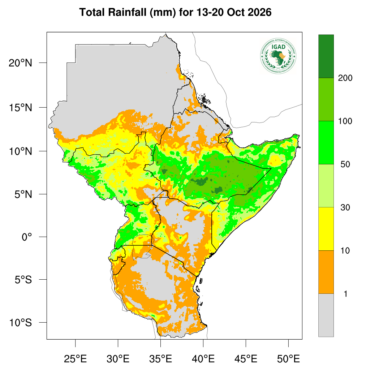 Weather Forecasts13 October 2026Rain and Rising Temperatures Forecast Across the Greater Horn of Africa
 Climate9 October 2026Beyond Negotiations: Africa Expects Concrete Outcomes from Antalya


