
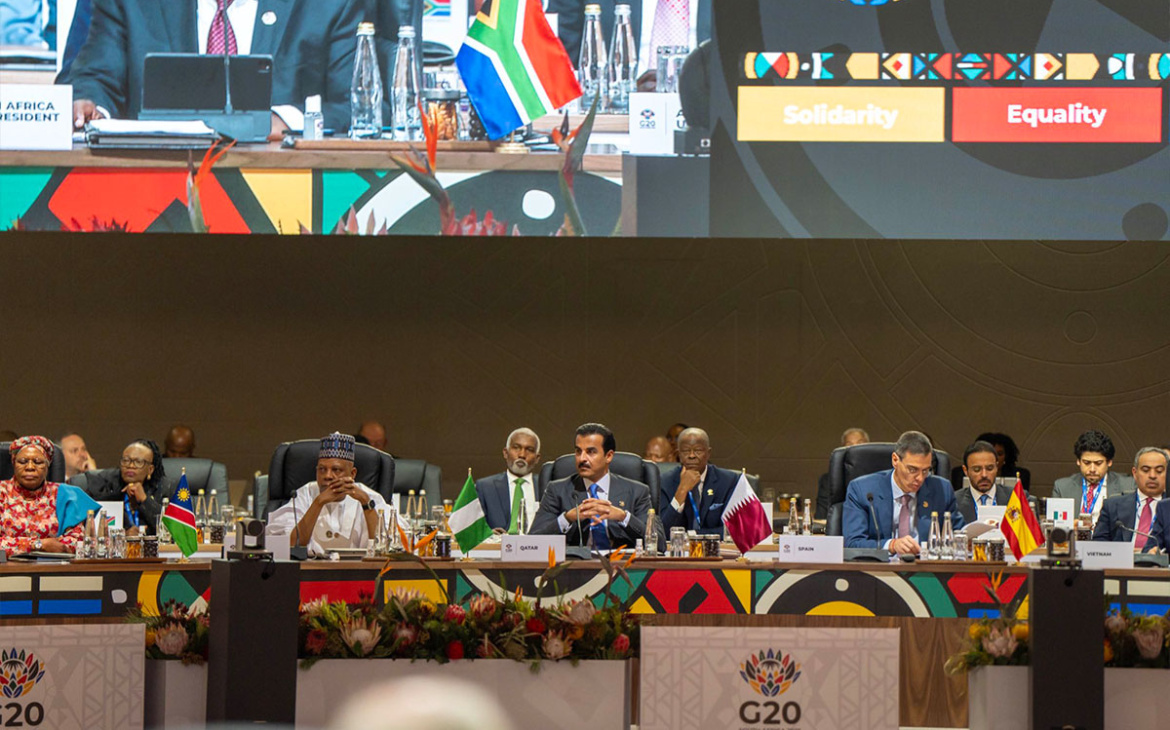
For the first time in history, the G20 Summit was held on African soil. Convened in Johannesburg from November 22–23, 2025, the meeting emphasized Africa’s priorities and highlighted the rising influence of the Global South in shaping global governance.
South Africa, serving as host, framed the gathering around Solidarity, Equality, and Sustainability, themes aligned with the UN’s 2030 Agenda and the African Union’s Agenda 2063. It continued a distinct shift in leadership direction following Indonesia’s presidency in 2022, India’s in 2023, and Brazil’s in 2024, each pushing for more inclusive global economic systems.
Yet the summit was not without controversy, with one of the topmost being a boycott by the United States under President Donald Trump, citing unsubstantiated claims of farmer persecution, and Argentina’s abstention cast political shadows over the event.
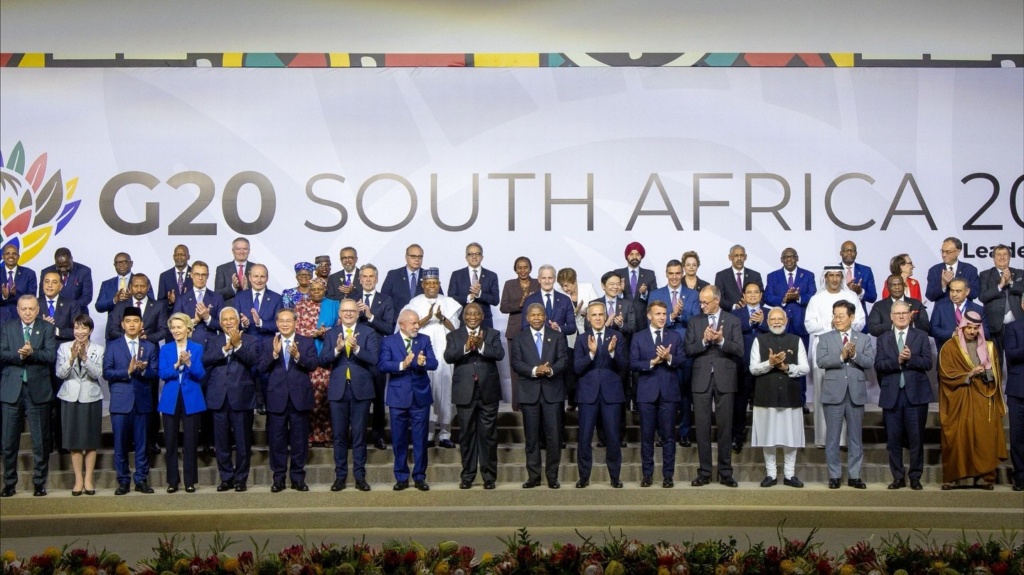
Even though, still 18 G20 members and invited partners, including the African Union, adopted a consensus 122-point Leaders’ Declaration, a 30-page document outlining commitments to multilateral cooperation.
South African President Cyril Ramaphosa hailed the outcome as a “triumph of multilateralism,” arguing that the agreement proved the G20’s legitimacy “with or without full attendance.” His opening remarks set the tone: “Economic recovery and climate action must advance hand in hand to secure a stable and sustainable future for all.”
Climate Finance Takes Center Stage in G20 Summit
On the 10th anniversary of the Paris Agreement, climate action emerged as the summit’s most urgent thread, especially as vulnerable nations continue to face the widening gap between climate ambition and available financing.
Leaders reaffirmed their commitment to the Paris goals and built on momentum from COP30 in Belém, Brazil, particularly on transitioning away from fossil fuels and expanding renewable energy.
Brazil’s President Luiz Inácio Lula da Silva emphasized the moment, saying, “The G20 Summit must champion a new economic model, and the seeds planted at COP30 for a [fossil fuel transition roadmap] will bear fruit sooner than later.”
Among the most notable outcomes was the endorsement of the Nelson Mandela Bay Target, an initiative aimed at boosting domestic resource mobilization to strengthen climate resilience across developing economies.
Investments in critical minerals, nuclear energy, and diversified supply chains were also advanced as part of a broader energy security push.
The declaration further called for coordinated action on climate disasters, including pledges for more affordable financing for low-income countries, an area where African and small island states have repeatedly demanded progress.
UN Secretary-General António Guterres, speaking ahead of the summit, urged leaders to move beyond rhetoric: “Now is the time for leadership and vision” on adaptation and sustainable financing, warning that conflicts are worsening environmental risks.
France positioned itself firmly behind the declaration’s climate focus, with President Emmanuel Macron describing it as a “steadfast commitment to combating climate change” on the Paris Agreement’s anniversary, despite the U.S. absence.
South Africa’s Foreign Minister Ronald Lamola went further, responding pointedly to Washington’s boycott: “The G20 should send a clear message that the world can move on with or without the US,” reinforcing the idea that the Global South is prepared to advance climate resilience without traditional power centers.


