When rains fail or floods strike without warning in the Horn of Africa, the cost is measured not just in damaged infrastructure but in lost lives, failed harvests, and shattered livelihoods; hence, early warning is critical. For millions across the region, timely early warning information is more than data; rather, it is the thin line between resilience and disaster.
It is against this backdrop that the 71st Greater Horn of Africa Climate Outlook Forum (GHACOF 71) convened in Nairobi under the theme “Climate Services for Bridging the Early Warning Gap Together.”
The two-day forum brings together scientists, policymakers, researchers, development partners, and the private sector to reflect on the June to September (JJAS) 2025 season and the mounting climate risks across the region.
Organized by the IGAD Climate Prediction and Applications Centre (ICPAC) in collaboration with the Kenya Meteorological Department (KMD), their primary goal is to evaluate the performance and impacts of the June to September 2025 season and reflect on transboundary climate risks.
The convention is also set to present the consolidated objective regional climate outlook for the OND 2025 season and discuss the implications of the OND 2025 climate forecast and management strategies.
In her opening remarks, Kenya’s Cabinet Secretary for the Ministry of Environment, Climate Change and Forestry, Dr. Deborah Barasa, commended ICPAC for its dedication to hosting 71 forums and urged EAC and IGAD member states to share knowledge, timely information, and a united regional approach for effective early warning systems.
Dr. Barasa emphasized the institutionalization of GHACOF within Regional Economic Communities (RECs) by fully supporting the implementation of the Global Framework for Climate Services (GFCS) at all levels.
“Notable progress has been made in strengthening climate services across our region,” she stated. “For example, with ICPAC’s support, Kenya successfully developed and launched its National Framework for Climate Services (NFCS) in March of this year.”
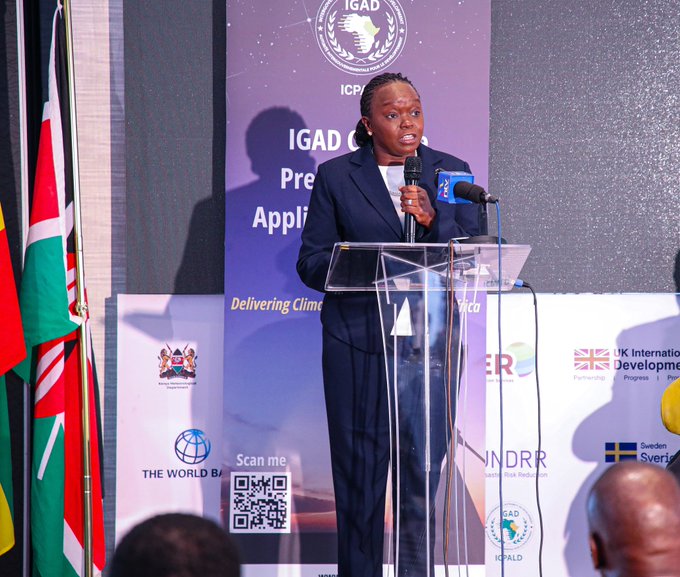
GHACOF 71 arrives at a crucial moment, considering the region is experiencing a sharp increase in unusual weather, marked by a dramatic shift from predictable seasonal rhythms to heightened uncertainty. Regional forecasts indicate these unprecedented conditions are bringing harsher droughts, sudden floods, and increasingly erratic rainfall patterns.
The urgency was further highlighted by Mr. Mohammed Abdi Ware, IGAD Deputy Executive Secretary, who stated that timely and accessible climate information saves lives, protects livelihoods, and enables better planning. “When it fails to reach the last mile,” he warned, “the cost is counted in human suffering.”
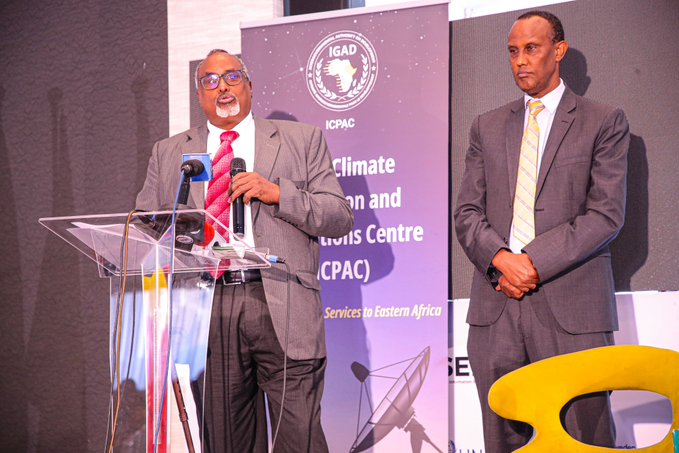
Dr. Abdi reiterated that collaboration and early action are critical to building holistic resilience, which “cannot be built in silos.” He revealed that ICPAC is guiding RECs and member states in integrating climate information into regional and national policies, sectoral strategies, and community action plans.
“The objective is clear: to turn science into solutions, and forecasts into action that safeguards lives and livelihoods,” he said.
The acting Director of the Kenya Meteorological Department (KMD), Dr. Edward Muriuki, pointed out that their commitment is embedded in ensuring that weather and climate services are accurate and timely for effective decision-making.
“The continued partnership between KMD and ICPAC is evident at both the national and county levels through initiatives such as the National Climate Outlook Forums, Participatory Scenario Planning, and PICSA training, which ICPAC continues to support,” said Dr. Muriuki.
He added that implementing the Early Warnings for All initiative will significantly reduce climate-related damages by providing the critical lead time needed to evacuate communities, safeguard infrastructure, and implement risk reduction measures.

Linking Climate to Public Health
A key focus of the forum was the clear link between unusual weather patterns and public health crises, as it emphasized the role of early warning systems. Data presented by member states revealed how climate variability directly influences the spread of diseases.
The study among the GHA revealed a mixed picture, with reductions in respiratory and diarrheal diseases in some areas, but severe outbreaks in others:
- Cholera: Ethiopia (735 cases, 3 deaths), Kenya (426 cases, 20 deaths), South Sudan (2,933 cases, 11 deaths), and Uganda (200 cases, 5 deaths).
- Other Outbreaks: Kenya recorded 612 cases of Chikungunya virus, while South Sudan faced a significant malaria outbreak (516,439 cases, 232 fatalities).
- The study highlighted diverse, temperature-driven outbreaks across the region, including Schistosomiasis in Rwanda, a Kala-azar outbreak in Kenya (1,900 cases, 2.7% fatality rate), Mpox in Burundi, and Diphtheria in Somalia (1,672 cases, 87 deaths), alongside typhoid, meningitis, and dengue.
- The situation in South Sudan was particularly severe, with high cases of acute respiratory illness, acute diarrhea (over 1.1 million cases), and even snake bites (729 cases, 28 deaths).
In response, member states have implemented programs that include oral cholera vaccines, health campaigns, enhanced disease surveillance, malaria prevention measures, and WASH (Water, Sanitation, and Hygiene) initiatives.
Echoing the forum’s collaborative spirit, Dr. Abdi Ware concluded that GHACOF is more than a mere event, as it empowers early warning adoption and re-strategizing. “It is a space where science meets society, where knowledge is co-produced, and where regional solidarity is built.”
“It is our responsibility to ensure that the outcomes of this forum reach the farmer in Kitui, the pastoralist in Karamoja, the fisherfolk in Lake Victoria, and policymakers in Addis Ababa, Kampala, Mogadishu, Juba, and all corners of our region.”
GHACOF 71 emphasizes that bridging the early warning gap is not just about forecasts; it is about turning knowledge into coordinated action that safeguards lives, livelihoods, and the future of the region.
GHACOF 71 comes with a shared recognition that bridging the early warning gap requires more than accurate forecasts; it demands that science be translated into action, and that the voices of the most vulnerable are heard.
For a region where climate extremes have become the new normal, the forum reaffirmed that resilience can only be built together, across borders, and with urgency.
Author Profile

-
Seeker.
Inspire AFRIKA.
Latest entries
 Climate9 October 2026Beyond Negotiations: Africa Expects Concrete Outcomes from Antalya
 Animals7 October 2026In Kajiado’s Drylands, Collective Selling of Small Herds Is Changing the Livestock Trade
 Oceans6 October 202640 Years of Ocean Cooperation: The Western Indian Ocean’s Next Test Is Implementation
 Adaptation5 October 2026Africa Is Financing Its Own Survival as Climate Adaptation Money Falls Short