The Greater Horn of Africa is heading into another week of contrasting weather extremes, with heavy rainfall expected to soak parts of the region’s northern corridor while widespread heat continues to dominate much of the landscape.
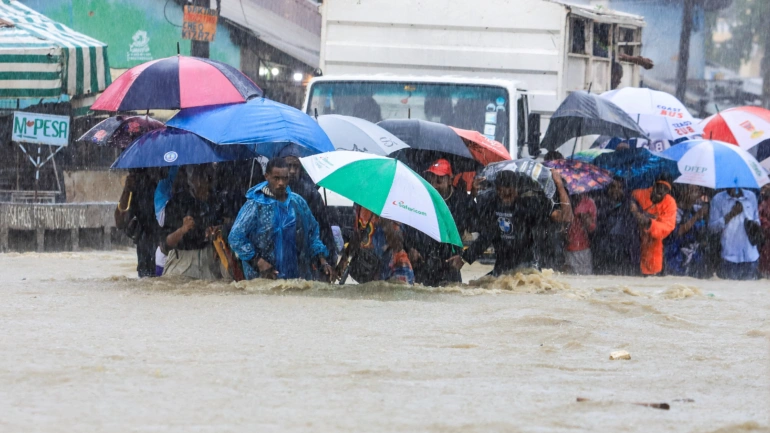
The forecast outlook indicates that between 21 and 28 July 2026, weather patterns are expected to divide the region into two distinct zones. In the north and northwest, communities in Ethiopia, Sudan and South Sudan are likely to contend with intense rainfall, flooding and saturated soils. Meanwhile, much of the rest of the Greater Horn will continue to experience above-average temperatures, reinforcing heat stress across already vulnerable populations.
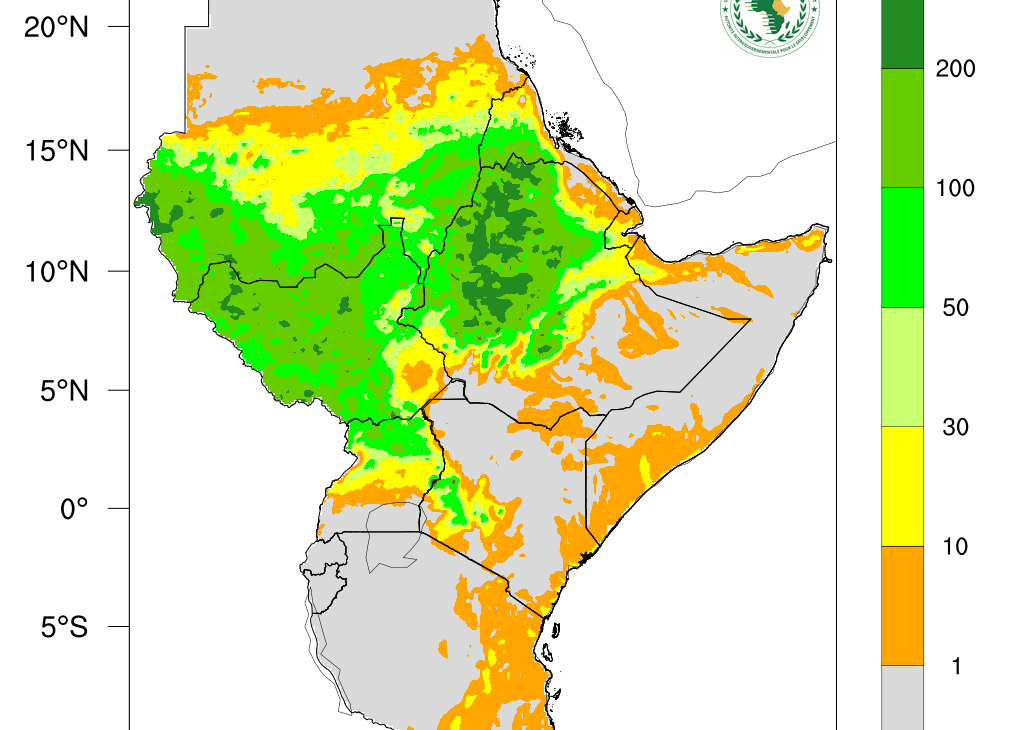
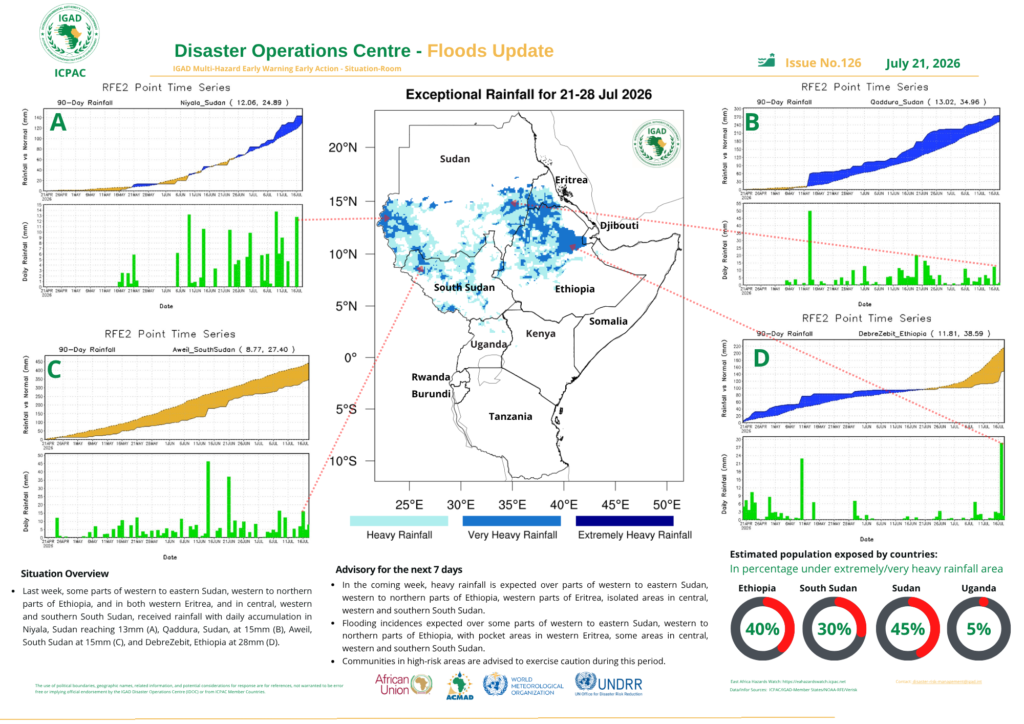
The heaviest rainfall is forecast over western to northern Ethiopia, where totals are expected to exceed 200 millimetres during the week. Isolated areas in south-western Sudan and northern South Sudan are also likely to receive similar amounts. Surrounding these areas, moderate rainfall of between 50 and 200 millimetres is expected across southern Sudan, most of South Sudan, northern Uganda, western Kenya, western Eritrea and additional parts of Ethiopia.
Elsewhere, rainfall will be considerably lighter. Southern Kenya, southern Somalia, eastern and southern Tanzania, central Sudan and parts of eastern Ethiopia are expected to receive less than 50 millimetres of rain, highlighting the uneven distribution of precipitation across the region.
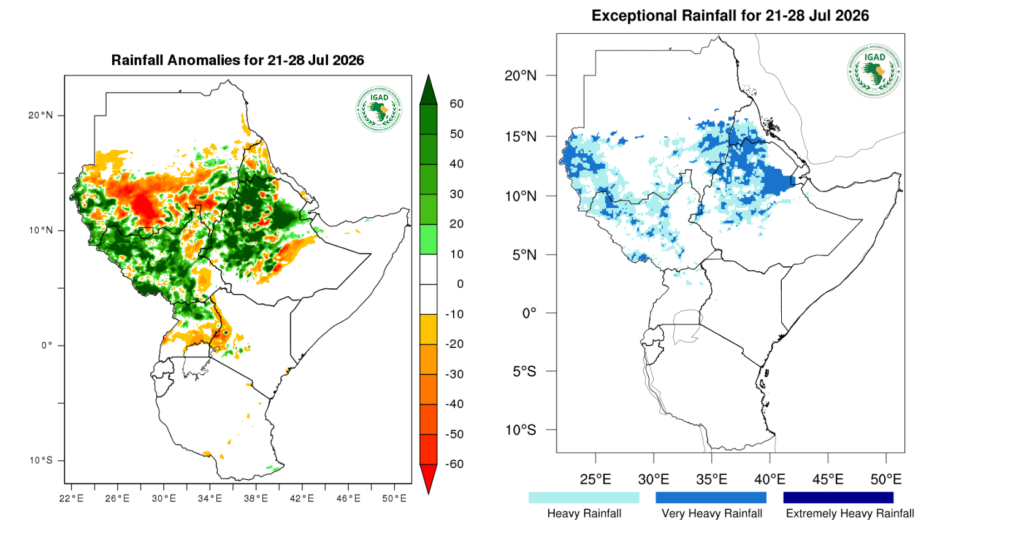
The forecast suggests that rainfall will not only be abundant in some areas but also exceed what is normally expected for this time of year. Wetter-than-average conditions are projected across south-western Sudan, western to northern Ethiopia, northern Uganda and central to western South Sudan. In contrast, southern Sudan, western Eritrea, central to eastern Uganda and western Kenya are likely to record below-normal rainfall.
Perhaps most notable is the likelihood of exceptional rainfall, with precipitation expected to exceed the 90th percentile across parts of western to eastern Sudan, western to northern Ethiopia, western Eritrea and isolated locations in central, western and southern South Sudan. Such rainfall significantly increases the likelihood of flooding, particularly in areas with poor drainage or where soils are already saturated from previous rains.
Flooding is therefore expected in parts of Sudan, Ethiopia, Eritrea and South Sudan, prompting calls for communities living in flood-prone areas to remain alert throughout the forecast period.
While rain dominates one part of the regional story, heat defines another.
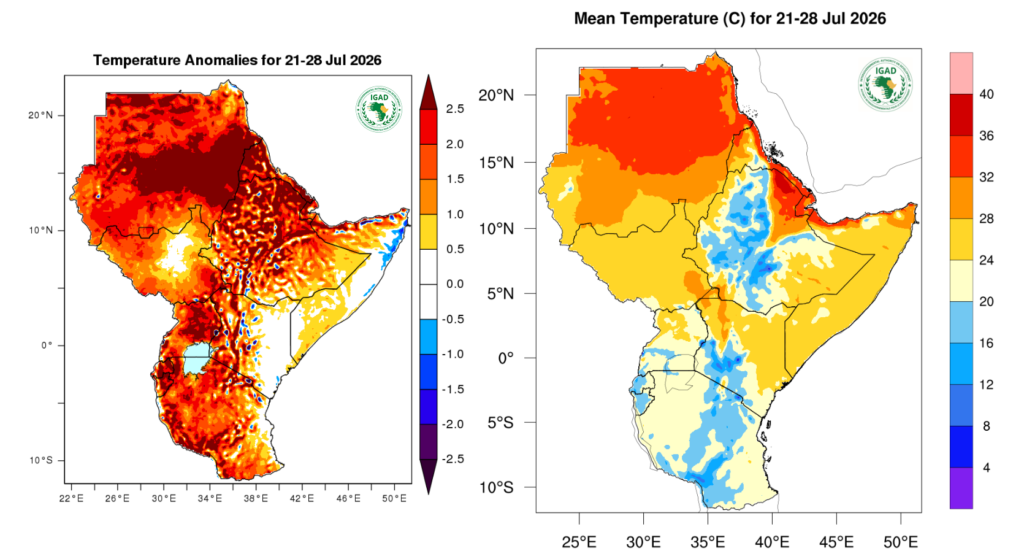
Temperatures exceeding 32°C are forecast over Djibouti, central and eastern Sudan, coastal Eritrea, northern coastal Somalia and north-eastern Ethiopia. Across most of the Greater Horn of africa, temperatures are expected to range between 20°C and 32°C, while cooler conditions below 20°C will be limited to Rwanda, Burundi, central and western Kenya, central to southern Tanzania and parts of northern Ethiopia.
The broader temperature outlook also points to a region that remains warmer than average. Most parts of the Greater Horn are expected to record above-normal temperatures, with only a handful of isolated locations likely to experience cooler-than-average conditions.
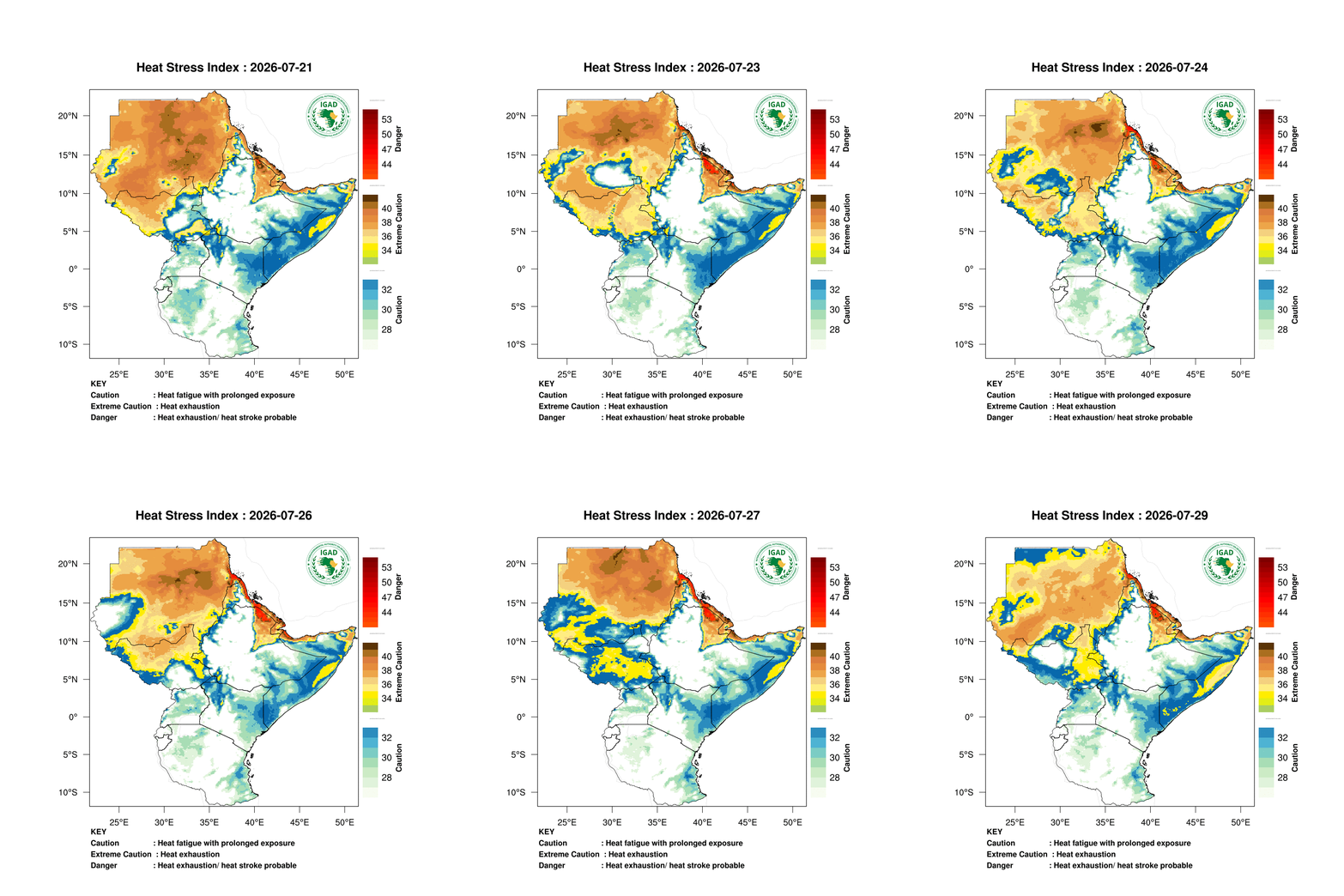
These elevated temperatures are expected to translate into significant heat stress. Much of South Sudan, Sudan, Eritrea, Djibouti, central to northern Somalia and north-eastern Ethiopia is forecast to experience ‘Extreme Caution’ heat stress conditions, where prolonged exposure and physical activity can increase the risk of heat-related illnesses.
Even more concerning are pockets of the Afar region of Ethiopia, central Eritrea, sections of Eritrea’s coastline and isolated areas of northern Sudan, where heat stress is expected to reach the ‘Danger’ category. Under these conditions, heat-related illnesses become increasingly likely without adequate hydration, shade, and reduced outdoor exposure during the hottest hours of the day.
Taken together, the week’s forecast paints a picture of a region experiencing multiple climate extremes simultaneously. While abundant rainfall may improve water availability in some areas, it also raises the threat of flooding and infrastructure damage. At the same time, persistent above-average temperatures continue to expose millions of people to hazardous heat, highlighting the increasingly complex weather patterns facing the Greater Horn of Africa.
The coming week serves as another reminder that weather impacts across the region are no longer defined by a single hazard, but by the growing overlap of floods, heat and uneven rainfall distribution, demanding greater preparedness from governments, humanitarian agencies and communities alike.