
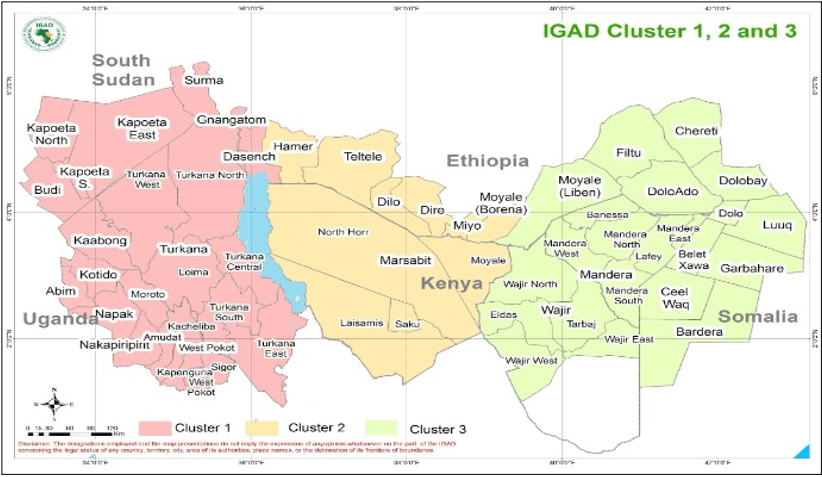
The 5th Sub-Regional Climate Outlook Forum (Sub-COF5) has placed renewed focus on how climate intelligence can guide decision-making in one of the Horn of Africa’s most climate-sensitive cross-border zones.
Convened under the theme “Advancing climate services, building community resilience, and contributing to sustainable development,” the forum translated the March–May (MAM) 2026 seasonal forecast into sector-specific guidance for pastoral and agro-pastoral communities in the Marsabit–Borana cluster.
Organized under the auspices of the IGAD Climate Prediction and Applications Centre in partnership with the IGAD Centre for Pastoral Areas and Livestock Development, national meteorological services of Ethiopia and Kenya, Norwegian Capacity (NORCAP), and the World Meteorological Organization Global Producing Centers, the forum brought together climate scientists, local authorities, humanitarian actors, and community representatives.
Their shared goal was to co-produce climate information that is not only scientifically robust but also usable at the community level.
The forum sits within the broader framework of the Intergovernmental Authority on Development regional climate services strategy, which aims to strengthen early warning systems and climate resilience across the Greater Horn of Africa.
Sub-COF5 Reveals A Region on Frontlines of Climate Variability
IGAD Cluster II, covering the Marsabit–Borana cross-border region, is highly dependent on seasonal rainfall patterns.

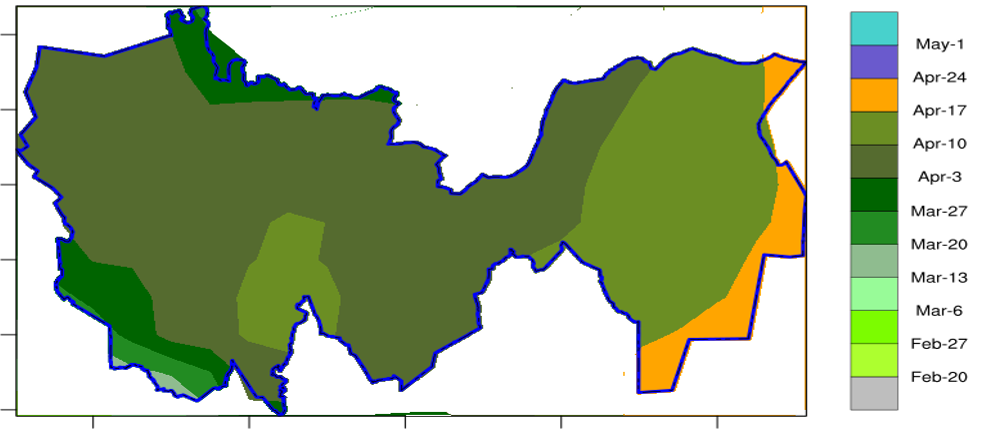
The MAM season typically delivers up to 300 mm of rainfall over northern and eastern Marsabit County, including Godoma, Bultiye, Sololo, Uran, and parts of Bubisa, Maikona, and Dukana, while Dire and Moyale in Ethiopia often receive more than 300 mm.
However, the MAM 2026 forecast signals uneven prospects. Most of the cluster is likely to experience normal to below-normal rainfall, with localized pockets of wetter-than-usual conditions expected in northwestern areas such as Hamer and Teltele. The onset of the rains is projected to be generally normal, except in parts of Marsabit and Mandera, where delays are possible.
Climate experts at the forum emphasized that even slight rainfall deficits can have outsized impacts in pastoral systems.
“In dryland environments like Marsabit–Borana, the distribution and timing of rainfall are just as important as the totals,” one ICPAC climate specialist noted during technical discussions. “A delayed onset or extended dry spells within the season can significantly affect pasture regeneration and water access.”
Compounding rainfall uncertainty is a strong signal for above-average temperatures. Forecast models indicate a 60–65 percent probability of warmer-than-normal surface temperatures across much of the cluster.
According to regional climate analysts, elevated temperatures are likely to intensify evapotranspiration, accelerate soil moisture loss, and increase pressure on already fragile water systems.
“Heat is a silent multiplier of risk,” a forum participant from a national meteorological service observed. “It affects livestock productivity, human health, and water demand simultaneously. When combined with below-average rainfall, it can quickly escalate into a humanitarian concern.”
Sector Impacts: Livestock, Water, and Stability
For pastoral communities whose livelihoods depend heavily on livestock, the forecast presents a mixed outlook. Areas facing below-normal rainfall may see continued stress on grazing lands and water points, potentially prolonging drought conditions in some locations. Reduced pasture availability can weaken livestock body conditions, lower milk yields, and increase the risk of disease.
At the same time, zones expecting above-normal rainfall could experience temporary improvements in pasture and water resources. Yet these benefits come with trade-offs.
Increased rainfall variability raises the likelihood of localized flooding and waterlogging, which can damage infrastructure, contaminate water sources, and disrupt mobility routes critical for pastoralists.
Water resource managers at the forum highlighted the importance of anticipatory planning. “We need to use this forecast to manage reservoirs, boreholes, and water trucking operations proactively,” one regional water official said. “Early action can prevent crisis responses later.”
The forum also examined how climate stress intersects with social and security dynamics in cross-border areas. Competition over scarce water and pasture has historically contributed to localized conflicts in the Marsabit–Borana corridor. Participants stressed that integrating climate information into peacebuilding and conflict prevention strategies is essential.

“Climate services are not only about weather,” a conflict and disaster risk expert told delegates. “They are about safeguarding livelihoods and stability. When communities can plan, the risk of resource-based tensions decreases.”
From Forecasts to Community Action
A central theme of Sub-COF5 was the co-production of climate services, ensuring that forecasts are shaped by and communicated to end users in accessible ways. Pastoralist representatives shared local knowledge on seasonal indicators, mobility patterns, and coping strategies, enriching scientific discussions with on-the-ground perspectives.
Sector working groups developed tailored advisories for agriculture, livestock, health, and disaster risk management. Recommended actions include adjusting grazing plans, strengthening livestock vaccination campaigns, preparing for heat-related health risks, and enhancing early warning dissemination through local networks.
ICPAC officials underscored that the effectiveness of these measures depends on coordination. “Seasonal forecasts are most powerful when they inform concrete decisions at county and community levels,” an ICPAC representative said. “Our role is to bridge science and action by working closely with local institutions.”
The agency called on stakeholders to strengthen collaboration across borders and sectors, emphasizing that climate risks do not respect administrative boundaries. Continued investment in climate services, early warning systems, and community engagement was identified as critical to building long-term resilience.

A Test Case for Regional Climate Services
Sub-COF5 illustrates a growing shift in the Horn of Africa from reactive crisis management to anticipatory climate risk planning. By translating regional forecasts into localized guidance, the forum offers a model for how science, policy, and community knowledge can converge to support sustainable development.
For the Marsabit–Borana region, the MAM 2026 season will test the region’s preparedness to navigate a complex mix of rainfall variability and rising temperatures. The extent to which climate information is integrated into everyday decision-making, from herding routes to water management and public health planning, will shape outcomes on the ground.
As one forum participant summarized, “The forecast gives us a window of opportunity. What matters now is how effectively we act on it.”
Author Profile

-
Seeker.
Inspire AFRIKA.
Latest entries
 Biodiversity24 October 2026Faith Leaders and Civil Society Call for Stronger Partnerships to Restore Nature
 Biodiversity23 October 2026Inside Kobe’s Grassroots Effort to Train the Next Generation of Biodiversity Leaders
 Animals23 October 2026As COP17 Meets, World’s Rarest Great Ape Faces a Make-or-Break Test in Indonesia
 Biodiversity22 October 2026One in Five Tropical Biodiversity Sites Overlapped by Mining Concessions, COP17 Report Finds


