Kenya is no longer a spectator in international carbon markets as it launches its National Carbon Registry
Kenya has taken a decisive step into the global carbon economy with the launch of the Kenya National Carbon Registry (KNCR), a centralized digital platform designed to anchor the country’s participation in international carbon markets and tighten oversight of climate finance flows.
Unveiled on 17 February 2026 in Nairobi, the registry operationalizes Kenya’s engagement with carbon trading under the Paris Agreement Article 6, positioning the country to track, verify, and authorize carbon credits under internationally recognized standards. The platform is managed by the National Environment Management Authority (NEMA) and marks a transition from years of policy development to full-scale implementation.
The KNCR is the culmination of nearly a decade of legislative and institutional groundwork that began with the 2016 Climate Change Act. Subsequent reforms, including the 2023 amendment to the Act and the gazettement of the 2024 and 2025 carbon market regulations, progressively built the legal architecture for a domestic carbon ecosystem.
The Cabinet Secretary for the Ministry of Environment, Climate Change and Forestry, Deborah Barasa, said the registry gives Kenya’s green economy a digital heartbeat, adding that as the world searches for credible climate solutions, Kenya stands ready to deliver them.
The registry provides the operational backbone for that framework. It prevents double-counting of emissions reductions, aligns Kenya’s credits with Article 6 rules under the United Nations Framework Convention on Climate Change, and authorizes Internationally Transferred Mitigation Outcomes (ITMOs) for cross-border trading.
“From today, Kenya is no longer a spectator in international carbon markets. We step forward as architects of our own climate destiny,” Barasa said, adding that the launch sends a clear signal to investors and the international community that Kenya is ready to participate in global carbon markets with transparency, integrity, and strong governance.

Officials describe the launch as a milestone not only for Kenya but also for Africa’s broader carbon market ambitions. By centralizing project registration and credit issuance, the platform replaces fragmented oversight with a transparent, government-backed system that strengthens investor confidence while safeguarding national climate commitments.
Governance Built Around Carbon Sovereignty
Oversight of the registry sits within a whole-of-government structure led by the Ministry of Environment, Climate Change and Forestry, which retains carbon sovereignty. As the designated national authority, NEMA manages day-to-day operations, with its Director General serving as National Registrar.
Sector ministries responsible for agriculture, energy, and forestry provide technical vetting for projects within their mandates. The regulatory framework requires strict safeguards to ensure environmental integrity and social equity.
Projects operating on public or community land must allocate a share of revenues to community development and national climate funds. This provision ensures that carbon finance translates into tangible local benefits, particularly in rural areas where many land-based projects are located.
“For years, innovation thrived, but we lacked a single, trusted national ledger. Today, that changes. The National Carbon Registry is the title deed of Kenya’s emissions reductions,” Barasa said.
Since the regulations were introduced, more than 80 carbon project concept notes have been submitted, signaling strong investor interest in sectors such as reforestation, renewable energy, clean cooking, and sustainable agriculture.
Principal Secretary for the Ministry of Environment, Festus Ng’eno, emphasized that Kenya’s carbon credits are sovereign assets protected by law and must deliver real value to citizens, the environment, and the economy.
“We are building a system grounded in fairness, transparency, and inclusivity, one that ensures communities, particularly those who conserve and protect our forests, are recognized and equitably benefit from carbon market participation,” Ng’eno said.

Technology as a Trust Mechanism
At its core, the KNCR functions as a digital ledger for Kenya’s carbon assets. Built with technical support from the climate technology firm Verst Carbon, the platform registers and tracks projects across sectors, verifies mitigation outcomes, authorizes credit transfers, and provides real-time reporting.
The emphasis on digital transparency reflects lessons learned from earlier phases of voluntary carbon markets, where fragmented registries and inconsistent standards sometimes undermined credibility. By embedding verification and reporting into a single national system, Kenya is positioning itself as a supplier of high-integrity credits in a market increasingly focused on quality over volume.
According to Kenya’s Special Climate Envoy Ali Mohamed, the registry provides the strategic infrastructure needed for a credible and functioning carbon market.
He said digitising and standardising project tracking, credit issuance, transfers, and corresponding adjustments embeds transparency, environmental integrity, and investor confidence at the core of Kenya’s carbon market ecosystem.

The registry also aligns with national priorities, including Kenya’s ambitious 15-billion-tree planting initiative and the expansion of renewable energy capacity. Officials view carbon markets as a channel for mobilizing climate finance to support these goals while creating green jobs.
A Test Case for Africa’s Carbon Future: Economic Promise and Persistent Risks
Government projections frame carbon credits as a potential top export commodity capable of generating billions in climate finance. If realized, the scale of investment could strengthen conservation efforts, expand clean energy access, and diversify rural livelihoods.
Yet optimism is tempered by recent challenges in Kenya’s carbon sector. High-profile setbacks, including the collapse of major clean cooking ventures that faced delays in credit authorization, exposed financial risks, and highlighted the importance of predictable regulatory timelines.
Analysts note that such cases raise broader questions about risk-sharing and value distribution in carbon finance. While international buyers often benefit from recurring credits, local developers and communities can carry disproportionate exposure when projects stall.
Barasa said Kenya’s green transition is no longer aspirational but measurable and verifiable, citing initiatives such as the 15-billion-tree programme as evidence of ecosystem restoration linked to economic opportunity.
The architects of the KNCR argue that a centralized registry can reduce uncertainties by streamlining approvals and clarifying government commitments.
International partners are closely watching Kenya’s model as a potential blueprint for Africa’s carbon market development. Germany’s development agency Deutsche Gesellschaft für Internationale Zusammenarbeit has provided €2.4 million in readiness funding, while private sector groups such as the Kenya Private Sector Alliance advocate for inclusive rules that balance investor needs with social safeguards.

Alignment with UN climate standards is expected to attract a diverse pool of buyers, including airlines and technology firms seeking credible offsets. For Kenya, the registry represents both an economic strategy and a governance experiment, an effort to scale carbon markets responsibly without triggering a speculative rush.
Henriette Geiger, the EU Ambassador to Kenya, commended the country for delivering what she described as Africa’s first national carbon registry and stressed the need to scale up climate investments while strengthening equitable benefit-sharing mechanisms, particularly for communities in the Arid and Semi-Arid Lands.
The coming months will reveal whether the platform can convert investor interest into durable projects that deliver measurable climate and development gains. What is clear is that Kenya has moved beyond consultation into execution.
By anchoring its carbon ambitions in a centralized registry, the country is staking a claim as a regional leader in the next phase of climate finance, one where credibility, transparency, and equity will determine long-term success.
Author Profile

-
Seeker.
Inspire AFRIKA.
Latest entries
 Agriculture14 October 2026Africa’s Food Systems Future Depends on Listening to Farmers
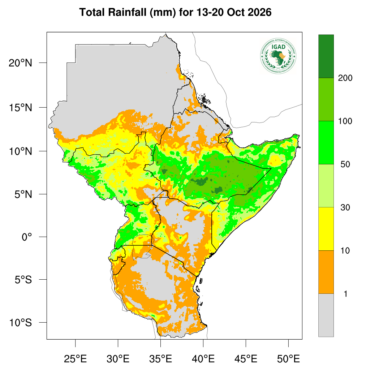 Weather Forecasts13 October 2026Rain and Rising Temperatures Forecast Across the Greater Horn of Africa
 Climate9 October 2026Beyond Negotiations: Africa Expects Concrete Outcomes from Antalya
 Animals7 October 2026In Kajiado’s Drylands, Collective Selling of Small Herds Is Changing the Livestock Trade