

Small-scale farmers, who are often overlooked despite their critical role in providing most of the nation’s food, have won a landmark case securing their rights to save, share, and exchange seeds. The High Court has officially declared the proposed Seed and Plant Varieties Act, which was awaiting assent in the Kenyan parliament, unconstitutional.
The case, supported by Greenpeace Africa and civil society organizations, including Food Sovereignty Ireland, the Grain Organization, and the Seed Sovereignty organization, marks a major victory. These groups argued that the seed is life and sovereign, and that whoever controls it influences the lifeline of a generation.
The ruling by Justice Rhoda Rutto is a bold and progressive move. It declared punitive sections of the Seed and Plant Varieties Act unconstitutional and decriminalised the age-old practice of saving, sharing, and exchanging indigenous seeds.
The judgement affirms that Farmer-Managed Seed Systems (FMSS) are a protected right, not a criminal activity. This decision comes after significant public concern over a law that threatened farmers with jail terms of up to two years and a fine of 1 million shillings (about $7,800 USD) for selling or exchanging unregistered seeds.
Experts in the sector had warned that the policy would have effectively handed control of the country’s food system to multinational corporations. As Elizabeth Atieno, Food Campaigner at Greenpeace Africa, stated, the court has affirmed what we have known all along: seed is sovereign.
“Today, the shackles have been removed from Kenya’s farmers, making this not just a legal win, but a victory for our culture, our resilience, and our future. By validating indigenous seeds, the court has struck a blow against the corporate capture of our food system,” said Atieno.

This victory is crucial at a time when the world, faced with increasingly severe climate change impacts, is struggling to meet global food demand. The judgement ensures that using climate-resilient, locally adapted seeds is no longer a crime.
Gideon Muya, Programs Officer at the Biodiversity and Biosafety Association of Kenya, lauded the judgment as a shield for biodiversity. “Indigenous seeds are the library of life; they hold the genetic diversity we need to withstand droughts, pests, and a changing climate,” he said.
“The court has recognised that you cannot patent nature’s heritage. We have reclaimed the right to choose what we plant and what we eat, free from the coercion of commercial seed monopolies,” added Muya.
This case, like many others, highlights a policy gap that needs to be bridged from the national level down to local communities, with input from those most involved.
According to Wambugu Wanjohi, Legal Counsel for the Law Society of Kenya, which supported the petition, the court’s interpretation correctly amplified farmers’ rights. He emphasized the importance of acknowledging that the rights of farmers supersede punitive, commercially driven laws that infringe on their inherent rights.
“This judgment sets a powerful legal precedent not only for Kenya but also for the entire African continent,” added Wanjohi.

The defeated Seed and Plant Varieties Act had given seed inspectors sweeping powers to raid seed banks and seize harvests. It made it illegal for farmers to process or sell seeds unless they were registered merchants, granting extensive proprietary rights to plant breeders while offering none to farmers.
Claire Nasike, an agroecologist, expressed her delight that “the right to save, share and exchange seeds is in the right hands, those of Kenyan farmers.” She further expounded that the judgment reveals how farmers’ right to seed must be recognised and protected through policy instruments.
Author Profile

-
Seeker.
Inspire AFRIKA.
Latest entries
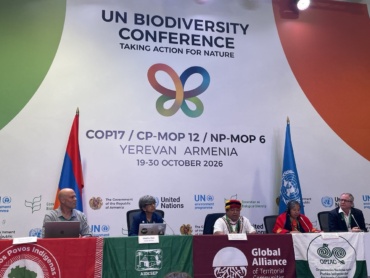 Biodiversity22 October 2026One in Five Tropical Biodiversity Sites Overlapped by Mining Concessions, COP17 Report Finds
 Biodiversity21 October 2026COP17 Opens in Armenia with Global Biodiversity Progress Under Scrutiny
 Biodiversity19 October 2026Yerevan Declaration Sets Tone for COP17 as World Leaders Demand Real Action on Biodiversity
 Changemakers19 October 2026How Earth Wise Storage Plans to Expand Smallholder Poultry Farming in Rwanda


