
Rising oil prices triggered by escalating tensions in the Middle East could place fresh economic pressure on many countries across Sub-Saharan Africa, most of which depend heavily on imported fuel.
The crisis intensified after disruptions around the Strait of Hormuz, a key global oil transit route responsible for nearly 20 percent of the world’s oil and liquefied natural gas trade, sent energy markets into turmoil.
Based on research by Zero Carbon Analytics, within the first days of March, as the war in the Middle East escalated, Brent crude prices rose by about 18 percent, increasing the cost of fuel imports worldwide.
In Sub-Saharan Africa, where many economies rely on imported petroleum products, the price surge could significantly increase import bills and strain foreign exchange reserves.
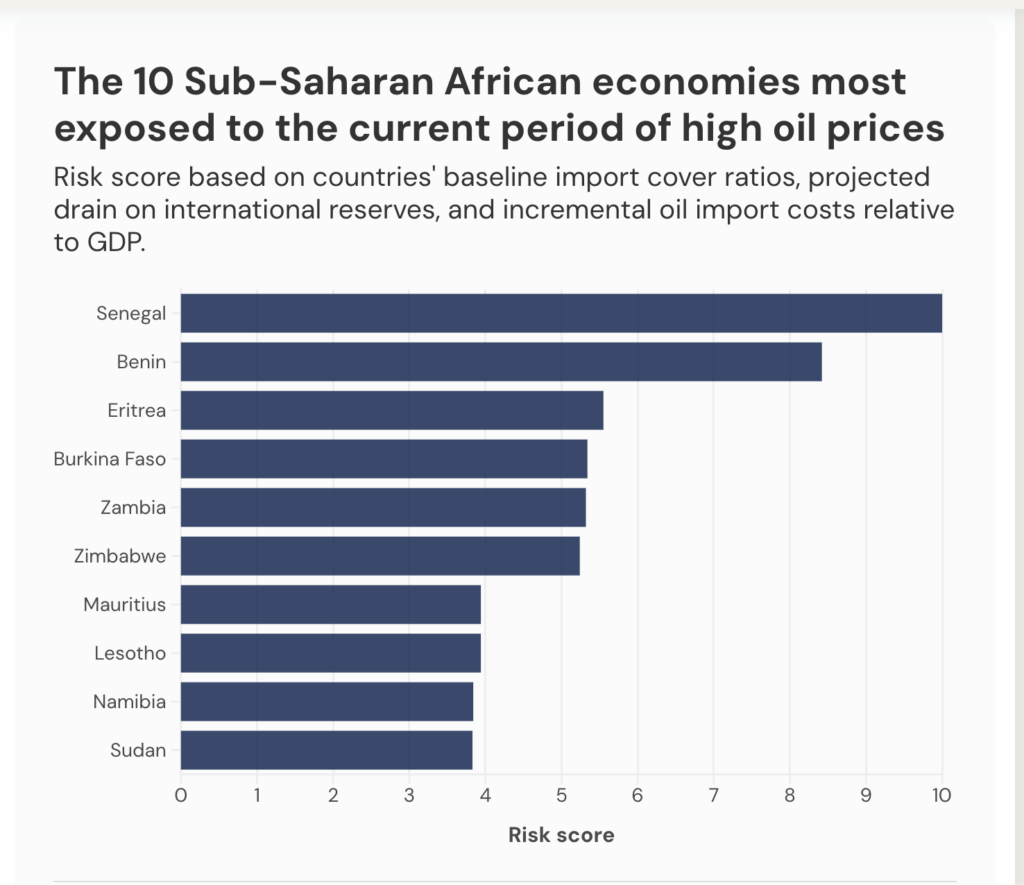
Countries such as Senegal, Benin, Eritrea, Burkina Faso, and Zambia are among the most vulnerable due to their high reliance on fuel imports and relatively low foreign currency reserves. Higher oil prices could quickly erode their ability to finance essential imports.
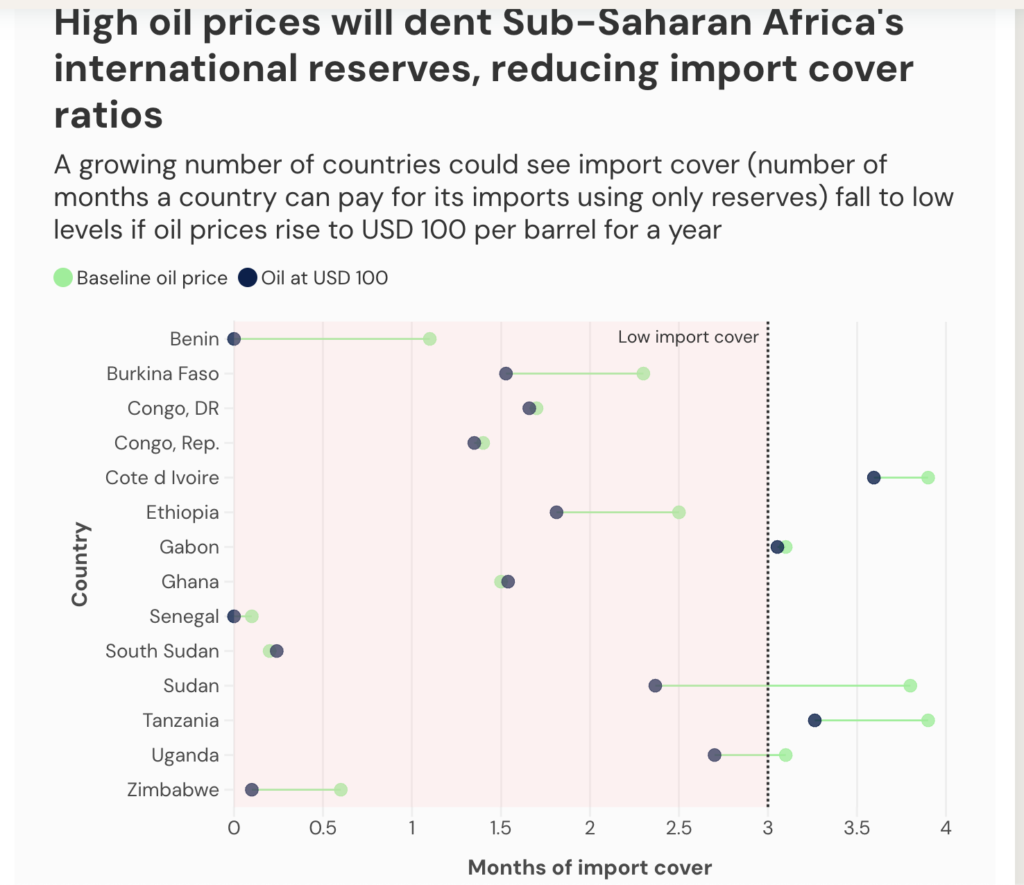
Zimbabwe, as a landlocked country that imports all of its fuel, illustrates the risk: rising prices could increase its annual oil import bill by nearly USD 195 million if consumption levels remain unchanged. With international reserves already covering less than one month of imports, the country could face growing currency pressures.
Larger economies could also feel the effects. If oil prices rise to around USD 100 per barrel, South Africa’s annual oil import costs could increase by more than USD 6 billion, potentially pushing up domestic fuel prices and inflation.
The impacts may extend beyond energy markets as higher natural gas prices, linked to disruptions in LNG supply, are also pushing up fertiliser costs. For African farmers, rising fertiliser prices could reduce usage and lower crop yields, worsening food insecurity in vulnerable regions.
Economists warn that sustained high oil prices could lead to rising inflation, higher transport and food costs, and increased borrowing costs as central banks move to stabilise their currencies.
The unfolding crisis once again highlights the risks of heavy reliance on imported fossil fuels. It is renewing calls for African countries to accelerate investment in renewable energy and electrified transport systems to strengthen long-term energy security.


