
Global biodiversity is vanishing at unprecedented rates, eroding ecosystems, destabilizing food systems, and threatening human well-being. Scientists warn that species extinction is accelerating, while habitat degradation continues across land and sea. Against this backdrop, the adoption of the Kunming-Montreal Global Biodiversity Framework (GBF) in 2022 marked a pivotal political commitment to place nature on a path to recovery.
But ambition alone will not reverse the crisis. Implementation, grounded in national policies, finance, science, and cooperation, is what will determine whether the framework delivers transformative change.
That reality shaped deliberations at the sixth meeting of the Subsidiary Body on Implementation (SBI 6) under the Convention on Biological Diversity (CBD), where delegates confronted both progress and persistent gaps.
A Crucial Implementation Checkpoint in Rome
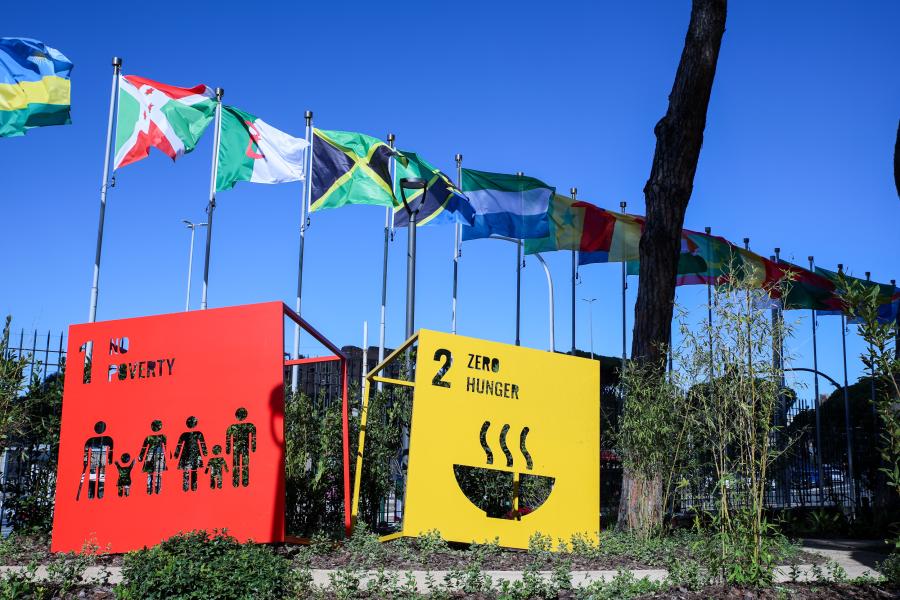
SBI 6 convened from 16–19 February 2026 at the headquarters of the Food and Agriculture Organization of the United Nations (FAO) in Rome, Italy. Approximately 600 participants attended, representing governments, Indigenous Peoples and local communities (IPLCs), civil society, women and youth groups, academia, international organizations, and the private sector.
The session focused on the mechanics of implementation, how to translate the GBF’s global targets into concrete national action.
Delegates addressed a wide range of items, from encouraging required domestic measures to ensuring the means to bridge data gaps and build capacity. Scientific and technological collaboration, access to financial resources, and improved monitoring systems were repeatedly cited as prerequisites for meaningful progress.
Central to the discussions was the review of national biodiversity strategies and action plans (NBSAPs) and national targets aligned with the GBF. These plans are the backbone of implementation, defining how countries will contribute to halting and reversing biodiversity loss by 2030.
Parties were reminded of the 28 February 2026 deadline for submission of seventh national reports. Yet by the time the meeting closed, only four had been submitted: by the European Union, Lesotho, Uganda, and Switzerland.
Delegates underscored the urgency of meeting reporting requirements. At the same time, many pointed to structural obstacles, particularly the late disbursement of funding and other resource constraints that have slowed national consultations, data collection, and technical assessments.
The message was clear: accountability depends on timely reporting, but reporting depends on predictable support.

Bracketed Text and Political Fault Lines
Despite broad agreement on the need to accelerate action, time limitations and opposing views resulted in largely bracketed recommendations across several agenda items. These included resource mobilization, the financial mechanism, scientific and technical cooperation, and collaboration with other international processes.
Some delegations emphasized the importance of cooperation and synergies with parallel frameworks, including the Agreement on the Conservation and Sustainable Use of Marine Biological Diversity of Areas beyond National Jurisdiction (BBNJ) and the Intergovernmental Science-Policy Panel on Chemicals, Waste and Pollution (ISP-CWP). Others stressed institutional mandates and raised concerns about engaging in processes where they are not formal members.
The debates revealed both the interconnected nature of environmental challenges and the institutional complexities of global governance. Calls for compromise and solidarity were frequent, with Parties expressing hope that outstanding differences can be resolved at the 17th meeting of the Conference of the Parties (COP 17), scheduled for October 2026 in Yerevan, Armenia.
The CBD at a Glance
The Convention on Biological Diversity was adopted on 22 May 1992 and opened for signature on 5 June 1992 at the Rio “Earth Summit.” It entered into force on 29 December 1993 and now counts 196 Parties.
The Convention is built on three core objectives that are conservation of biodiversity, sustainable use of its components, and fair and equitable sharing of benefits arising from the use of genetic resources.
The Conference of the Parties (COP) serves as its governing body. Decision-making is supported by three subsidiary bodies: the Subsidiary Body on Scientific, Technical and Technological Advice (SBSTTA); the SBI; and the Subsidiary Body on Article 8(j) and related provisions concerning IPLCs.
The SBI itself was established in 2014 by COP Decision XII/26, replacing the Ad Hoc Open-ended Working Group on Review of Implementation. Its mandate includes reviewing progress, recommending strategic actions to enhance implementation, strengthening means of implementation, and overseeing operational matters of the Convention and its Protocols.
From Framework to Reality
The GBF seeks to address both direct and indirect drivers of biodiversity loss—land- and sea-use change, overexploitation, pollution, invasive species, and unsustainable consumption patterns rooted in inequality. Its vision is bold: halt and reverse biodiversity loss by 2030.
Yet SBI 6 demonstrated that the journey from agreement to action remains complex.
Reporting gaps, financing delays, institutional sensitivities, and capacity constraints continue to challenge progress. At the same time, the breadth of participation in Rome, from governments to IPLCs and youth, signals that biodiversity governance is no longer confined to environmental ministries alone.
As the global community prepares for COP 17 in Yerevan, the question is no longer whether the world understands the scale of the biodiversity crisis. It is whether political will, solidarity, and sustained investment can align quickly enough to turn a historic framework into measurable recovery for nature, and, ultimately, for humanity itself.


