
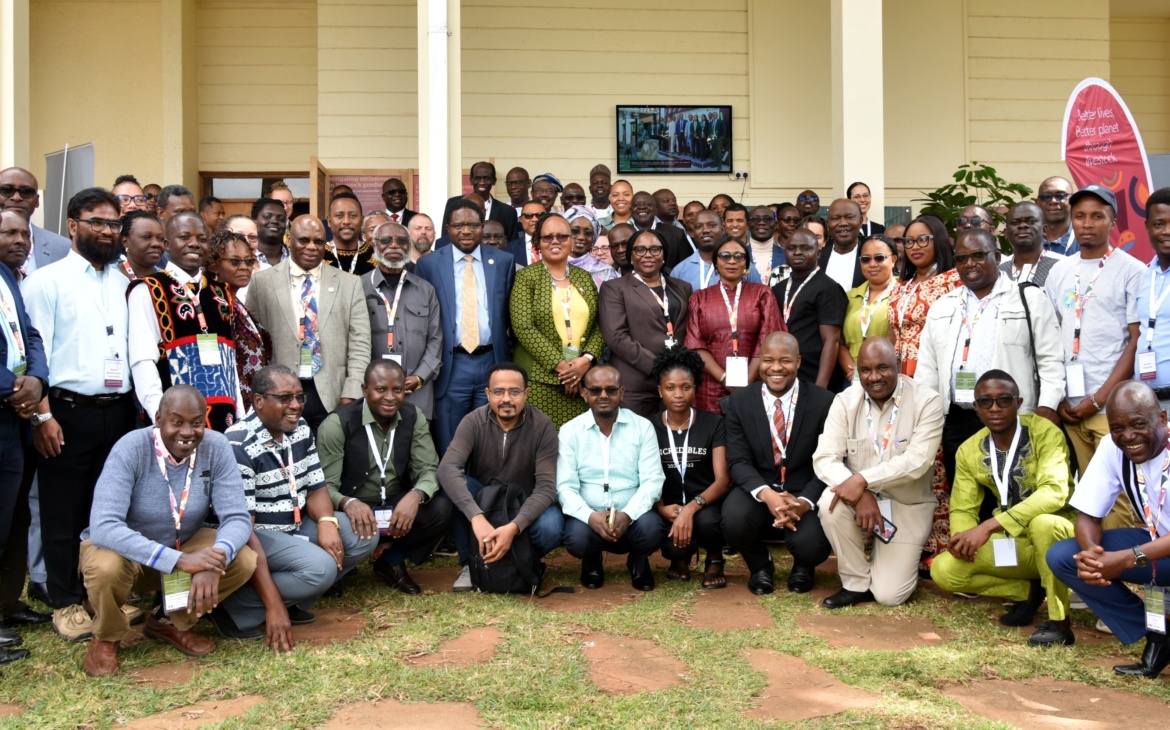
Africa’s vast livestock genetic wealth could become one of the continent’s most powerful yet underutilized climate adaptation tools, according to a newly launched open-access reference book.
Titled African Livestock Genetic Resources and Sustainable Breeding Strategies: Unlocking a Treasure Trove and Guide for Improved Productivity, the publication was unveiled by the African Animal Breeding Network (AABNet) in partnership with the International Livestock Research Institute (ILRI), the Centre for Tropical Livestock Genetics and Health (CTLGH), and the African Union Inter-African Bureau for Animal Resources (AU-IBAR).
The book consolidates decades of research on livestock genetics, breeding strategies, and adaptation pathways tailored to African production systems, positioning indigenous breeds at the center of climate resilience and food security efforts.
Why Livestock Genetics are Essential as Africa Warms
Africa hosts nearly one-third of the world’s livestock population and holds extraordinary genetic diversity: up to 180 indigenous cattle breeds, 289 goat breeds, 126 poultry types, 94 dromedary breeds, and hundreds of sheep varieties.
Many of these breeds have evolved over generations to withstand extreme heat, endemic diseases, water scarcity, and fluctuating feed availability.
In an era of intensifying climate shocks, adaptation is no longer just biological heritage; it is economic infrastructure.
Yet this diversity is under threat. Indiscriminate crossbreeding with exotic, high-yield breeds is accelerating genetic erosion. While crossbreeding can raise short-term productivity, experts warn that it often overlooks the resilience traits embedded in local breeds, traits critical for survival in harsh and low-input systems.
At the same time, productivity challenges persist. Indigenous breeds in smallholder systems often produce lower outputs per animal, leading to higher greenhouse gas emissions per unit of milk or meat produced. However, total emissions from these systems remain significantly lower than those from intensive livestock industries elsewhere.
The book argues that strategic genetic improvement, combined with better animal health and management, can simultaneously raise productivity and reduce emissions intensity, advancing both food security and climate mitigation.
“Africa’s livestock genetic diversity is not just a heritage, it is a climate and development tool,” said Appolinaire Djikeng, Director General of ILRI.
“By using science-based breeding strategies, we can improve productivity, enhance resilience, and reduce emissions intensity across African livestock systems.”

Breeding Strategies Rooted in African Realities
Central to the publication is a call for breeding objectives aligned with African production realities. The authors emphasize that genetic improvement programmes must reflect farmer priorities, market demands, and environmental constraints.
That includes:
- Prioritizing adaptive traits such as heat tolerance and disease resistance
- Aligning breeding goals with smallholder and pastoral production systems
- Integrating conservation with sustainable utilization
- Strengthening data systems and genetic evaluation capacity
- Expanding professional training in animal breeding across the continent
“Local breeds are the backbone of climate-resilient African agriculture,” said Mizeck Chagunda, Director of CTLGH. “Protecting and sustainably using these breeds through targeted breeding is essential if we are to safeguard livelihoods and meet the challenges of climate change.”
The book also explores emerging technologies, including genomic tools, reproductive technologies, and gene editing, while stressing the importance of ethical governance and practical feasibility within African systems.
Embracing a coordinated Continental Response
The launch positions AABNet and its partners as leaders in coordinating livestock genetic conservation and improvement across Africa. A key recommendation is strengthening multi-country genetic evaluation frameworks to address persistent gaps in infrastructure, human capacity, and data systems.
Beyond science, the institutions emphasize advocacy and business development to promote the uptake of improved breeding services, ensuring that smallholder farmers gain access to adapted, productive animals.
“Conserving and using Africa’s indigenous livestock genetic resources is a matter of climate and development security,” said Huyam Salih, Director of AU-IBAR. “Strategic investments in genetic characterization, breeding programmes, and farmer-centered approaches will drive sustainable, resilient livestock systems for Africa’s future.”
Ed Rege, Chair of AABNet’s Executive Committee, described the book as a foundational text for professionalizing animal breeding across the continent and combating genetic erosion.
As climate variability intensifies across the Horn of Africa, the Sahel, and Southern Africa, livestock systems face mounting pressure from drought, disease outbreaks, and shrinking grazing lands. In this context, safeguarding genetic diversity is no longer simply a conservation agenda; it is a resilience strategy.
By positioning indigenous livestock breeds as assets rather than relics, the publication reframes Africa’s genetic wealth as a driver of sustainable development, emissions efficiency, and long-term food security.
The book is available as an open-access resource, offering policymakers, researchers, and practitioners a practical roadmap for strengthening livestock systems in a warming world.


