
What happens when extractive industries meant to power economic growth undermine a people’s right to water? This is not a hypothetical question for over 2.5 million people living in the coal-dependent communities in Mpumalanga. Every day, people are forced to live without access to safe water. Industries, such as agriculture and tourism in the region, are unable to thrive due to pollution and inconsistent access to quality water. When water systems collapse, so do the circumstances required for alternative livelihoods to emerge.
This is not simply a failure of state infrastructure, but a reflection of how decades of ongoing pollution have weakened water governance and eroded the systems that sustain both life and livelihoods. Water is not only a necessary condition for human life, but also crucial for economic possibility, essential for shaping prospects for work, production, and economic diversification. What is unfolding is not an accidental scarcity, but an economic crisis rooted in water governance implementation gaps leading to water service failures.
Monitoring water service provision and regulating water services requires intergovernmental coordination as it presides across several government institutions in the country. In 1997, South Africa enacted the Water Services Act to establish a legislative framework in which section 155 of the Constitution would be administered. The aim was to give the municipalities a degree of autonomy and agency over the local provision of water services, all within the legal perimeters of the national legislation. This has resulted in an overall weak regulatory system often requiring intervention, although temporary, from national government.
The enforcement thereof has been fragmented and accountability scattered. Municipalities in the region have had limited technical and financial capacity to manage water pollution, resulting in exacerbated water shortages. In addition to managing the aging infrastructure disabling municipalities from treating the water effectively and ensuring they consistently provide quality water, municipalities are surrounded by communities who have no economic means to pay for the services.
Over the years, imminent gaps in policy implementation reveal critical flaws in state pre-ordained non-separation of Water Service Authority (WSA) and Water Services Provider (WSP) functions. Municipalities have had the executive authority to regulate and provide water, and the fundamental issue here is the lack of accountability and transparency.
The introduction of Independent Water Providers (IWPs) is bringing in a new dawn of administration characterised by prescribed minimum licensing requirements means additional requirements with particularised skills. How does the transition justly take effect on the ground when municipalities are financially and technically challenged with the general state administration issues in addition to ongoing pollution?
Over the past two decades, research and civil society investigations alike have proven that the cost of treating toxic water from acid mine drainage is a financial burden for municipalities. Alarming mismanagement of water and finances has caused declining municipal performance, according to the Blue, Green and No Drop Report. A combination of lack of competency to enforce regulations on the ground and institutional gaps in oversight services has become acceptable in the public arena; cause-and-effect reactions are decades behind to the extent that a 1997 Act is tabled for amendment in 2025.
These dynamics converge acutely where environmental degradation and industry demand stress from coal mining intersect with institutional collapse in water service policy and water service delivery. Pemmy Majodina, Minister of the Department of Water and Sanitation, proposed this amendment aimed at clarifying functions and strengthening authority between national and local governance across the country.
With growing water demand, growing debt and ecological degradation, it all boils down to municipalities needing to implement stringent measures to manage revenue lost and operational inefficiencies. Meanwhile, ACCORD rightfully points out that this is a “continuing environmental problem for future generations in South Africa.” There is a lack of corporate accountability and state transparency concerning the long-term impacts of water mismanagement in communities during and post coal-mining.
Attempting to address systematic water service failures through stringent utility model and revenue collection will only lead to the further corporatization of water systems and further isolate communities who are economically marginalised. If the state decides to tighten regulation by introducing essential water service provider licencing requirement but fails to address suffocating economic prospects in the process, ultimately, we would burden communities with the actualizing of this change.
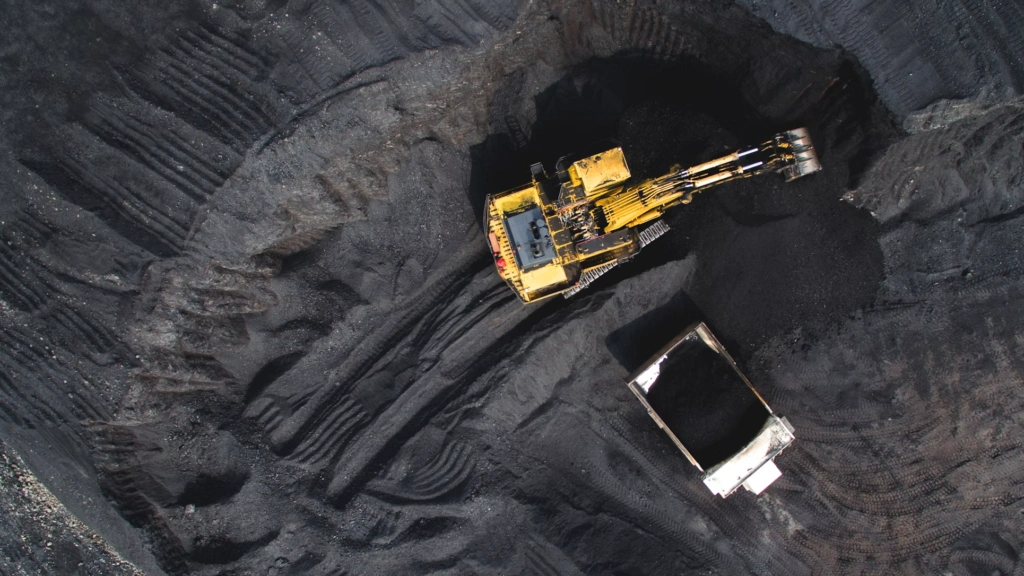
Meanwhile, abandoned coal mines leave legacies of unrehabilitated land pollution with acid mine drainage undetected and unaddressed, continuing unhindered damage to strained water infrastructure. In areas such as Komati and Hendrina, apparently drastic economic and ecological declines from coal mine closures have actualized in sudden virtual ghost towns.
Coal is on the decline globally, and a fossil-free South Africa is on the horizon. Lingering arguments about how coal contributes significantly to the economy’s GDP, regardless of the water wasted in the process and the municipalities unable to manage it, are not counting the number of bodies dropping due to pollution nor the stifling of economic diversification.
This is concerning because we are over-reliant on one dying industry that is taking critical aspects of human life and economic survival down with it. Secondly, as a metric tool used to measure economic growth, GDP has historically neglected to measure tangible economic corrosion in the everyday lives of people on the ground. The value created by workers in the industry hardly translates into local investments, nor does it improve living conditions, begging the question “whose economy is it anyway?” In the Economy is Care dialogue series, New Economy Hub Director, Sekoetlane Phamodi argues that real economic progress should be measured by how society values people.
The practicality of which is made tangible in the strength of its public-serving system, such as health, education and even water. Communities such as Masakhane have long been vocal about the lack of direct investment from the coal mine into their local economies. According to the community, the presence of the mine has not built evident environmental and socio-economic value.
Limited by employment opportunities as a result of demand for specific specialised skills and limited economic opportunities, the community’s ability to participate meaningfully in their local economy is constrained. This places a direct strain on the local municipality’s ability to collect revenue in the form of rates to service its communities and for economic diversifications.
So, what does the future hold in economic opportunities in the wake immanent large scale mine closures? Truthfully, water as the point of entry, it reveals what has long been ignored: the possibility of just transition stands to be hindered in localities where basic conditions of life are already compromised. SA’s JET framework recognises the need to build resilience against water scarcity and climate impacts, but treats water largely as a supporting condition rather than a crucial constraint on local economic transition. For the transition to be truly just, it must be built from the ground up and be rooted in local realities.
Economic diversification must start from the material conditions on the ground and scale towards the national diversified economy. This will require functioning water infrastructure and reliable water systems, which are the cornerstone of climate-resilient economies. Without that foundation, economic diversification becomes a rhetoric rather than strategy.
The South African just transition and economic development pathways will not be won from Pretoria alone, but must be co-designed with communities, grounded in public education, and co-governed. We need Intergovernmental coordination urgently to ensure ongoing monitoring and regulate non-compliance against both municipal and industrial polluters. Business must commit financial resources to help the collapsing municipality in treating water while investing in localised green industrialisation.
If local government lacks technical capacity, financial room, political legitimacy, and meaningful community participation, then the transition from coal will not deliver justice. It will simply redistribute abandonment at every ecological level. Securing local economies in the coal region is crucial, but without access to reliable, quality water, we cannot live.
Author Profile