Global ocean warming continued unabated in 2025, driven by the persistence of greenhouse gases and a decline in aerosol pollution. This trend reflects the long-term accumulation of heat within the climate system, even as conditions evolved toward a La Niña phase during the year.
A critical indicator of this warming is that Ocean Heat Content (OHC)is approximately 90% of the excess heat generated by global warming, which is stored in the ocean.
From 2024 to 2025, the heat in the upper 2000 meters of the global ocean increased by ∼23 ± 8 Zettajoules, an amount of energy roughly 200 times the world’s total electricity generation in 2024, according to a study led by Lijing Cheng of the Institute of Atmospheric Physics at the Chinese Academy of Sciences.
This heating is pervasive since regionally, about 33% of the global ocean area experienced one of its top three warmest years on record (since 1958), while about 57% fell within the top five. Affected basins include the tropical and South Atlantic Ocean, the Mediterranean Sea, the North Indian Ocean, and the Southern Oceans.
World Meteorological Organization (WMO) Secretary-General Celeste Saulo stated that these record ocean and atmospheric temperatures “helped fuel extreme weather, heatwaves, heavy rainfall, and intense tropical cyclones,” underlining the vital need for robust early warning systems.
The most visible and devastating impact is on coral reefs, as these consequences of heat are already fueling extreme weather. From January 2023 through much of 2025, 84% of the world’s coral reefs were affected in the most intense global bleaching event ever recorded.

Bleaching, primarily caused by high ocean temperatures, pushes reefs toward a tipping point estimated at 1.2°C of global warming.
Bill Hare, CEO and Senior Scientist at Climate Analytics, remarked that this “massive and unprecedented” event signals that the point of no return for coral reefs “has been reached or is extremely close.”
For Small Island Developing States, he emphasized, the loss of reefs would directly jeopardize food, economic, and territorial security.
“We must act now to reduce emissions and set the world on a path back to well below 1.5°C,” Hare added, “to prevent further harm to our coral reefs and other crucial ecosystems.”
Author Profile

-
Seeker.
Inspire AFRIKA.
Latest entries
 Agriculture14 October 2026Africa’s Food Systems Future Depends on Listening to Farmers
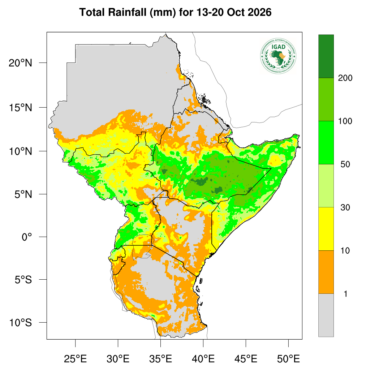 Weather Forecasts13 October 2026Rain and Rising Temperatures Forecast Across the Greater Horn of Africa
 Climate9 October 2026Beyond Negotiations: Africa Expects Concrete Outcomes from Antalya
 Animals7 October 2026In Kajiado’s Drylands, Collective Selling of Small Herds Is Changing the Livestock Trade