How one fellow’s frustration became a 30-member alliance and helped put conservation agriculture into national policy. A journey from
The soil problem, and a fix that can’t wait
On Rwanda’s steep, rain-lashed hillsides, the country’s most valuable resource is quietly running downhill. The scale of the problem is stark. Rwanda loses an estimated 27 million tonnes of topsoil every year to erosion, according to a Rwanda Water Resources Board assessment carried out with the International Union for Conservation of Nature (IUCN).
The national average is about 25 tonnes of topsoil per hectare per year, while the economic value of the lost soil is estimated at around 810 billion Rwandan francs annually.
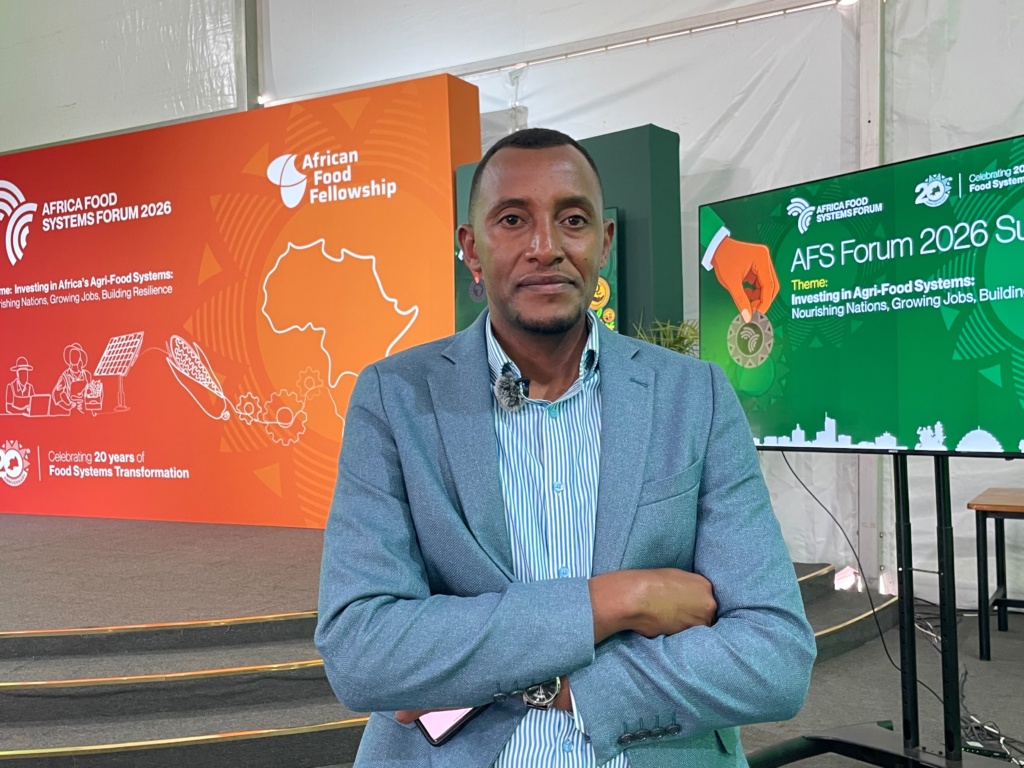
For Makuza Richard, during a conversation with Climate Lens News on the sidelines of the Africa Food Systems Forum in Kigali, Rwanda, the problem has become more than a statistic.
The Climate Smart Agriculture lead for the World Food Programme (WFP) in Rwanda has spent years advocating for conservation agriculture, only to find that having a technical solution was not enough. Scaling it required farmers, development organisations and, ultimately, government policy to move in the same direction.
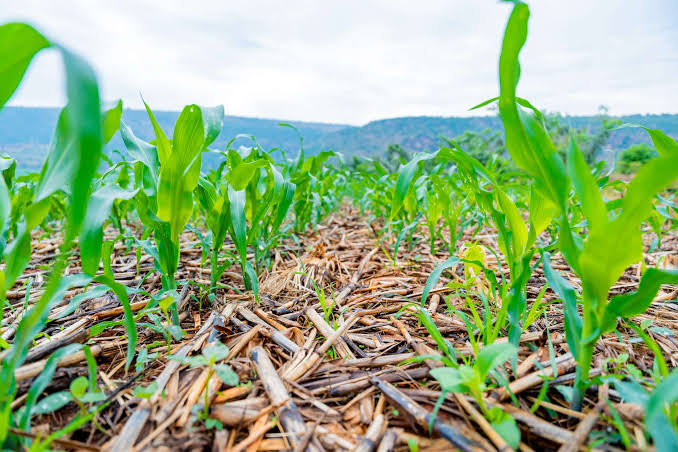
Makuza’s answer is conservation agriculture (CA), built around three principles. The first is minimum soil disturbance. “Instead of ploughing the whole field, you only till planting basins, which leaves the rest of the land intact,” he explains.
The second is permanent soil cover, while the third is crop diversification. The aim is to protect the soil, retain moisture and build healthier farming systems rather than repeatedly disturbing the land.
The approach is increasingly backed by evidence from Rwanda. In WFP-supported demonstration plots during the 2024A season, conservation agriculture recorded productivity increases of 28 per cent for maize, 54 per cent for beans and 37 per cent for potatoes compared with conventional agriculture.
A separate 2025 study of 222 farms in Rwanda’s Kirehe District found that conservation agriculture was associated with 20 per cent higher maize yields and 40 per cent higher net profits, although farmers also faced higher overall production costs, particularly for fertiliser, seed, weeding and irrigation.
For Makuza, these results illustrate why the approach matters in a country where agriculture remains highly exposed to soil degradation and climate shocks. “Conservation agriculture is really a game changer to the challenges that we have in Rwanda.”
Although there is a catch. Practised in its pure form, CA can take time to deliver its full benefits, particularly when introduced on already degraded land. “We’re starting from a minus,” Makuza says.
For farmers already struggling to feed their families, waiting several years for benefits is difficult. “You need to feed your people today, and farmers need to eat today.”
That is where Rwanda’s partners have increasingly promoted CA+, combining the core principles of conservation agriculture with measures such as integrated soil fertility management, appropriate spacing and pest and disease management.
A 2024 conservation-agriculture meeting involving government and development partners identified the CA+ approach as combining minimum soil disturbance, permanent soil cover, crop diversification and integrated pest management. Participants also called for a common understanding of the terminology and for stronger coordination under the Ministry of Agriculture.
Fourteen organisations, one voice
The technical case was only part of the challenge. Until 2023, organisations promoting conservation agriculture were often working alongside one another rather than as a coordinated movement. Makuza began phoning them. WFP, SNV, FAO, the Mennonite Central Committee, One Acre Fund and others were among the organisations involved in the emerging effort.
Makuza had advocated for conservation agriculture between 2015 and 2021 without securing meaningful government buy-in. He credits the African Food Fellowship, which he joined in 2022, with helping him shift from pursuing the issue largely as an individual advocate towards building a collective effort.
The fellowship’s own documentation describes Makuza’s approach as combining work with lead farmers, training local authorities and agricultural officials, and building a national coalition of civil-society organisations to influence public decision-making on conservation agriculture.
In May 2023, fourteen organisations formally launched the Regenerative and Conservation Agriculture Coalition (RCAC). The organisations had each seen conservation agriculture work in different parts of Rwanda. But scaling those efforts presented another challenge.
“You cannot scale when you don’t have policy support because you need the government to own the process,” Makuza says.
There was also a terminology problem. Organisations were using different terms and approaches, including “regenerative conservation agriculture and others”, making it harder to present government with a unified position.
The harder challenge was securing commitment at scale. “Within the coalition, you’re not measured if you’re working for WFP or another organisation. Your specific small project measures you,” Makuza says.
What began to bring the organisations together was a shared objective: influencing a national policy that all of them were interested in seeing succeed. “Slowly by slowly, people started seeing that the collective is important, and they started dedicating time and resources to the coalition.”
What began with 14 organisations has since grown into a coalition of 30 members. Its work unfolded alongside a growing government commitment to conservation agriculture.
In December 2024, Rwanda’s Ministry of Agriculture and Animal Resources (MINAGRI) described conservation agriculture as a pillar of the country’s Fifth Strategic Plan for Agriculture Transformation, or PSTA 5.
PSTA 5 sets a target of increasing land under conservation agriculture from 1,173 hectares in 2024/25 to 100,000 hectares in 2028/29, with implementation costed at 2.4 billion Rwandan francs.
The coalition’s work has also contributed to a broader effort to harmonise extension and implementation around conservation agriculture, and the ambition has since grown.
A 2026 initiative involving MINAGRI and the Rwanda Institute for Conservation Agriculture is now working towards 600,000 hectares under conservation agriculture by 2029, beginning with 100,000 hectares and expanding through subsequent agricultural seasons.
Makuza describes the scale-up as more ambitious than the coalition initially anticipated. “The government has gone even way more ambitious than we thought.”
From policy to the field, and a call to plan ahead
With policy support secured, the coalition’s focus is shifting towards implementation: coordinating partners, avoiding duplication and working through existing government structures.
“We avoid parallel structures, rather feed into the structures and improve them with the government,” Makuza says.
The policy commitment is now being translated into training and extension. WFP reported that in 2024 it trained 74 government extension agents and 120 cooperative leaders and lead farmers in conservation agriculture and other good agronomic practices. Those trainees went on to share the knowledge with more than 6,000 smallholder farmers.
Other partners are also building the frontline capacity needed for national expansion. Yet major challenges remain on the farm. “How do they get the soil cover materials? It’s a challenge. How do they get the inputs they need?” Makuza asks.
Conservation agriculture requires farmers to change established practices, while some of its benefits depend on sustained application over time. The transition can also involve additional costs, as the Kirehe study found, even where the system ultimately produced higher yields and profits.
For Makuza, however, the lessons extend beyond farming techniques. Climate resilience, he argues, is too often approached reactively, after a shock has already occurred. Such responses can be “very costly, very damaging.”
Rwanda’s food-security challenge makes that concern particularly important. WFP’s current country strategy says food insecurity affects 17 per cent of households, while 83 per cent of households in rural areas rely on subsistence agriculture.
“When a shock happens, you can easily have 20, 30 per cent of people who can easily drift back to food insecurity,” Makuza says.
His response is to put greater emphasis on foresight: planning, identifying risks before they materialise and working backwards to prepare communities. “You use fewer resources, you really minimise the impacts of the shocks,” he says.
That thinking has since taken him beyond Rwanda. He has led a foresight training in Kenya and convened a pilot workshop involving the coalition and the Fellowship’s climate-smart agriculture group.
For Makuza, the broader lesson is that better nutrition, stronger livelihoods and a protected environment will not come from a single intervention. They require development actors to bring their solutions together rather than treating them as separate projects.
“Let’s bring all these innovations together. Let it not be a side thing, but rather a main thing of collaboration.”