
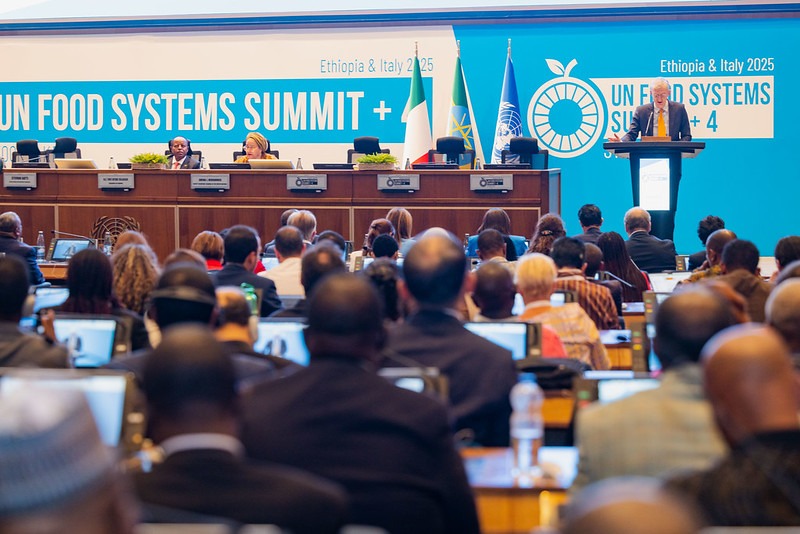
As the second UN Food Systems Summit Stocktake (UNFSS+4) concluded in Addis Ababa, one of the key highlights was the launch of the 2025 State of Food Security and Nutrition in the World (SOFI 2025) report.
The findings underscore a persistent global challenge: while hunger levels have declined marginally, deep regional disparities and economic shocks continue to threaten food security.
According to the report, 673 million people, 8.2% of the global population, faced hunger in 2024, down slightly from 8.5% in 2023 and 8.7% in 2022.
However, the decline was not uniform, since hunger continued to rise in several parts of the world, particularly in subregions of Africa and Western Asia, where an estimated 638 to 720 million people experienced food deprivation.
Africa remains the hardest-hit region, with over 20% of the population, approximately 307 million people, facing hunger in 2024. In Western Asia, 12.7% of the population, or more than 39 million people, were similarly affected.
FAO Director-General Qu Dongyu emphasized the limited time for addressing these gaps witnessed and shown by the SOFI report.
Qu pointed out that SOFI 2025 is a critical reminder of the urgency to intensify efforts to ensure access to sufficient, safe, and nutritious food for all, since progress is uneven and there is a need to work collaboratively and innovatively in tackling the challenges faced by vulnerable populations.
SOFI 2025 Shows Regional Gains amidst Persistent Challenges
While global hunger has slightly declined, the picture varies by region. In Asia, the prevalence of undernourishment (PoU) fell from 7.9% in 2022 to 6.7% in 2024, equating to 323 million people.
In Latin America and the Caribbean, PoU decreased to 5.1%, down from a peak of 6.1% in 2020, impacting about 34 million people.
Meanwhile, the global prevalence of moderate or severe food insecurity, a broader indicator encompassing inadequate access to food at any point during the year, also saw a slight dip, from 28.4% in 2023 to 28.0% in 2024, still affecting 2.3 billion people.
Inflation, Conflict, and Climate: A Triple Threat
The report also highlights the effects of post-pandemic economic responses, the war in Ukraine, and climate shocks, which have triggered food price inflation and disrupted recovery.
Global food inflation peaked at 13.6% in January 2023, more than five percentage points above the overall inflation rate. The impact was particularly severe in low-income countries, where food price inflation reached 30% in May 2023.
WFP Executive Director Cindy McCain expressed concern over declining support, pointing out that hunger remains at alarming levels, yet the funding needed to tackle it is falling.
She revealed that last year, WFP assisted 124 million people, even though this year, funding cuts of up to 40% mean tens of millions may lose access to this lifeline.
IFAD President Alvaro Lario called for renewed investments, urging that in times of rising food prices and disrupted value chains, there is an urgency for an increase in investments in rural transformation. Adding that these are not only essential for food security but are also vital for global stability.
Despite rising costs, the number of people unable to afford a healthy diet fell from 2.76 billion in 2019 to 2.6 billion in 2024. Yet disparities persist. In low-income countries, that number increased from 464 million to 545 million over the same period. In lower-middle-income countries (excluding India), the figure rose from 791 million to 869 million.
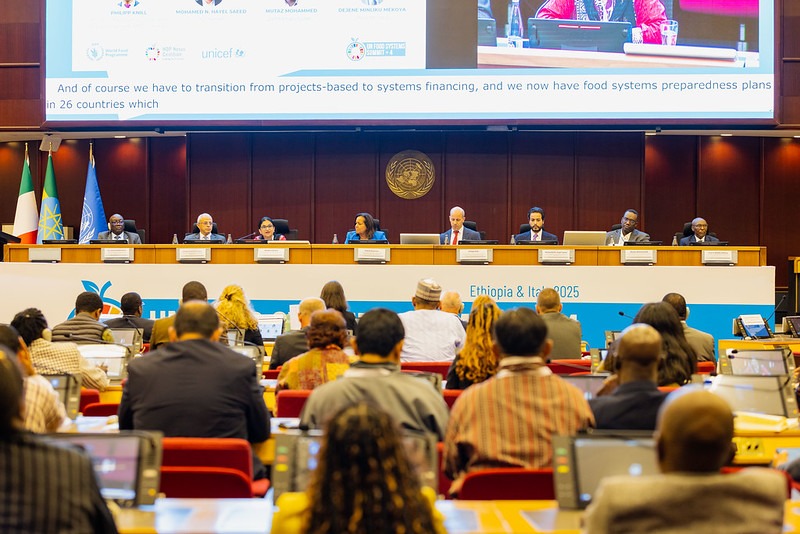
WHO Director-General Dr. Tedros Adhanom Ghebreyesus noted that the report shows encouraging progress but also highlights where gaps remain. As such, it emphasized the need to direct efforts toward ensuring that everyone can access a healthy, nutritious diet.
Nutrition Targets: Gains in Some Areas, Losses in Others
SOFI 2025 also tracks global progress on nutrition, showing a mixed record:
- Stunting among children under five declined from 26.4% in 2012 to 23.2% in 2024.
- Wasting dropped slightly from 7.4% to 6.6%, while overweight in children remained largely unchanged at 5.5%.
- Exclusive breastfeeding for infants under six months rose significantly, from 37.0% in 2012 to 47.8% in 2023.
- Adult obesity increased from 12.1% in 2012 to 15.8% in 2022.
- Anaemia among women aged 15–49 rose to 30.7% in 2023, up from 27.6% in 2012.
- A new SDG indicator shows that only one-third of children aged 6–23 months and two-thirds of women in the same age range meet the minimum dietary diversity.
UNICEF Executive Director Catherine Russell emphasized the urgency of protecting children: “Rising food prices could deepen nutrition insecurity for millions of families. We must act urgently to ensure children’s development is not compromised.”
Policy Recommendations
The report calls for a combination of short- and long-term strategies to tackle food insecurity:
- Targeted and time-bound fiscal measures, such as social protection programs.
- Transparent monetary policies to contain inflation.
- Strategic investments in agricultural research, rural infrastructure, transport, and market systems to build resilience.
The SOFI 2025 report offers a sobering yet actionable view of global food and nutrition security. While some indicators show marginal improvement, significant challenges remain, particularly in Africa, Western Asia, and low-income countries, where economic shocks, inflation, and unequal access continue undermining progress.
The message from Addis Ababa is clear: without collective action, the world risks falling short of SDG 2, Zero Hunger, by 2030.


