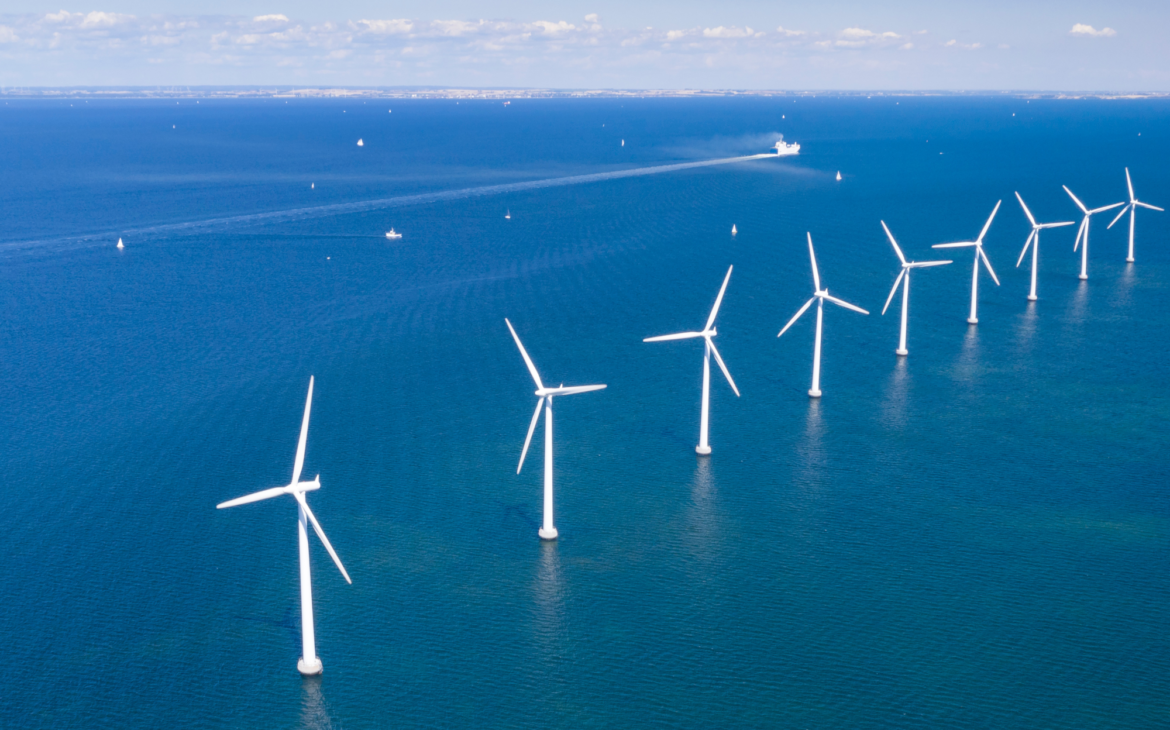
Africa could be sitting on one of the world’s largest untapped clean energy frontiers, with new research estimating up to 6,750 gigawatts (GW) of offshore wind potential, enough to reshape the continent’s energy systems, generate millions of jobs, and unlock more than USD 1 trillion in economic value.
The central question is no longer potential. It is whether finance, infrastructure, and political will can align quickly enough to unlock what lies offshore.
Africa’s coastline stretches more than 30,500 kilometres across the Atlantic, Indian, and Mediterranean seas. Along these waters, strong and persistent wind systems sweep across vast marine zones, creating conditions suitable for large-scale offshore energy generation.
Yet for decades, this resource has remained largely absent from global energy planning.
Even partial development could be transformative. Harnessing just 5% would deliver about 338 GW of new capacity, more than doubling current supply. It would also generate around 1,332 terawatt-hours (TWh) annually, enough to meet a significant share of projected demand growth through 2040 while reducing reliance on imported fossil fuels.
The economic upside is equally striking: nearly 6 million jobs, over USD 1 trillion in value, and substantial avoided climate and environmental losses.
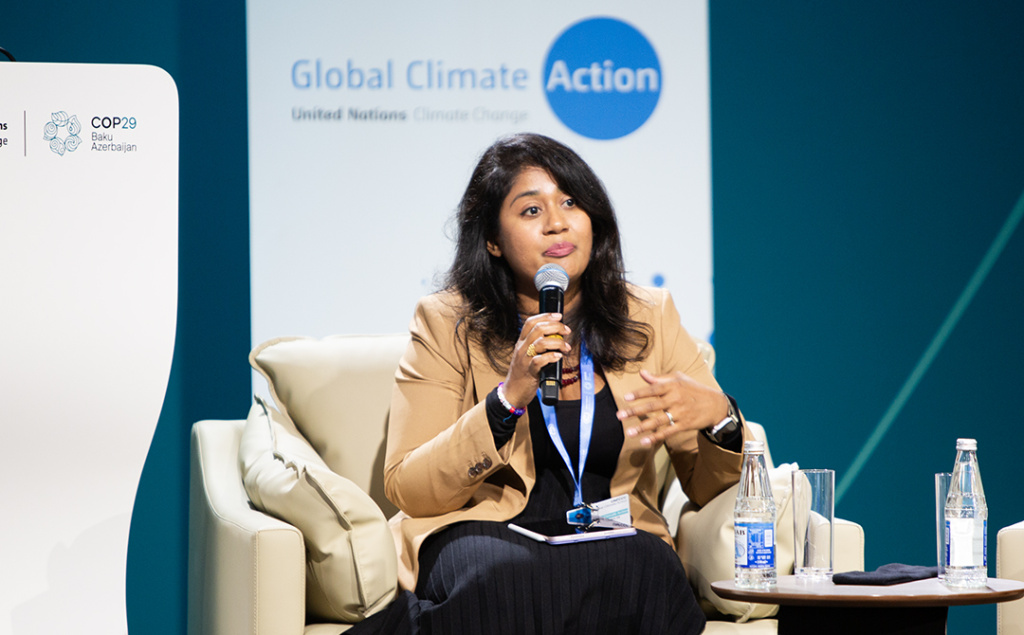
According to Shamini Selvaratnam, Director for International Climate and Clean Energy at Ocean Conservancy, the green economy and the blue economy are interconnected. Hence, this connection further debunks the story of how the blue economy has been perceived in Africa as mainly a tourism and shipping aspect.
“With this connection, there could be a sustainable use of resources within these ecosystems to address issues like increasing energy insecurity, create job opportunities and improve livelihoods,” said Shamini.
A Continent Lagging in a Global Boom
Offshore wind has rapidly evolved into a core pillar of the global energy transition, with installed capacity reaching about 92 GW by 2025, nearly tripling in five years.
Africa, however, remains largely outside this expansion. The continent receives less than 2% of global renewable energy investment, despite its vast resource base.
Most offshore wind development has been concentrated in Europe and Asia, where early investments in ports, transmission systems, supply chains, and policy certainty enabled rapid scaling.
Africa’s offshore sector, by contrast, remains in its early stages. Yet the geography is compelling.
Southern Africa holds some of the continent’s strongest offshore wind corridors. South Africa alone is estimated to have 1,632 GW of technical potential, capable of generating around 6,434 TWh annually, nearly 30 times its current electricity demand.
Namibia follows with 1,259 GW, positioning it as a potential regional clean energy exporter. Morocco and Libya also hold significant Mediterranean offshore resources with long-term regional integration potential.
Along the Indian Ocean, Somalia, Madagascar, Kenya, and Mauritius show strong prospects for floating offshore wind, particularly in deeper waters unsuitable for fixed-bottom systems.
Kenya is emerging as a key entry point in this transition. The country has an estimated 68 GW of floating offshore wind potential and 9 GW of fixed-bottom capacity, according to World Bank assessments, remarkable for a system with just 3.8 GW of installed electricity capacity.
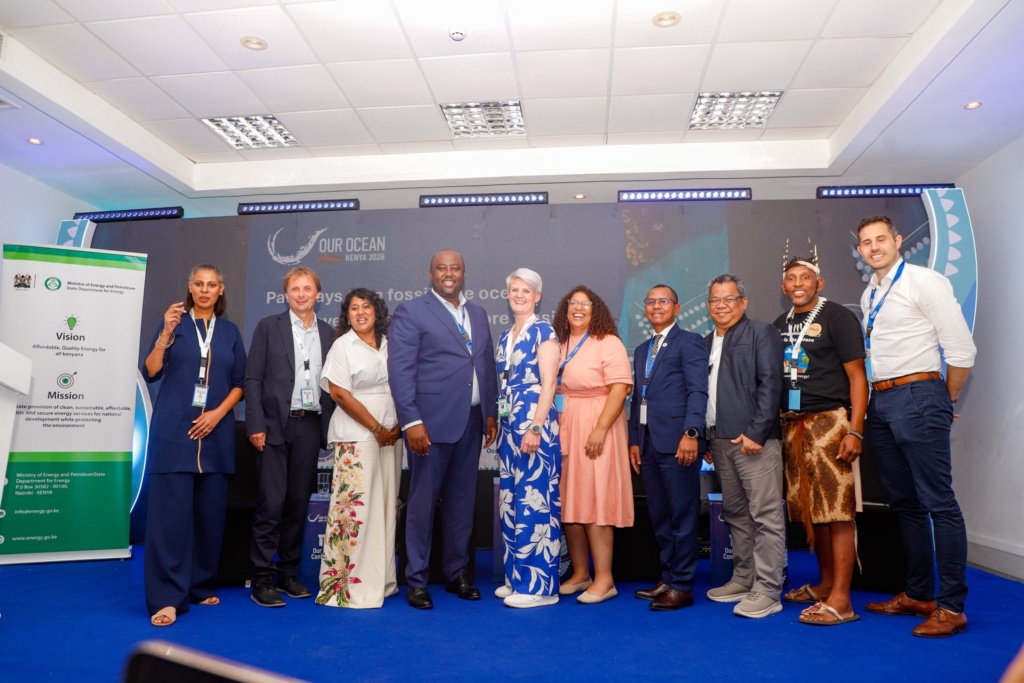
This momentum is now extending into international cooperation. Kenya’s admission to the Global Offshore Wind Alliance (GOWA), announced during the Ocean Conference 2026 in Mombasa, marks a major milestone for its energy transition and makes it the first African country to join the alliance.
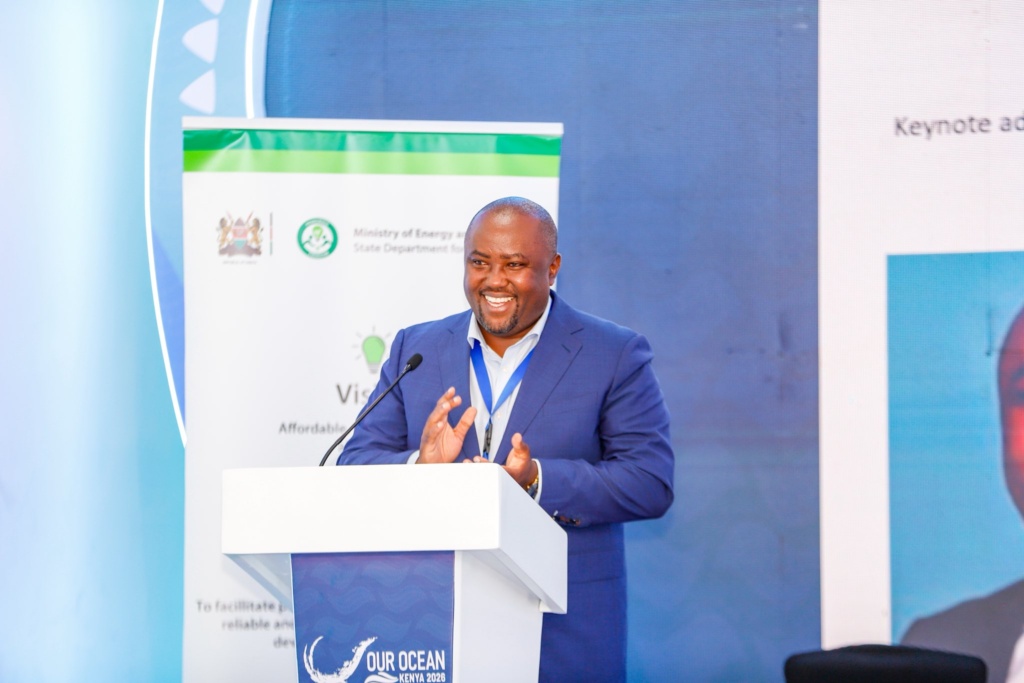
Speaking at the launch, Principal Secretary for Energy, H.E. Alex Wachira, said the development strengthens Kenya’s global partnerships and clean energy ambitions.
“This is a huge win for Kenya and a significant milestone for Africa’s ocean-climate agenda, opening new opportunities to unlock the potential of offshore wind as a clean energy solution.”
Shamini Selvaratnam, in an interview with Climate Lens News, highlighted Kenya’s entry into GOWA as a defining moment for Africa’s ocean-energy future.
“Kenya joining the Global Offshore Wind Alliance as the first country on the African continent in the offshore wind alliance is a significant move. I hope Kenya can lead by example on the continent in showing that ocean protection can also go hand in hand with the energy transition, job creation and protecting our natural assets,” said Shamini.
Her remarks reflect a growing convergence between ocean governance, clean energy planning, and climate policy in coastal African states.
Beyond Power: Jobs and Industrial Transformation
Offshore wind is increasingly seen not only as an energy solution, but as an industrial development strategy. The World Bank estimates that every USD 1 million invested creates about 25 jobs, significantly higher than fossil fuel investments.
These jobs span manufacturing, marine engineering, port logistics, transmission systems, environmental services, and long-term operations.
“Through GOWA, Kenya will benefit from global expertise, policy knowledge, investment networks, and technical cooperation to support the assessment and future development of offshore wind resources along our coastline,” stated PS Wachira.
Each gigawatt installed adds an estimated USD 3.2 billion in broader economic value, strengthening coastal industrial ecosystems.
This aligns with the African Union’s blue economy agenda, which projects that sustainable ocean-based sectors could generate up to USD 405 billion and create 57 million jobs by 2030.
“Offshore wind represents a powerful pathway for Africa to advance climate action, strengthen energy security, drive sustainable development, and support a just transition while harnessing the immense potential of our oceans,” said Kenyan PS Wachira.
Climate Stakes Along the Coastline
The economic case strengthens further when climate impacts are considered. A 338 GW offshore wind buildout could avoid around 690 million tonnes of CO₂ emissions annually.
Studies linking emissions to ocean degradation estimate that avoided emissions of this scale could reduce global ocean-related losses by up to USD 50 billion annually by 2030, including damage to fisheries, coral reefs, mangroves, and coastal infrastructure.
For African coastal states already facing climate stress, the risks are escalating. Sea levels along parts of the East African coastline are rising at about 5 millimetres per year, above the global average.
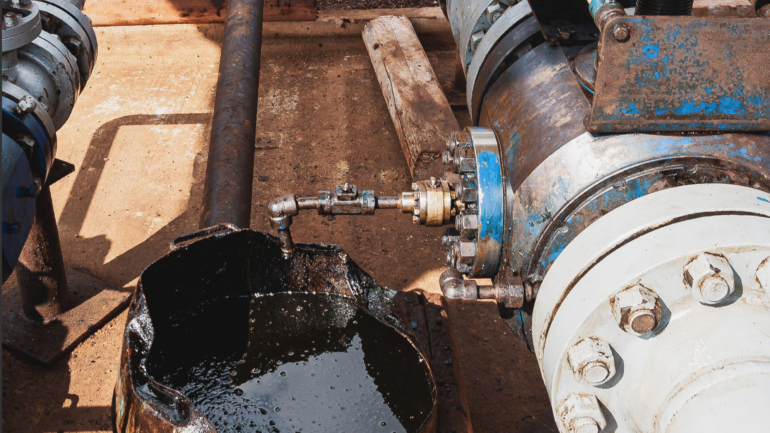
At the same time, oil pollution continues to damage ecosystems in regions such as the Niger Delta, where extensive mangrove loss has already been recorded.
In this context, offshore wind is emerging as both an energy solution and a resilience strategy. Despite strong potential, Africa’s offshore wind sector faces significant structural constraints. A 2025 World Bank report identifies four key enablers: long-term strategy, stable policy frameworks, effective regulation, and supporting infrastructure.
Across most coastal states, these remain incomplete. Many countries still lack dedicated offshore wind policies, marine spatial planning systems, and clear permitting frameworks. Electricity grids are often not ready for large-scale renewable integration.
Ports capable of supporting offshore installation and maintenance remain limited, while high financing costs continue to slow early development.
As the Global Wind Energy Council notes: “A coordinated effort between governments, industry and investors was key to balancing risks and benefits in areas where offshore wind has been successfully developed.”
The International Renewable Energy Agency (IRENA) similarly points to regional platforms, such as the Africa Clean Energy Corridor, as critical to scaling cross-border renewable integration.
Without coordinated investment in infrastructure, supply chains, and policy certainty, Africa risks missing another global energy transformation cycle.
The Blue Trillion
Africa’s offshore wind opportunity is no longer theoretical. Evidence from the University of Southampton, the World Bank, IRENA, and global industry bodies converges on a single conclusion: the continent holds one of the world’s largest untapped renewable energy frontiers.
Bridging the gap between potential and deployment will require coordinated action from governments, development finance institutions, regional bodies, and private investors. It will also require long-term policy stability, affordable finance, and deliberate industrial planning.
Although the scale is increasingly unavoidable, unlocking just 5% of Africa’s offshore wind potential would more than double electricity generation capacity, create nearly 6 million jobs, unlock over USD 1 trillion in economic value, and significantly strengthen coastal resilience.
The blue trillion is no longer a forecast. It is a decision waiting to be made, just offshore.
Also Read: Oil won’t Save Africa, Inside the big Push for a Just Transition