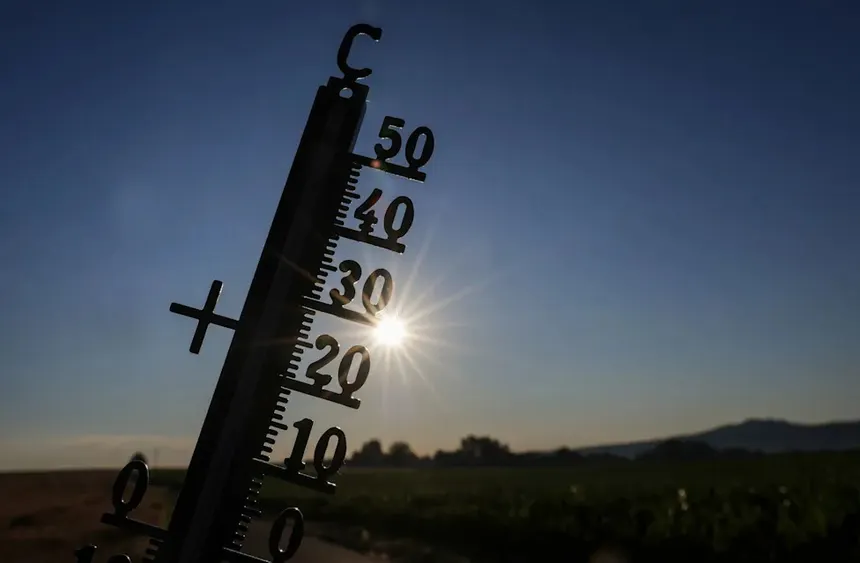
As global temperatures continue to break records, scientists say the greatest heatwave on Earth is unfolding beneath the ocean surface.
Across continents, communities are enduring longer heatwaves, drier conditions, heavier downpours and increasingly erratic weather. Yet the most important climate story may not be unfolding in the atmosphere at all.
It is happening beneath the waves.
According to the European Union’s Copernicus Climate Change Service, June 2026 was the second-warmest June ever recorded globally, with temperatures averaging 1.39°C above the estimated pre-industrial level.
The figure is uncomfortably close to the 1.5°C threshold that governments pledged to avoid under the Paris Agreement.
But climate scientists are increasingly focused on something even more troubling: Earth is absorbing more energy than it is releasing back into space.
Recent research shows that the gap between incoming solar energy and the heat Earth radiates back into space has roughly doubled over the past two decades.
Meaning the planet is accumulating heat faster than before, prompting scientists to investigate whether the rate of warming itself may be accelerating.
“The ocean has absorbed around 90% of the heat trapped by greenhouse gases,” says Prof. Petteri Taalas, former Secretary-General of the World Meteorological Organization (WMO)
A dangerous heatwave is unfolding out of sight
Covering about 71% of the planet, the ocean acts as a giant heat reservoir. For decades it has absorbed the overwhelming majority of the excess heat generated by human activities, particularly the burning of fossil fuels.
Marine heatwaves are becoming longer, more frequent and more intense. Vast areas of the world’s oceans are now experiencing temperatures far above historical averages, and scientists are monitoring the development of a strengthening El Niño over already exceptionally warm seas.
The combination is worrying because warmer oceans do not simply stay warm. They influence weather systems across the globe.
According to NOAA Coral Reef Watch, Marine heatwaves are becoming longer, more frequent and more intense because of climate change.
Climate communicator Ingmar Rentzhog, founder of We Don’t Have Time, argues that the heat stored in the ocean eventually returns to society through extreme weather.
As ocean temperatures rise, evaporation increases, altering rainfall patterns, intensifying droughts in some regions while fueling heavier downpours in others. Warmer seas can also provide additional energy for storms and disrupt long-established climate patterns.
The effects are already visible across many parts of the world: prolonged droughts, flash floods, shifting monsoon patterns and increasingly unpredictable storm behavior.
The warning signs are becoming harder to ignore
The past few years have delivered a cascade of climate records: unprecedented ocean temperatures, severe marine heatwaves, record-breaking global warmth and increasingly costly extreme weather events.
Copernicus officials say the persistence of exceptional temperatures is consistent with the long-term warming trend driven by greenhouse gas emissions.
The concern is not just that records are being broken, but that they are being broken with increasing frequency.
The next frontline: coral reefs
One of the clearest indicators of ocean stress is found in coral reefs.
Corals live close to their thermal limits. A relatively small increase in sea temperature can trigger coral bleaching, a process in which corals expel the symbiotic algae that provide them with food and color. If high temperatures persist, entire reef systems can die.
Scientists often describe coral reefs as the “canaries in the coal mine” of ocean warming because they respond rapidly to heat stress that is becoming increasingly common.
As the world marks Coral Reef Week, the health of these ecosystems has become a powerful measure of the ocean’s condition.
The next question is what those signals mean for the world’s coral reefs, and whether one of the planet’s most valuable marine ecosystems can survive an ocean that is running a fever.
Read Also: Can the Horn of Africa Stay Ahead of Climate Disasters
Author Profile

- How can we learn if we don't question?
Latest entries
 Events12 October 2026Cybersecurity in the Floriculture Industry
 Opinion & Analysis8 October 2026Why Africa Must Look to What Already Exists in Its Blue Economy
 Agriculture5 October 2026The Search for a Smarter Way to Feed Crops
 Events30 September 2026The Goat, the Market and the Dryland: Heifer International’s Push for Livestock Resilience