
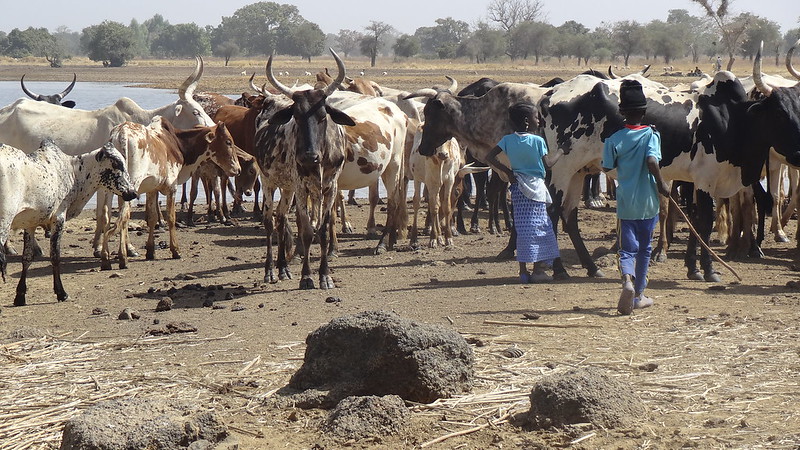
Every rainy season in the Greater Horn of Africa tells an almost familiar story, with meteorologists forecasting heavier-than-normal rains or warning of an impending drought months in advance.
Governments issue advisories alongside humanitarian agencies monitoring conditions. Yet, by the time assistance reaches affected communities, livestock have already died, crops have failed, families have been displaced, and emergency appeals are once again underway.
For decades, the region has excelled at predicting disasters, but struggled to act on those predictions quickly enough. Now, a new regional initiative is seeking to change that equation.
Action Against Hunger (ACF), in partnership with the IGAD Climate Prediction and Applications Centre (ICPAC), has launched the Institutionalising Interoperable Multi-Hazard Anticipatory Action (IMPAACT) project, a two-year programme co-funded by the European Commission’s Directorate-General for European Civil Protection and Humanitarian Aid Operations (ECHO).
Rather than focusing solely on responding after disasters occur, the initiative aims to institutionalise anticipatory action, using scientific forecasts and risk information to trigger assistance before crises escalate.
The project will directly support 243,801 vulnerable people across Ethiopia, Somalia and Djibouti, targeting communities facing overlapping threats from climate extremes, conflict and displacement.
The Greater Horn of Africa is among the world’s most climate-exposed regions. Recurrent droughts, devastating floods, conflict and food insecurity increasingly occur simultaneously, creating complex humanitarian emergencies that stretch governments and aid agencies alike.
In recent years, climate forecasting across the region has improved considerably. Institutions such as ICPAC now provide increasingly accurate seasonal and weekly climate outlooks, giving governments and humanitarian organisations valuable lead time before hazards unfold.
The challenge, however, has rarely been predicting disasters. It has been transforming those forecasts into coordinated action.
Humanitarian responses often depend on lengthy funding approvals, fragmented institutional arrangements and reactive emergency systems that mobilise only after livelihoods have already been lost.
IMPAACT seeks to close that gap by strengthening existing government-led preparedness structures rather than creating parallel systems, connecting regional climate science with national and local decision-making.
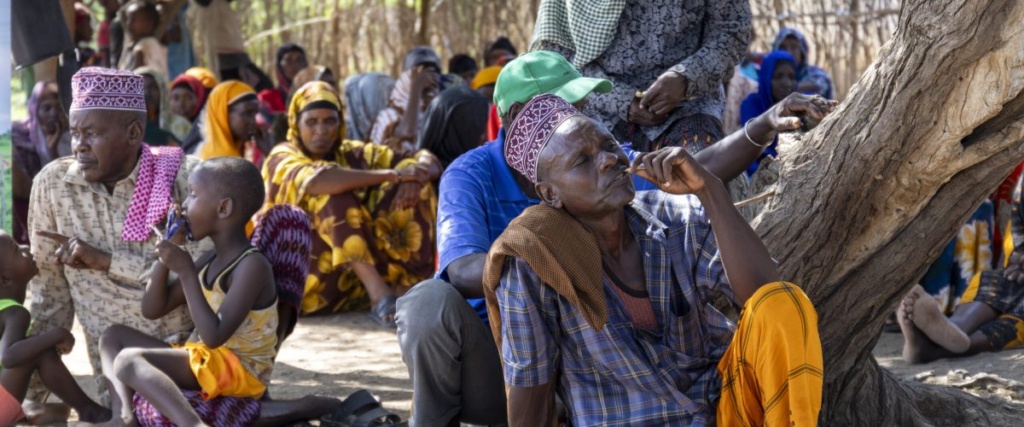
The programme will focus on four key areas: strengthening regional anticipatory action frameworks; improving preparedness in conflict-affected cross-border areas between Ethiopia and Somalia; enhancing urban disaster preparedness in Djibouti; and establishing a rapid-onset crisis mechanism capable of delivering initial assistance within 48 hours once predefined risk thresholds are reached.
For humanitarian organisations, that shift represents more than operational efficiency; it signals a fundamental change in philosophy.
“This project represents a fundamental shift in how we confront humanitarian crises in the region, moving from reactive response to proactive protection,” said Rotimy Djossaya, Chief Impact Officer at Action Against Hunger.
“By bridging the gap between early warning data and swift, coordinated action, this initiative will allow us to reach the region’s most vulnerable people before disaster strikes.” He added that resilience depends not only on surviving emergencies but on building institutions capable of preventing predictable shocks from becoming humanitarian catastrophes.
At the regional level, ICPAC will play a central coordinating role, ensuring consistency across Ethiopia, Somalia and Djibouti while validating cross-border trigger mechanisms and integrating the programme into existing regional coordination platforms.
According to ICPAC Director Dr Abdi Fidar, anticipatory action has become an essential component of climate resilience as climate-related hazards become more frequent and severe.
“As climate extremes and humanitarian crises become more frequent and severe, investing in disaster preparedness through anticipatory action is no longer optional; it is essential,” he said.
He noted that the ECHO-supported partnership provides an opportunity to strengthen government ownership of anticipatory action systems while protecting lives, livelihoods, and development gains across the Horn of Africa.

The project also reflects a broader global shift in humanitarian thinking. Traditional disaster response has largely focused on emergency relief after crises unfold. Increasingly, governments, donors and humanitarian agencies are recognising that acting before disasters strike is not only more effective but often significantly more cost-efficient.
Providing livestock feed before drought conditions worsen, distributing cash before markets collapse, reinforcing flood defences ahead of heavy rainfall or relocating vulnerable households before flooding occurs can dramatically reduce both humanitarian suffering and recovery costs.
Such approaches rely on trusted early warning systems, clear trigger mechanisms, pre-arranged financing and strong institutional coordination, all elements that IMPAACT aims to strengthen.
Over the next two years, the programme will reach 86,261 people in Ethiopia, 105,332 in Somalia and 52,208 in Djibouti, with particular attention to pastoralists, displaced populations and vulnerable urban communities.
Protection, conflict sensitivity, environmental sustainability and social inclusion have been embedded throughout the project’s design, reflecting the increasingly interconnected nature of climate risks in the Horn of Africa.
For a region where climate forecasts have often accurately predicted disasters that nonetheless became humanitarian emergencies, the success of IMPAACT may ultimately be measured by something remarkably simple: whether the next warning leads to action before lives and livelihoods are lost.
If successful, it could help redefine disaster management in the Horn of Africa, not by improving forecasts, but by ensuring those forecasts finally trigger timely, coordinated action where it matters most.


