
Copper plays a critical role in the race to green transition, driving its demand. Governments and corporations increasingly invest in mining and exploration, much to the detriment of the environment, and with negative impacts on local communities.
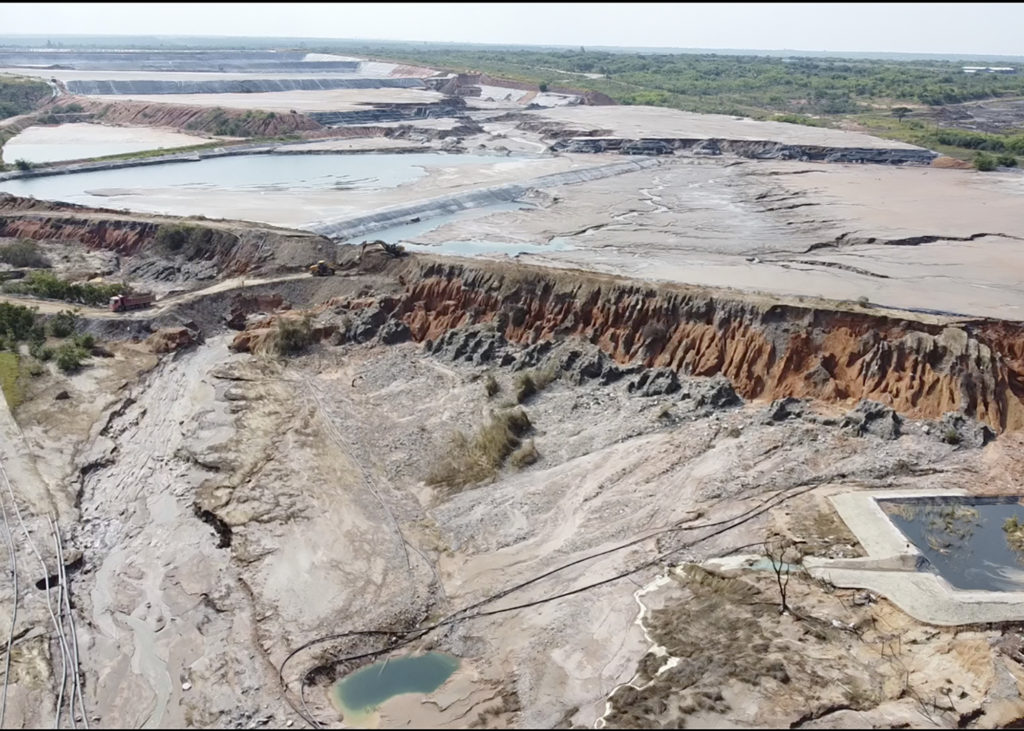
For instance, when millions of litres of toxic mining sludge poured into Zambia’s Kafue River earlier this year, it wiped out fish, destroyed crops, and poisoned water supplies across one of Africa’s most important watersheds.
The pollution occurred after the dam holding mining waste for Sino-Metals Leach Zambia, a subsidiary of China Nonferrous Metal Mining Group, burst its walls.
Copper is vital for wiring renewable energy grids, electric vehicles, and wind turbines, and the stakes. Africa’s second-largest copper producer, President Hakainde Hichilema’s government has pledged to triple copper output to 3 million tonnes a year by 2032 to attract investment and strengthen its role in the clean energy supply chain.
The Disaster & Injustice
When the February spill occurred, Communities downstream reported mass fish deaths, contaminated fields, and an abrupt halt to small-scale agriculture and fishing activities, their main sources of income and food security.
Despite the scale of the disaster, the Zambian government levied a fine of just USD 13,000 against the mining company, an amount critics argue is negligible compared to the environmental destruction and long-term health risks now facing affected communities. The penalty underscored the imbalance between the urgent push to expand copper production and the weak enforcement of environmental safeguards in one of Africa’s most resource-dependent economies.
Affected community members have decried the injustice.
“We watched the river turn black and the fish float to the surface,” recalled Sean Cornelious, a local community leader, describing how families who depended on daily catches were suddenly left without food or income.
Activist Chilekwa Mumba, who has long campaigned for stronger oversight of Zambia’s mining sector, said the response exposed systemic injustice. Compensation offered to families was meagre, barely enough to cover immediate losses, let alone the long-term risks of soil contamination and waterborne disease.
“The people here are living with health fears, while the company walks away with profits,” Mumba noted.
According to the local media, residents who tried to speak out about the disaster also reported harassment and intimidation by local authorities and company security.
Independent investigations by Drizit Environmental Consultants and EPSE Oy found that the February waste dam burst released far more toxic sludge into the Kafue River system than the Zambian government admitted.
While officials sought to reassure the public that contamination levels were within “safe limits,” independent samples detected concentrations of heavy metals, lead, arsenic, and cadmium, at levels linked to organ damage, birth defects, and cancer. Estimates of the sludge released varied sharply: government reports suggested a limited spill, but independent experts warned the discharge could run into tens of thousands of tonnes, raising fears of long-term contamination of farmland and drinking water
Farmers Take a Stand
Now, farmers downstream are threatening multi-million-dollar lawsuits, with some claims ranging from $200 million in damages to an unprecedented $80 billion demand.
The crisis has also drawn international concern: both the United States and Finland issued advisories urging their citizens to evacuate affected areas, signaling the gravity of the pollution beyond Zambia’s borders.
For many, the moment recalls Chilekwa Mumba’s landmark legal victory against Vedanta in UK courts, where Zambian villagers successfully challenged corporate impunity. The Sino-Metals case, they argue, could set another precedent for holding mining giants accountable.
At the heart of this crisis, like similar ones from mining in the Amazon to overfishing in the Pacific, is the gap between rising demand and the underfunded and weak regulatory systems, highlighting a “casual approach” to pollution, prioritizing profits and foreign investment over the health of its citizens and ecosystems.
What Next
The tension between growth and justice is now impossible to ignore. Like the case of Zambia, questions have to be asked whether the boom associated with the green transition can truly be sustainable, or if it simply shifts the costs of the green transition onto vulnerable communities.
As Raymond Mutale of Transparency International Zambia puts it, the impact has been “catastrophic… residents… witnessing their livelihoods being washed away… yet those responsible continue to operate with impunity.” Kelvin Chisanga drives the point home, saying, “the cost of our inaction is already being paid by the most vulnerable Zambians,” especially children whose health is being irreversibly harmed.
As Prof. Patricia Kameri Mbote, Director, Law Division at the UN Environment Programme, puts it, “Climate justice is what gives climate action its moral and political legitimacy. Without justice, climate action fails.” The time to act is now.
Read Also: Zambia’s Toxic Rivers
Author Profile

- How can we learn if we don't question?
Latest entries
 Events12 October 2026Cybersecurity in the Floriculture Industry
 Opinion & Analysis8 October 2026Why Africa Must Look to What Already Exists in Its Blue Economy
 Agriculture5 October 2026The Search for a Smarter Way to Feed Crops
 Events30 September 2026The Goat, the Market and the Dryland: Heifer International’s Push for Livestock Resilience


