

The triple planetary crisis, the interconnected emergencies of climate change, biodiversity loss, and pollution, was a central theme at the recently concluded second African Climate Summit.
While the summit highlighted this urgency, the discussions pivoted to solutions, focusing on local innovations and the resilience-building actions of local communities and youth.
This focus was evident in a session at the African Union pavilion titled, “Delivering Africa’s Circular Economy Agenda: From Roadmaps to Continental Action.” National representatives emphasized a renewed commitment to realizing the circular economy vision as they make strides toward implementation.
The forum was timely, occurring just months after the adoption of the Continental Circular Economy Action Plan (CCEAP). The session was hosted by a coalition of key players: the African Development Bank’s Africa Circular Economy Facility (ACEF), the United Nations Development Programme (UNDP), and the African Circular Economy Alliance (ACEA).
ACEF provides catalytic finance for circular initiatives, while ACEA serves as a continental platform for governments to align policies and drive joint projects.
African Union Commissioner Moses Vilakati outlined the ambitious scope of the AU’s live Action Plan, stating that the summit sets the stage for a green, inclusive, and resilient future. He positioned this as Africa’s opportunity to lead the global circular economy while directly confronting climate change through solutions embedded within local communities.
The discussion strategically linked Africa’s climate agenda with its industrial strategy, framing climate action not merely as an environmental issue but as a driver of economic competitiveness, regional trade, and sovereignty.
“The potential benefits of such a transformation are substantial: it could unlock $546 billion in market opportunities and create 11 million jobs by 2030,” Vilakati said.
The CCEAP is designed as a shared blueprint for transformation, rooted in the continent’s diverse realities and the aspirations of its people. Leaders unanimously emphasized that the plan’s success is entirely dependent on bold partnerships, local innovation, and the leadership of women and young people.

Dr. Anthony Nyong, Director for Climate Change and Green Growth at the African Development Bank, affirmed Africa’s readiness for this transition.
“Africa has the vision, through the AU’s Action Plan and the national roadmaps, that translates this vision into practical steps. We also have the platforms, through ACEA and ACEF, to connect these efforts and mobilize the resources required to scale them,” he said.
The session also featured international support, with Finland’s Ambassador Sinikka Antila sharing how her country’s pioneering national circular economy roadmap successfully rewired industries and reshaped markets.
She pointed to African advantages, stating, “We’ve seen how circularity can drive systemic change. Yet Africa holds unique advantages: scale, a youthful population, and the urgency to leap ahead.”
Concrete examples of progress are already emerging. Rwanda’s Cleaner Production and Climate Innovation Centre supports entrepreneurs turning discarded plastics into sturdy eco-bricks for building classrooms, while Ethiopia’s Environmental Protection Authority is embedding circularity into new industrial regulations.
However, alongside these opportunities, entrepreneur Gabriella Sirak of the Addis Ababa-based agritech firm Lersha highlighted a major roadblock to scalability. Despite a wealth of innovation, there is a lack of pathways to scale promising pilots into widespread, impactful businesses.
In conclusion, UNEP’s Dr. Margaret Oduk framed the circular economy as a necessary strategic shift for the continent, one that must be collectively mainstreamed and acted upon.
She urged streamlined operations, noting that circular solutions have the potential to reset Africa’s economy, accelerate a greener recovery, and establish sustainability as the baseline of development, not an afterthought.
Author Profile

-
Seeker.
Inspire AFRIKA.
Latest entries
 Corporate15 October 2026Water, Sanitation and Digital Learning at the Centre of Garissa School Upgrade
 Agriculture14 October 2026Africa’s Food Systems Future Depends on Listening to Farmers
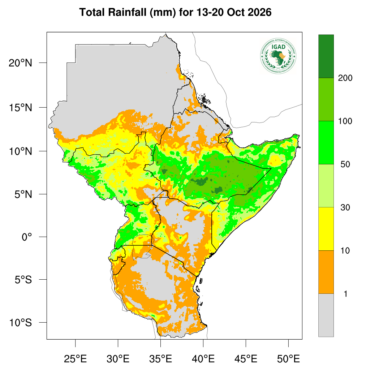 Weather Forecasts13 October 2026Rain and Rising Temperatures Forecast Across the Greater Horn of Africa
 Climate9 October 2026Beyond Negotiations: Africa Expects Concrete Outcomes from Antalya


