Africa is rapidly urbanizing. In Nairobi alone, the urban population has swelled from under 4 million in 2015 to a projected 5.7 million by 2025. With this growth, extreme heat events are no longer just uncomfortable; they’re deadly.
The effects of climate change are felt globally. Shanghai is a major economic hub in eastern China, with a population of approximately 24.89 million and a total area of 6,340.5 km². The city has a subtropical monsoon climate, characterized by hot, humid summers.
Due to rapid urbanization and its climatic context, Shanghai faces rising extreme heat risks. These events strain public health systems, increase heat-related illnesses, and stress the city’s infrastructure, challenges mirrored in many global cities today.
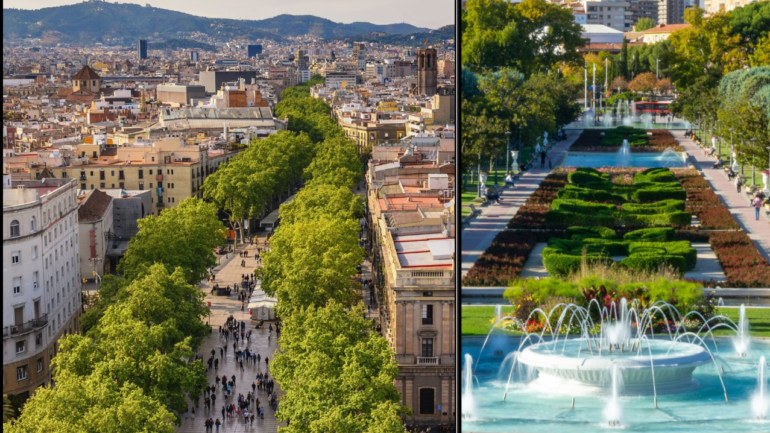
Anyone who has walked a busy city street in the midday sun knows this feeling; the concrete radiates heat back at you like an oven. Research carried out in Shanghai discovered that not all streets had the same effects. Those shaded by dense tree canopies consistently registered lower temperatures, sometimes several degrees cooler than streets left bare under direct sunlight. For residents, that difference can mean the line between discomfort and heat stress.
Buildings, too, played a part. Their height, spacing, and arrangement shaped how heat accumulated and dispersed through the day. Narrow alleys trapped heat, while streets with varied building heights and more open space allowed for better airflow, creating small pockets of relief.
The study further reveals that not all greenery is equal when it comes to cooling cities. Tree canopies are especially powerful because they block direct sunlight and, through a process called evapotranspiration, release moisture into the air that helps lower surrounding temperatures.
Researchers found that the cooling effect of vegetation is strongest at noon within a 40-meter radius, a threshold measured using the Normalized Difference Vegetation Index (NDVI). In simple terms, the closer you are to dense, leafy cover, the more relief you’ll feel from the heat.
Urban design also matters. Building height variation (VH) influences how heat is trapped or released. Streets with uniform, tall buildings can act like heat traps, while a mix of heights allows air to circulate and carry heat away.
This means that a single well-placed line of trees along a busy avenue can reduce air temperature enough to ease heat stress for pedestrians. Combined with smarter building layouts, these natural and structural choices can turn an unforgiving street into a livable one.
Cities like Nairobi, Dar es Salaam, and Lagos are also grappling with the urban heat island effect, where concrete and asphalt trap heat and push temperatures higher than in surrounding rural areas.
For example, over 30 years, 72,828 ha (73%) of the Wakiso-Kampala wetlands have been lost. Rapid urban growth in these cities often comes at the expense of trees, wetlands, and other natural cooling systems, leaving millions of residents exposed to dangerous levels of heat.
The findings from Shanghai offer a valuable insight. The principles of vegetation thresholds and building design strategies for African cities can be adopted. Planting dense tree canopies along transport corridors, preserving pockets of green space, and encouraging varied building heights are life-saving measures in a warming world.