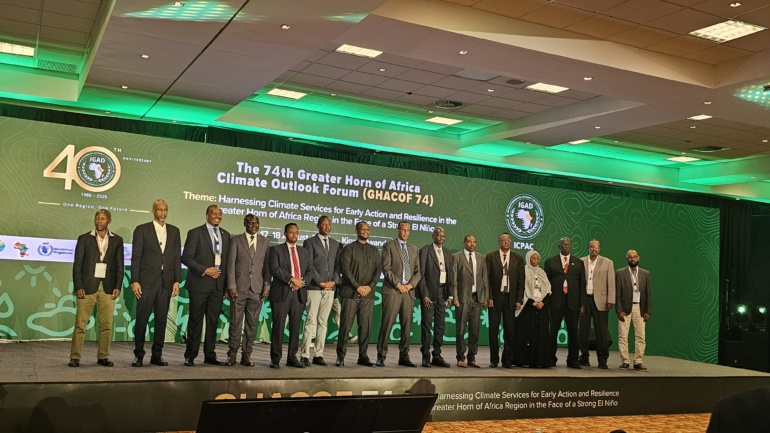
The World Meteorological Organization (WMO), celebrating its 75th anniversary, is taking a bold step forward by integrating Artificial Intelligence (AI) into weather forecasting and climate resilience efforts. As the organization reflects on decades of trusted science and service, it is also focusing on innovation to address the growing challenges posed by extreme weather and climate change.
The rising significance of AI has earned it a key place on the agenda of the WMO’s Executive Council meeting, a five-day session addressing critical priorities, including the “Early Warnings for All” initiative.
This program aims to ensure life-saving alerts reach everyone globally by the end of 2027, helping reduce deaths and damages caused by hazardous weather and climate events.
Already, pilot projects using AI to improve flood prediction, drought monitoring, and disaster preparedness are underway across several countries. WMO’s vision is to ensure that every person on Earth is protected by early warning systems by 2027, an ambitious target requiring both global cooperation and technological breakthroughs.
As WMO reflects on its 75-year legacy, the organization remains committed to staying at the cutting edge of climate science, ensuring that innovation translates into actionable, life-saving solutions worldwide.
“WMO has always been a place where cooperation precedes crisis,” said Secretary-General Celeste Saulo. “That foundation remains our strength. But the world around us is shifting. We must evolve together, preserving our core identity while emerging stronger.”
WMO President Abdullah al Mandous echoed this urgency, emphasizing that the organization must become more effective, efficient, and responsive to the challenges facing humanity.
Artificial Intelligence: A New Frontier
AI is already being widely adopted by National Meteorological and Hydrological Services, with the potential to revolutionize how forecasts are generated, shared, and acted upon. While it still needs understanding and adjustment, AI is transforming operations and demands new skills and responsive governance.

“AI is rapidly reshaping how we work,” noted Al Mandous. “We need to balance short-term caution with long-term engagement and innovation.”
The WMO Executive Council will explore how AI and machine learning can be scaled reliably and sustainably, in line with WMO standards such as the Integrated Processing and Prediction System (WIPPS).
A high-level session on AI brought together stakeholders from the WMO community, Big Tech, and academia to discuss future collaborations.
Strategic Positioning: From Services to Global Influence
Beyond technology, the Executive Council is discussing how WMO can remain agile in a time of limited resources and increasing demands. A top priority remains achieving universal early warning coverage by 2027.
“We are witnessing tangible progress, fortified by our indispensable allies,” said al Mandous, referring to the Systematic Observations Financing Facility and the Climate Risk and Early Warnings Systems Initiative, tools closing data gaps and delivering real-time alerts.
However, Secretary-General Saulo emphasized the need for stronger recognition within the broader United Nations system. “This is not a communication problem. It is a strategic positioning challenge,” she said.
She urged WMO to frame its work in terms that resonate globally:
- Data exchange should be linked to diplomacy and security.
- Early warnings should build public trust and institutional legitimacy.
- Hydrology investments should demonstrate their role in peacebuilding and food systems.
“What we offer is not minor. It is essential infrastructure, foresight, and a global public good in its purest form,” she concluded.
Author Profile

-
Seeker.
Inspire AFRIKA.
Latest entries
 Climate9 October 2026Beyond Negotiations: Africa Expects Concrete Outcomes from Antalya
 Animals7 October 2026In Kajiado’s Drylands, Collective Selling of Small Herds Is Changing the Livestock Trade
 Oceans6 October 202640 Years of Ocean Cooperation: The Western Indian Ocean’s Next Test Is Implementation
 Adaptation5 October 2026Africa Is Financing Its Own Survival as Climate Adaptation Money Falls Short