

Africa’s forest leaders, ministers, financiers, and certification bodies convened in Nairobi for the inaugural Zamba Heritage Congress, a high-level platform designed to move the continent from forest policy commitments to measurable implementation and finance mobilization.
Convened by the Forest Stewardship Council (FSC), the Congress, themed “From Commitment to Action: Africa’s Forest Legacy from COP30 and Beyond,” brought together representatives from 14 African countries, including Kenya, the Republic of Congo, Zambia, Ethiopia, Cameroon, Mozambique, and the Democratic Republic of Congo.
At stake is the future of Africa’s vast forest estate, from the Congo Basin’s tropical rainforests to Afro-montane ecosystems, dry woodlands, and peatlands, which collectively function as a global climate regulator, biodiversity reservoir, and economic lifeline for millions.
Yet these ecosystems face escalating threats from deforestation, land degradation, unsustainable energy demand, weak industrial value chains, and limited access to climate finance. The Zamba Heritage Congress aims to change that trajectory.
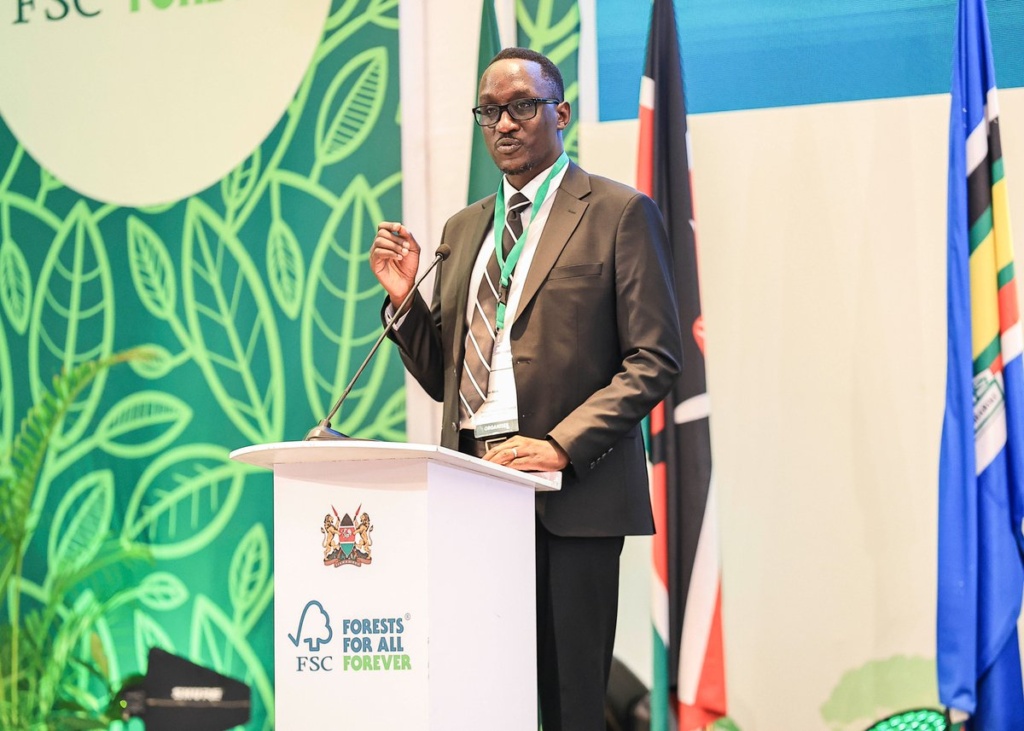
FSC Africa Regional Director Peter Alele framed the Congress as a turning point, urging stakeholders to prioritize implementation over rhetoric. His remarks were a reminder that we are not merely attendees but custodians of Africa’s forests, and it is time for Africa to write its own story of stewardship.
“Zamba Heritage Congress is set to be a place where deals are made, surpassing conversations, if Africa is to lead this transformation at the global level,“he said.
Unlike previous high-level forums, the Congress is structured around financing mechanisms, certification expansion, industrial transformation, and regional cooperation, aligning with the African Union’s Sustainable Forest Management Framework (2020–2030), AMCEN priorities, and the Global Biodiversity Framework adopted in Montreal.
FSC’s global leadership emphasized that Africa’s forests must be treated as a global public good, requiring African-led governance, community rights protection, and sustainable finance that delivers on the ground.
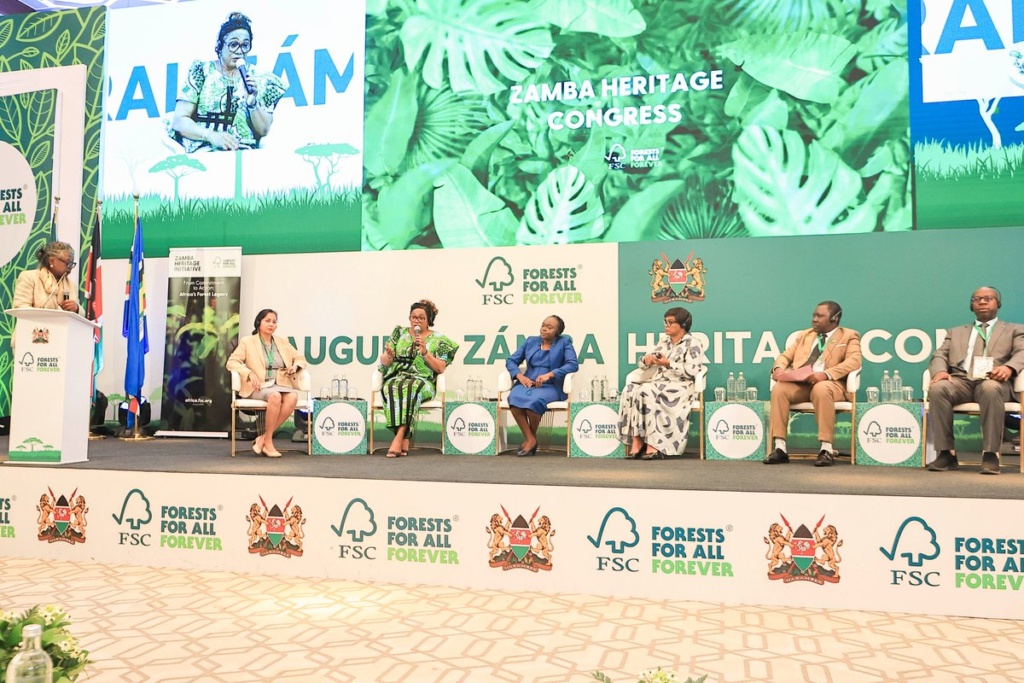
During a panel discussion, Dr Subhra Bhattacharjee, FSC Director General, reminded us that Africa’s forests are a global public good and protecting them requires African leadership, rights-based commitments to communities and Indigenous Peoples, and finance that works.
“For Africa’s forests to remain healthy, we need African leadership, commitment to rights for communities, workers and Indigenous peoples, and financing that works,” said Dr. Subhra.

Kenya Positions Forest Restoration at the Core
Cabinet Secretary for Environment, Climate Change and Forestry, Dr. Deborah Baraza, reaffirmed the country’s commitment.
“In Kenya, we hope to plant 15 billion trees in the next 10 years. We are excited to partner and look at various interventions, including forest management, to achieve this ambitious goal.”
The initiative aligns with Kenya’s national climate commitments and the AFR100 Forest Landscape Restoration Initiative.
The Cabinet Secretary also outlined how Kenya has strengthened its certification architecture. In 2021, the country launched its FSC Interim National Standard to support forest management certification and supply chain transparency. Four forest blocks around the Aberdare Range, covering approximately 65,000 hectares, have been designated for certification demonstration.
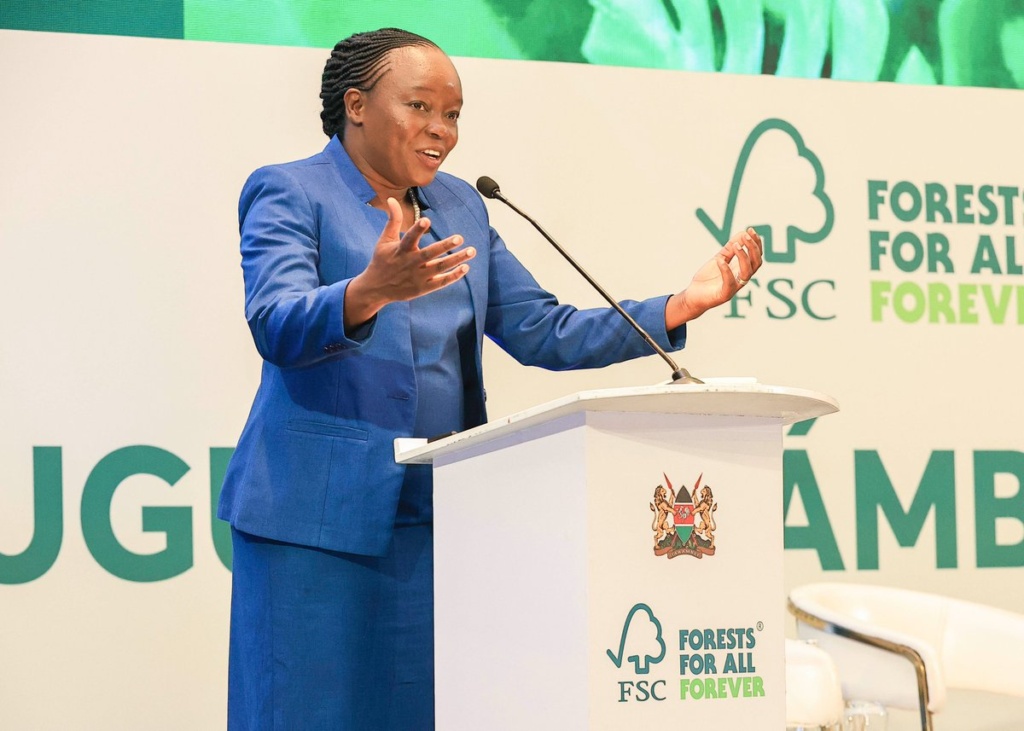
“This represents an important milestone in our journey towards sustainable forest management in both the public and private sectors,” Dr. Deborah stated.
Kenya now leads Eastern Africa in chain-of-custody certification, with 12 certified businesses responding to growing global demand for sustainably sourced forest products.
Through FSC-supported initiatives, more than 2,000 young people have benefited from forestry awareness programmes, while smallholder farmers and private investors are increasingly adopting certified sustainable practices.
Congo: Conservation Meets Industrial Transformation
The Republic of Congo, one of the anchor states of the Congo Basin, presented one of the strongest data-backed interventions at the Congress during the Zamba Heritage Congress. Represented by Minister of Forest Economy Rosalie Matondo, the country emphasized its long-standing investment in sustainable forest management.
She revealed that Congo holds approximately 23.5 million hectares of forest, covering nearly 69 percent of its national territory. Of these, about 15 million hectares are designated for timber production. Around 9.5 million hectares are under formal management plans, and roughly 10 million hectares are certified, positioning Congo among Africa’s leaders in certified forest area.
On conservation, nearly 27 percent of Congo’s territory is under protection, bringing it close to the global 30×30 biodiversity target adopted under the Kunming-Montreal Global Biodiversity Framework.
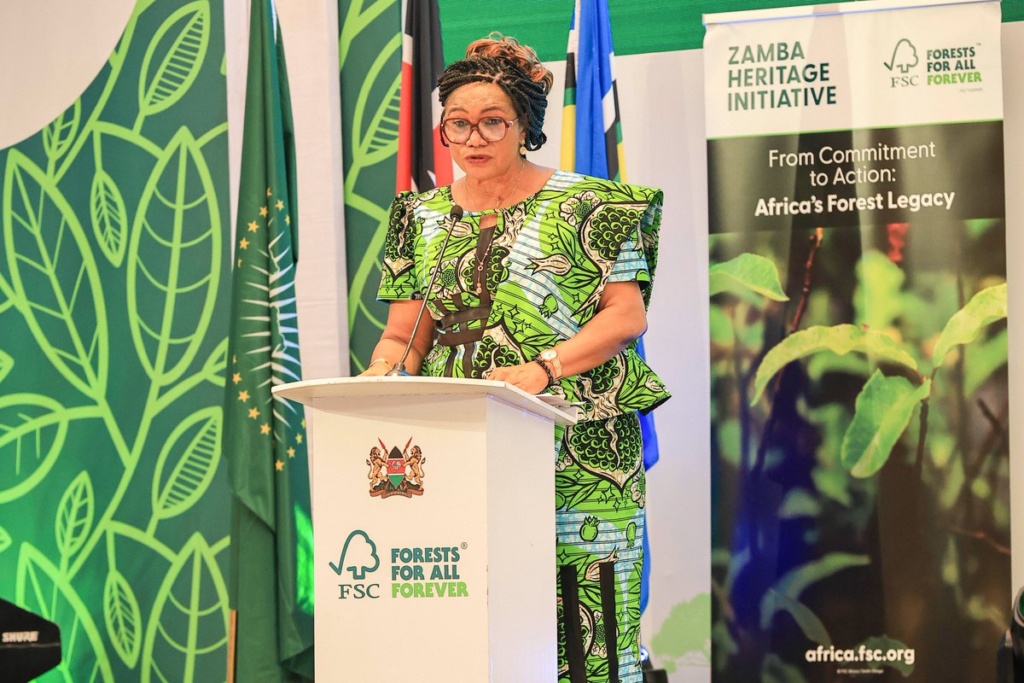
“Sustainable forest management is not optional; it is our development pathway,” Minister Matondo emphasized.
Since 2020, Congo has introduced governance reforms, strengthened legality systems under its Voluntary Partnership Agreement with the European Union, and enhanced fiscal oversight in the forest sector.
Notably, Congo’s vision extends beyond conservation.
Although the country’s forests have an estimated annual potential of 8 million cubic meters of timber, only about 2 million cubic meters are currently valorized. Minister Matondo stressed the need for local transformation and industrial value addition.
“Many forest species remain unutilized. We want these resources to be transformed locally to create added value, transfer technology and generate employment for our youth,” she said.
Congo is also expanding planted forests through partnerships between the government, private investors, and local communities, with roughly 500,000 hectares already established. The strategy aims to ease pressure on natural forests while supporting energy and industrial demand.
The Minister reaffirmed Congo’s commitment to scaling access to carbon markets and payment-for-ecosystem-services mechanisms, acknowledging that entry into global carbon markets remains a challenge for many African countries.
A Continental Financing Blueprint
Central to the Congress is the anticipated Zamba Heritage Action Plan, a ten-year roadmap targeting:
- 30 million hectares under sustainable management
- 5 million hectares of restored degraded land
- $400 million mobilized for Sustainable Forest Management
The plan seeks early pledges from African governments, development partners, and private investors in the lead-up to COP30.
Beyond restoration, the Initiative positions African forests as strategic assets within climate negotiations, biodiversity finance, carbon markets, and nature-based solutions.
The Congress signals a broader economic shift, treating Africa’s forests not only as conservation zones but as engines of green industrialization, youth employment, community empowerment, and climate resilience.
As global climate negotiations intensify and biodiversity targets tighten, the Zamba Heritage Congress reflects a growing continental resolve to shape forest governance on African terms, combining certification standards, restoration commitments, industrial transformation, and innovative finance.
From Nairobi, the message was unequivocal: Africa’s forests are not peripheral to global climate solutions; they are central.
Through the Zamba Heritage Initiative, the continent is positioning its forest wealth as a foundation for measurable climate action, equitable growth, and long-term ecological stability.


