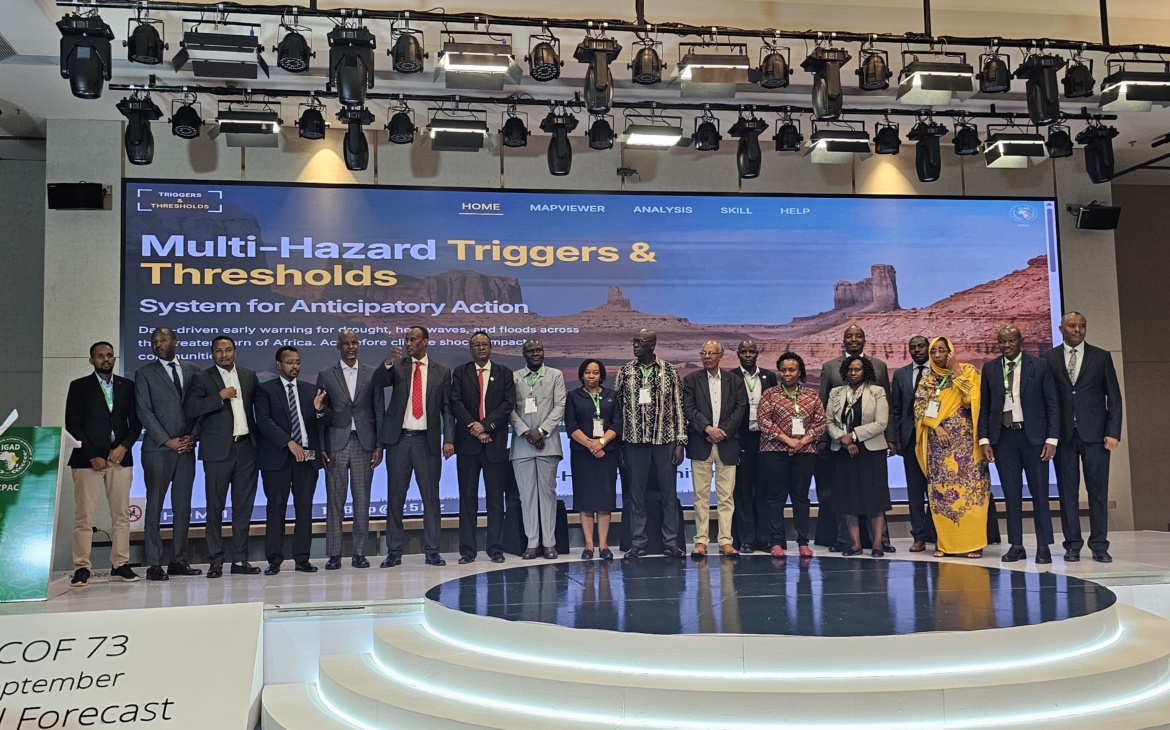
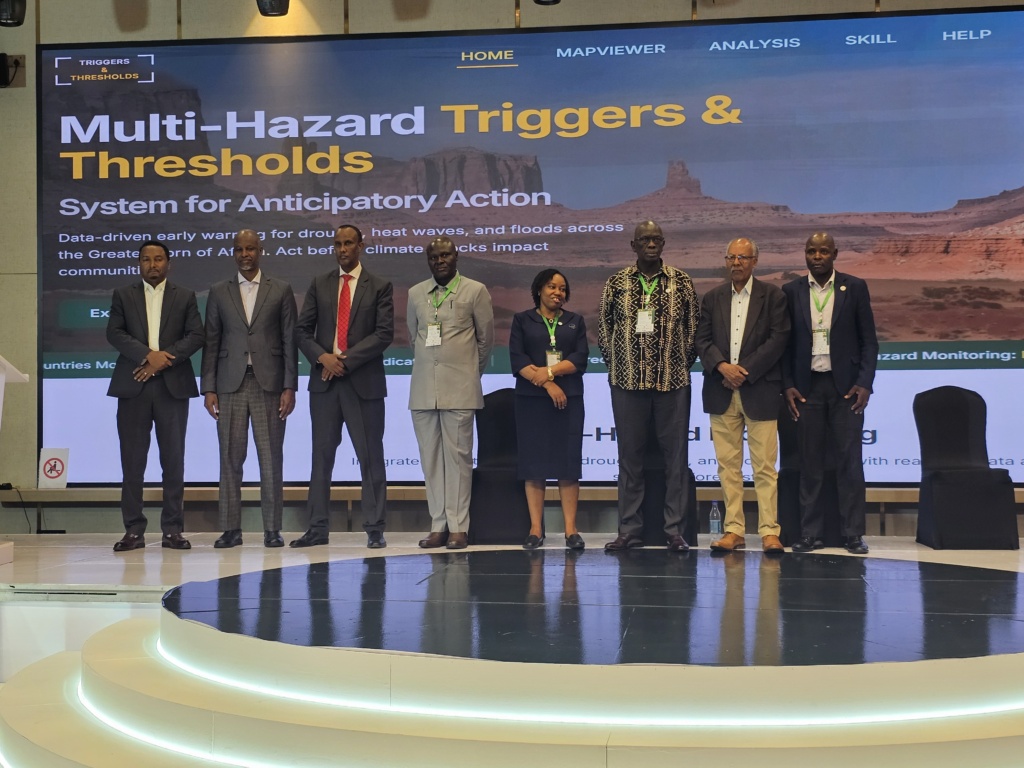
The IGAD Climate Prediction and Applications Centre (ICPAC) has launched a multi-hazard triggers and thresholds system during the 73rd Greater Horn of Africa Climate Outlook Forum (GHACOF 73), held from 18–19 May in Addis Ababa, Ethiopia.
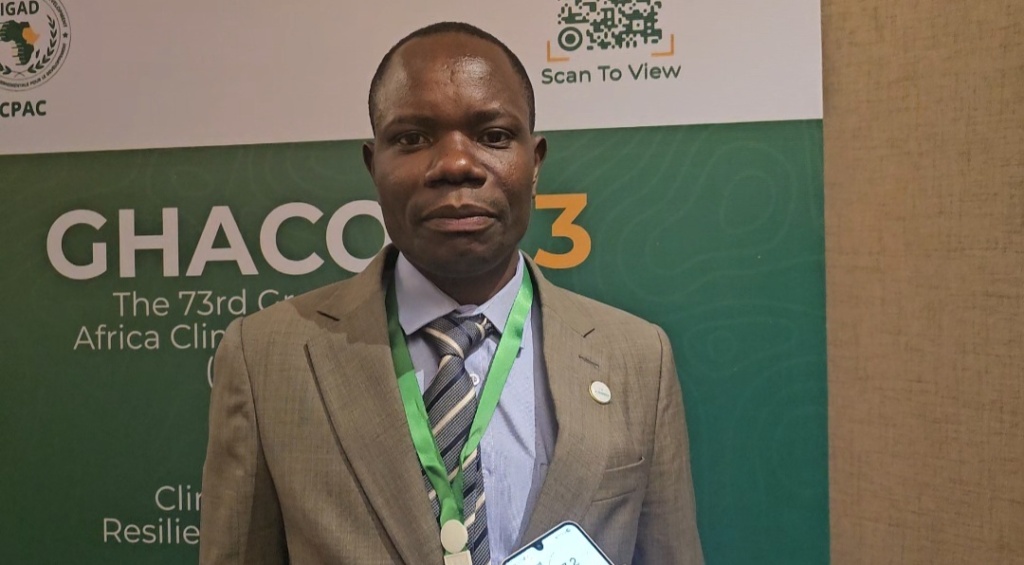
Dr. George Otieno, Climate Modelling Expert and Anticipatory Action Lead at the IGAD Climate Prediction and Applications Centre (ICPAC), said the system is designed to bring decision-making tools closer to communities and improve preparedness before disasters occur.
“With this, you can actually anticipate when risks are impending, and decisions can be taken way ahead of disaster,” said Otieno. “The rationale behind this system is that we have been experiencing repeated risks from both climate and non-climate issues, but decision-making has largely remained isolated.”
Otieno explained that the multi-hazard triggers and thresholds system has a regional component, bringing together different partners and stakeholders across the region.
“So anyone living within the 11 member countries can access the system and find relevant information on when a hazard is expected to happen, who is most likely to be impacted in terms of exposure, vulnerability, and risks, and what priority interventions can be taken before the event occurs,” he added.
He noted that the system currently focuses on hazards such as drought, heatwaves, floods, and displacement across the region.
“We will also include issues related to desert locusts and other sectoral impacts,” he said. “For example, during the GHACOF 73 forum, we discussed the education sector. We will provide impact-based forecasting that can outline different impact levels for sectors such as agriculture, water and sanitation, health, schools, and other relevant sectors.”
According to Otieno, the multi-hazard triggers and thresholds system is intended to become a responsive tool that supports timely decision-making before disasters occur.
He expressed hope that IGAD member states would continue working together to strengthen the system by providing updated data and information.
“The system has to be updated every month, every week, and every year as more data becomes available,” he said. “Member states, therefore, play an important role in improving the system. Already, countries such as Uganda, South Sudan, and Kenya have directly requested IGAD’s support on this component.”
Otieno also emphasized the importance of capacity building within member states to ensure sustainability.
“We want to train more experts together,” he said. “We expect member states to identify key experts from their respective departments who can be trained to host and operate the system for sustainability.”
He added that the goal is to institutionalize the system rather than make it project-driven. “We want it to become part and parcel of operations within the countries,” he said.