A growing coalition of governments, cities, civil society organizations and climate advocates is pushing for a more direct approach, one that openly addresses how the world can transition away from coal, oil and gas while ensuring economic stability, energy access and social justice.
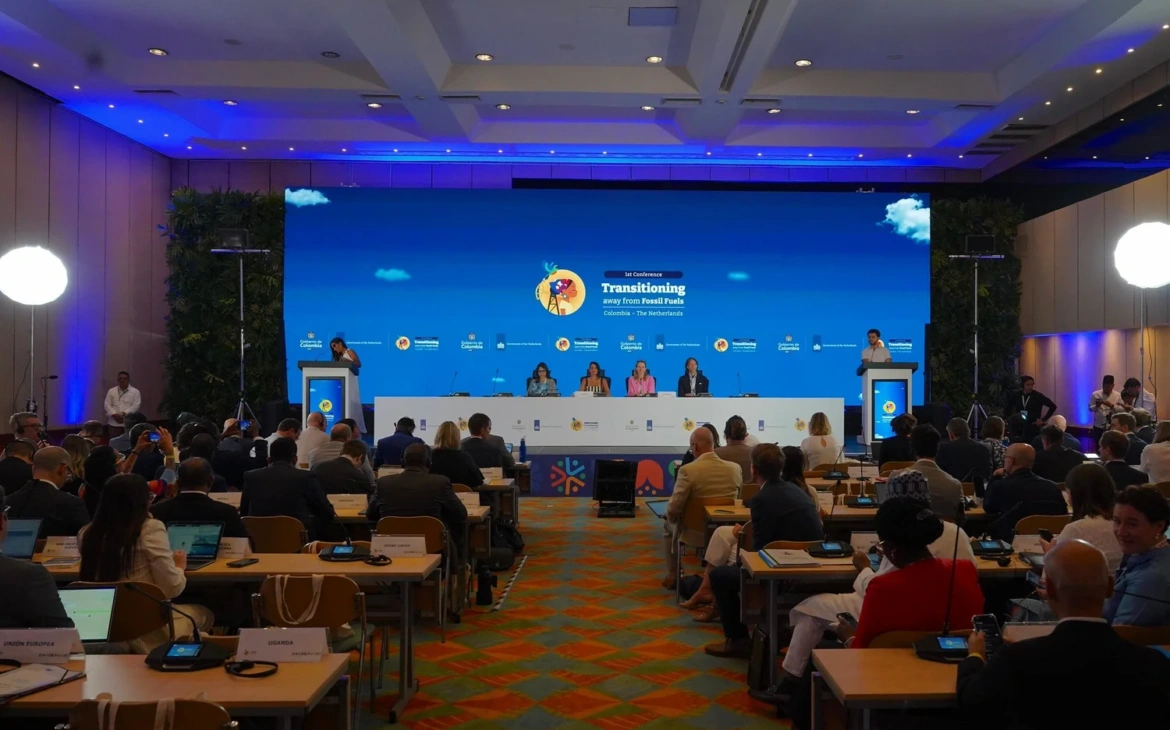
The momentum behind that shift was on full display at the recent Santa Marta Conference in Colombia, which many participants have described as a turning point in global climate diplomacy.
The conference brought together governments and stakeholders from across the world to discuss a challenge that has long been considered politically sensitive: managing a global fossil fuel phase-out.
According to the Fossil Fuel Treaty Initiative, the gathering focused on reducing economic dependence on fossil fuels, strengthening international cooperation, scaling up financing for transition efforts, and exploring legal mechanisms that could help guide a fair and orderly transition.
For climate advocates, the significance of Santa Marta was not merely the discussions themselves, but the fact that they took place in a dedicated multilateral forum focused specifically on fossil fuels.
“The Fossil Fuel Treaty Initiative dubbed the event historic,” noted organizers following the conference.
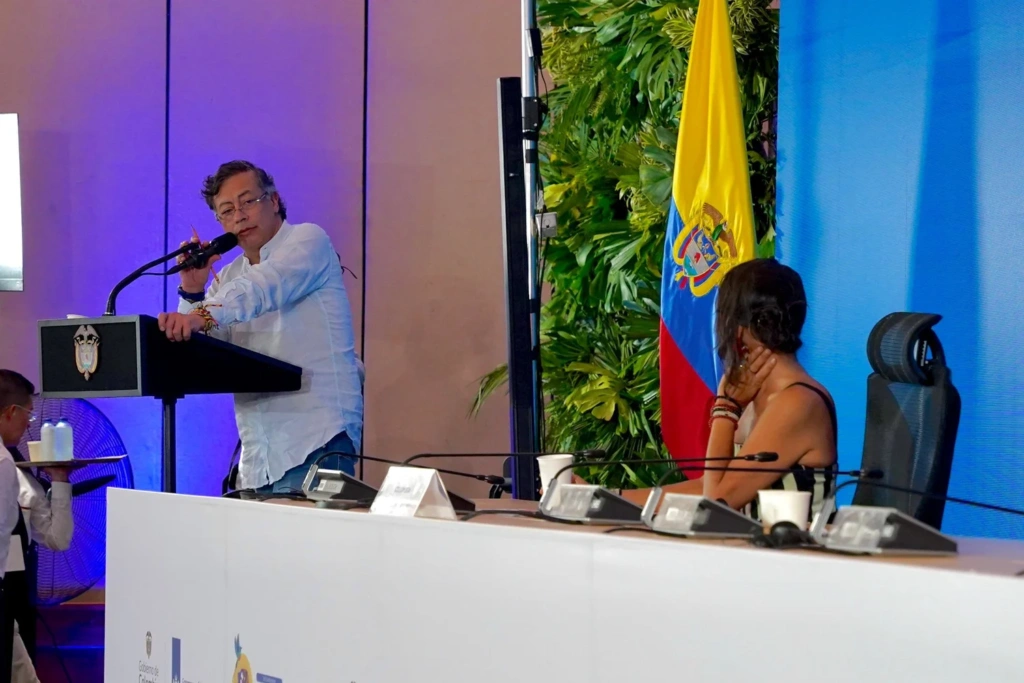
That sentiment was echoed by Kumi Naidoo, President of the Fossil Fuel Treaty Initiative, who argued that the event marked the beginning of something larger.
“A new reality is taking shape,” said Naidoo. “This is no longer a one-off moment, but the foundation of an ongoing international process dedicated to phasing out fossil fuels.”
The conference is expected to be followed by future gatherings, including a major conference co-hosted by Tuvalu and Ireland in 2027, setting the stage for what supporters hope will become a sustained diplomatic process focused on fossil fuel transition.
Moving the Debate Forward
The emergence of dedicated discussions on fossil fuel phase-out reflects a broader evolution in global climate politics.
For many years, climate negotiations largely focused on emissions targets without directly confronting the production and expansion of fossil fuels. That dynamic has gradually shifted as scientific evidence linking fossil fuel combustion to climate change has become increasingly difficult to ignore.
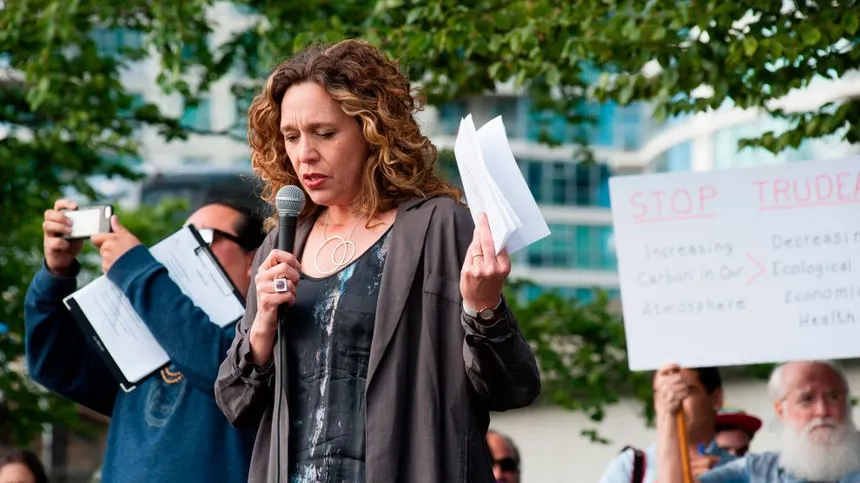
The growing willingness to discuss fossil fuels directly signals a significant change in international discourse.
As Berman observed during an appearance on Bloomberg Green’s Zero podcast: “You’re not talking about whether fossil fuel phase-out needs to happen, you’re talking about how.”
That shift may seem subtle, but it represents a profound change in global climate diplomacy. It suggests that fossil fuel phase-out is moving from the margins of climate advocacy into mainstream policy discussions.
Berman credits much of that momentum to governments willing to place the issue directly on the diplomatic agenda.
“The leadership demonstrated by Petro’s government has moved the phaseout of oil, gas and coal from the margins into the centre of global diplomacy,” she said.
Building Political and Legal Momentum
The growing focus on fossil fuel transition is occurring alongside broader developments in international climate governance.
One of the most notable came when the United Nations General Assembly adopted a landmark resolution affirming the findings of the International Court of Justice’s Advisory Opinion on climate change.
Led by Vanuatu and supported by a coalition of countries from across the Global South and beyond, the resolution reinforced the principle that states have responsibilities in addressing climate harm and advancing international cooperation.
For supporters of a Fossil Fuel Treaty, the decision represents another building block toward stronger global accountability mechanisms.
Momentum is also becoming visible at the local government level.
Recently, the City of Mississauga in Ontario, Canada became the 199th city worldwide to endorse the Fossil Fuel Treaty. While municipal endorsements do not create binding international obligations, they demonstrate growing public and political support for more ambitious climate action.
Together, these developments suggest that discussions once confined to advocacy circles are increasingly finding their way into government institutions and international forums.
Kenya’s Place in the Conversation
The debate is also gaining traction across Africa.
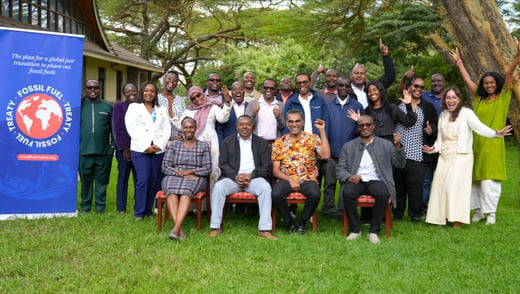
In Kenya, the Ministry of Energy recently convened a two-day retreat with the Fossil Fuel Treaty Initiative to explore how a proposed treaty could support implementation of the country’s National Energy Compact for 2025–2030.
The compact seeks to achieve universal access to electricity and clean cooking while advancing Kenya’s clean energy ambitions.
The discussions highlighted Kenya’s growing role in shaping conversations around energy transition and sustainable development.
With more than 90 percent of its electricity already generated from renewable sources, Kenya is frequently cited as one of Africa’s leading examples of how climate action and economic development can progress simultaneously.
As countries across the continent seek pathways toward industrialization and energy access, the challenge will be ensuring that global transition frameworks reflect the realities and priorities of developing economies.
For many African nations, the question is not simply how quickly fossil fuels can be phased out, but how the transition can be financed, managed and aligned with development goals.
Looking Toward Tuvalu 2027
Whether the momentum generated in Santa Marta ultimately translates into concrete international agreements remains to be seen.
Negotiating a coordinated global approach to fossil fuel phase-out will require navigating complex economic interests, energy security concerns and development priorities. Yet supporters argue that the emergence of a dedicated diplomatic process is itself a significant achievement.
As governments, cities and civil society organizations look toward the next major gathering in Tuvalu in 2027, the conversation appears to be entering a new phase.
The question facing policymakers is no longer whether fossil fuels should be part of climate diplomacy. Increasingly, the focus is on how nations can work together to deliver a transition that is fast, fair and adequately financed.
The road from Santa Marta to Tuvalu may be long, but it could prove critical in determining whether the world can finally agree on a viable exit strategy from the fuels driving the climate crisis.
Read Also: Kenya makes history with landmark climate loss and damage support
Author Profile

- How can we learn if we don't question?
Latest entries
 Agriculture16 October 2026“There Is No Shortcut”: A Kiambu Grower’s Decade in Mushrooms
 COP3115 October 2026Pacific Leaders Call for Urgent Climate Action Ahead of COP31
 Agriculture13 October 2026Can the buffalo fix Kenya’s milk problem? Farmers say start with the feed bill
 Events12 October 2026Cybersecurity in the Floriculture Industry