
As climate change intensifies pressure on global food production, regenerative agriculture is rapidly gaining recognition as one of the most promising pathways to building resilient food systems while restoring degraded ecosystems.
With forecasts indicating another year of severe weather disruptions driven by El Niño, including floods, droughts and supply chain shocks, the need to transform agriculture has become increasingly urgent.
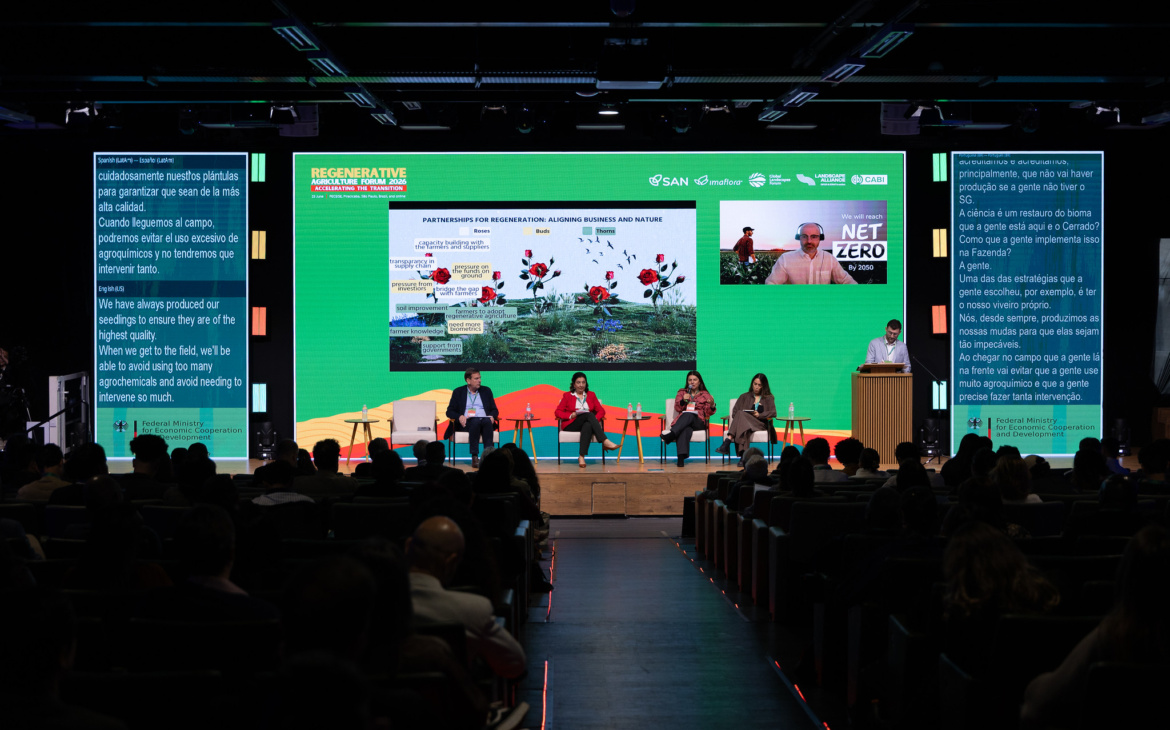
It was against this backdrop that farmers, scientists, investors, policymakers, and business leaders gathered at the Regenerative Agriculture Forum 2026 in Piracicaba, São Paulo, Brazil, to explore how regenerative farming can move from isolated success stories to mainstream agricultural practice.
A recurring message throughout the forum was that regenerative agriculture is far more than a collection of farming techniques. It represents a fundamental shift in humanity’s relationship with nature.
Analí Bustos, Strategic Director for Latin America at Naia Trust and Coordinator of GLFx Espinal Córdoba, argued that nature remains the foundation of both agriculture and the global economy, making the transition to regenerative agriculture as critical as the global shift toward clean energy and sustainable transport.
“The main challenge is to develop a logic of relationships, the transition is about the relationships between species and with the system,” she said, noting that ecological thinking remains largely absent from many agricultural training programmes.
Moreover, Xiaoan Li, Senior Program Officer at the Fetzer Institute, described today’s ecological challenges as fundamentally rooted in a crisis of relationships.
“Many of us have inherited a worldview of separation: humanity separated from nature, from one another, from future generations,” Li said. “If we can move from separation to belonging and from extraction to reciprocal relationship, regeneration will become more than something we just practice, but a way of being.”
The forum also challenged conventional perceptions that agriculture is inherently damaging to the environment. Instead, speakers argued that farming should be viewed as an integral component of healthy ecosystems.
Isabela Pascoal Becker, Director of Sustainability, Governance and Impact at Daterra Coffee, emphasized the importance of systems thinking, warning that today’s interconnected environmental and social challenges cannot be solved through isolated interventions.
“We have all learned that it is impossible to solve the complexities we linearly face today by changing only one element,” she said, urging greater collaboration across sectors and value chains.
Despite growing momentum, experts acknowledged that scaling regenerative agriculture still faces significant hurdles, particularly in demonstrating economic returns for farmers.
Ulrich Kuhlmann, Chief Scientist at CABI, highlighted the need for stronger public-private partnerships to generate locally relevant evidence, improve advisory services, and make regenerative innovations accessible to producers.
He noted that pesticide use has increased by around 70 percent globally since 2000, underscoring the urgency of finding alternative production systems.
“If we want regenerative agriculture to scale, we must invest not only in innovation but in independent advisory ecosystems, locally grounded evidence, knowledge platforms that make these innovations affordable, credible and actionable for all growers,” he said.
Innovation in crop breeding and agricultural biodiversity also emerged as a critical pillar of climate resilience.
Geoffrey Hawtin, 2024 World Food Prize Laureate and former director of CGIAR research centres, pointed to advances in seed systems, opportunity crops and plant breeding as essential tools for adapting to shifting pest and disease pressures brought about by climate change.
“Rather than putting on more pesticides, a lot of breeding companies are looking into developing resistance and tolerance, and varieties that use water more efficiently,” Hawtin said. “All these possibilities are on the horizon and need a consolidated effort from all of us.”

The forum also highlighted the indispensable role of Indigenous communities in safeguarding biodiversity and sustaining regenerative landscapes.
Nancy Reyna López, a Weenhayek Indigenous leader and Co-coordinator of GLFx Wikina Wos, delivered one of the forum’s most powerful appeals, describing how the loss of forests threatens not only ecosystems but also cultural identity.
“As Indigenous women, without the forest we cannot live. As our forest disappears, our culture fades with it,” she said, stressing the importance of protecting traditional knowledge for future generations.
Closing the discussion, Ricardo Abramovay, Senior Professor at the University of São Paulo and a leading authority on the bioeconomy, urged stakeholders to view regenerative agriculture as both an ethical commitment and a practical solution.
He argued that the transition requires society to move beyond harmful production models while respecting the knowledge, traditions, and rights of farming communities and Indigenous peoples.
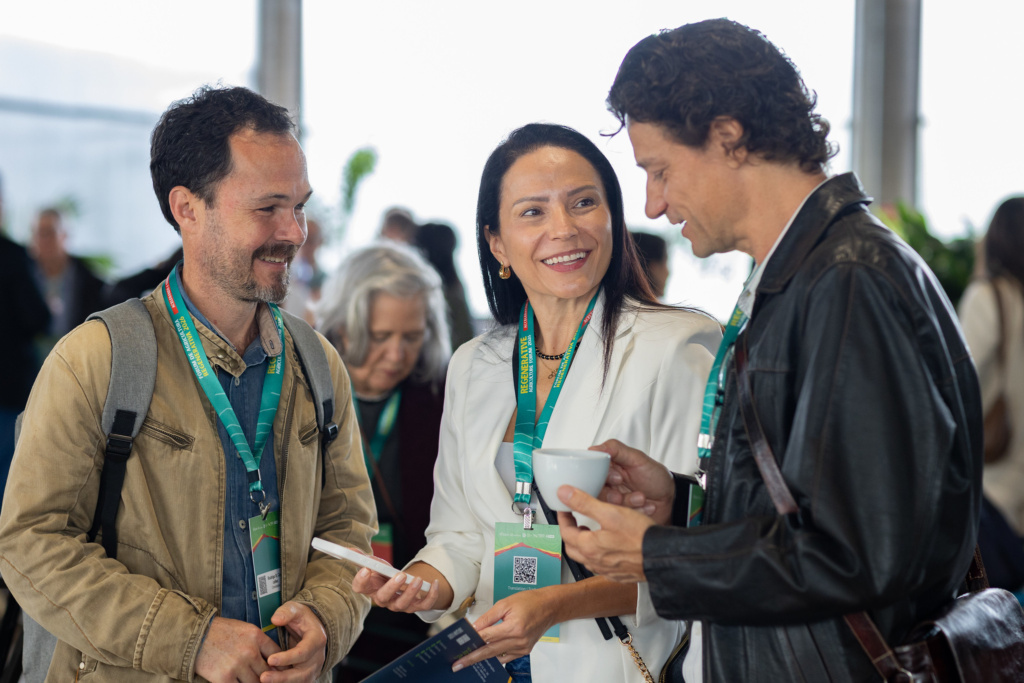
Held in Brazil for the first time, the forum brought together nearly 350 participants in person and more than 3,700 online.
While discussions ranged from sustainable finance and innovation to youth and women’s leadership, one message stood above all others: securing the future of food will require rebuilding humanity’s relationship with nature.
Regenerative agriculture is no longer a niche concept; it is increasingly being recognised as a cornerstone of climate resilience, biodiversity conservation, and sustainable food production.
Read Also: Resilience to Land Degradation Needs Community Engagement


