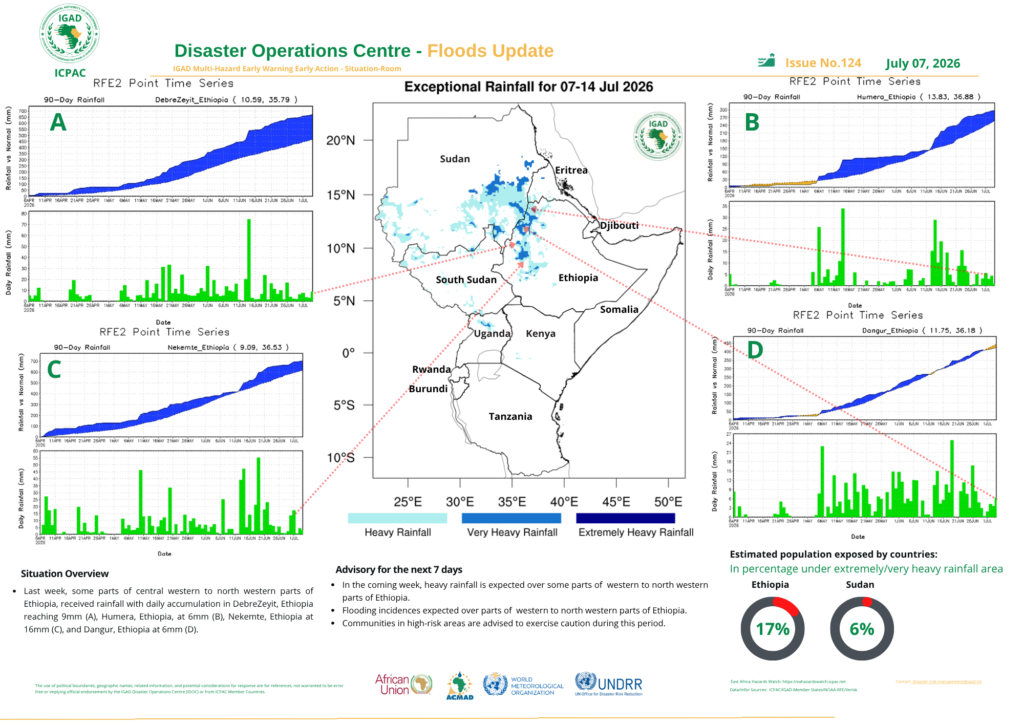
Enhanced rainfall is expected across western Ethiopia and central to western South Sudan between July 7 and July 14, 2026, while warmer-than-average temperatures are forecast to persist across most parts of the Greater Horn of Africa.
The latest outlook from the IGAD Climate Prediction and Applications Centre (ICPAC) indicates that localized heavy rainfall will continue in parts of the region, although many areas are expected to remain relatively dry, reflecting the increasingly uneven nature of seasonal weather patterns.
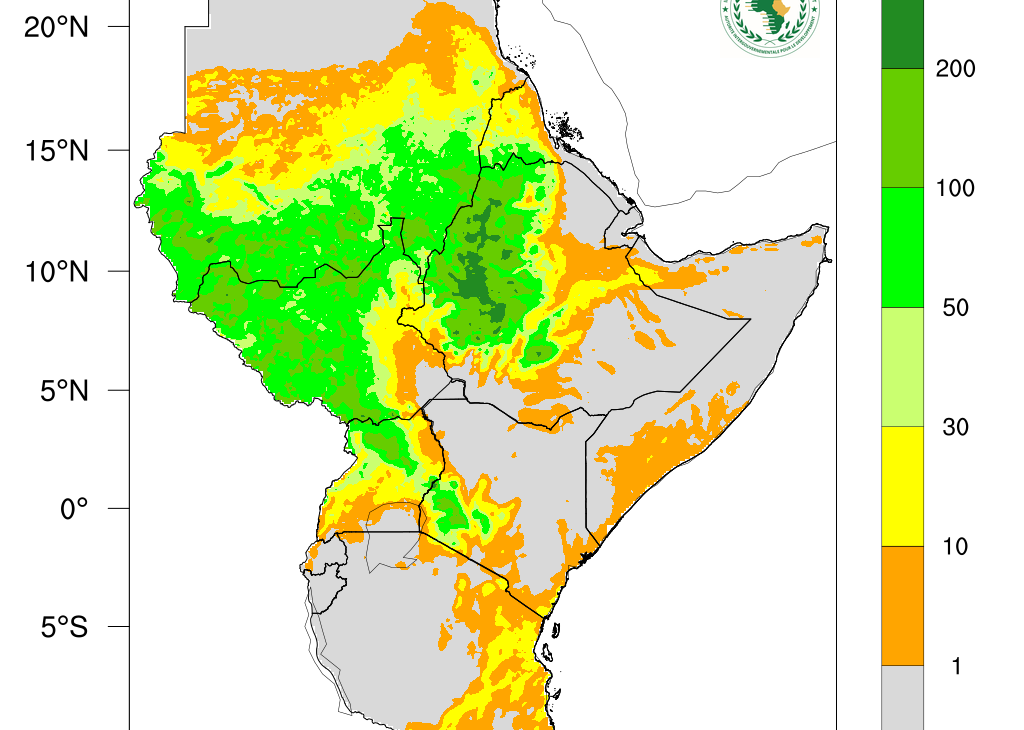
Forecasts indicate moderate rainfall of between 50 and 200 millimeters across parts of southern Sudan, most of South Sudan, northern Uganda, western Kenya, and western to northern Ethiopia. In contrast, light rainfall below 50 millimeters is expected over eastern and southern Tanzania, southern Kenya, southern Somalia, central Sudan, and parts of eastern Ethiopia.
Meteorologists note that one millimeter of rainfall is equivalent to one litre of water per square meter, highlighting the varying amounts of precipitation expected across the region.
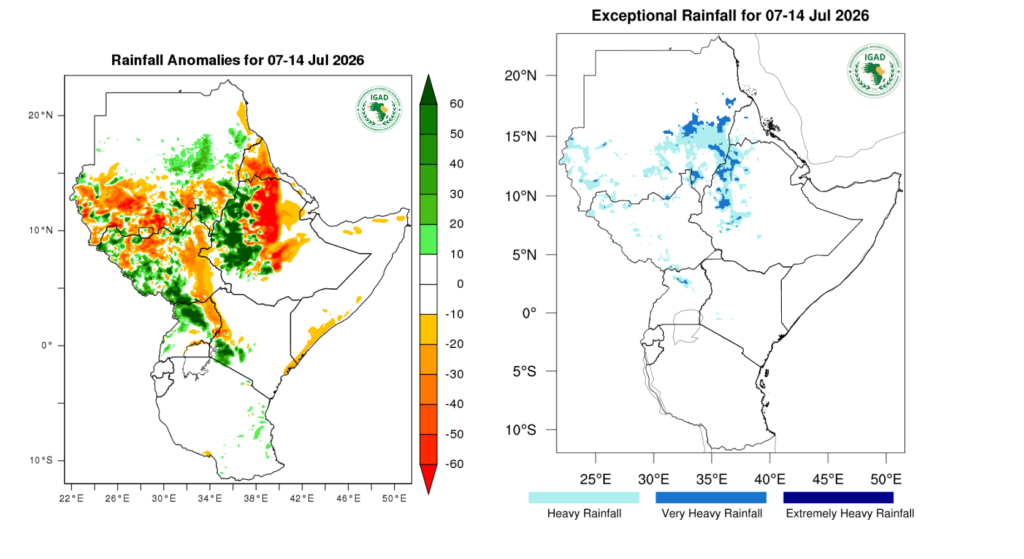
Rainfall is projected to be above normal across central to western South Sudan and western Ethiopia, with additional wetter-than-usual conditions expected over northern Uganda, western Kenya, and isolated areas of southern Sudan.
However, below-normal rainfall is forecast over southern Sudan, western Eritrea, eastern Uganda, western Kenya, and the central to northern highlands of Ethiopia, highlighting the contrasting weather conditions expected across neighboring regions.
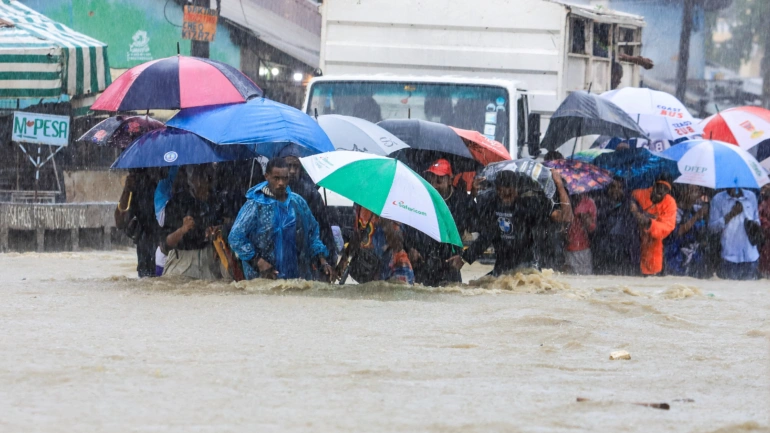
The intense rainfall is expected to increase the risk of localized flooding, particularly across western to north-western Ethiopia, where communities in flood-prone areas are advised to remain alert for possible flash floods and rising river levels.
Heat Continues to Grip the Greater Horn
Alongside the rainfall, temperatures are expected to remain above average across much of the Greater Horn of Africa.
Temperatures exceeding 32°C are forecast over Djibouti, central to eastern Sudan, coastal Eritrea, northern coastal Somalia, and north-eastern Ethiopia, while moderate to high temperatures between 20°C and 32°C are expected across most parts of the region.
Meanwhile, milder temperatures below 20°C are expected across Rwanda, Burundi, central to western Kenya, central to southern Tanzania, and parts of central to northern Ethiopia, particularly over elevated terrain.
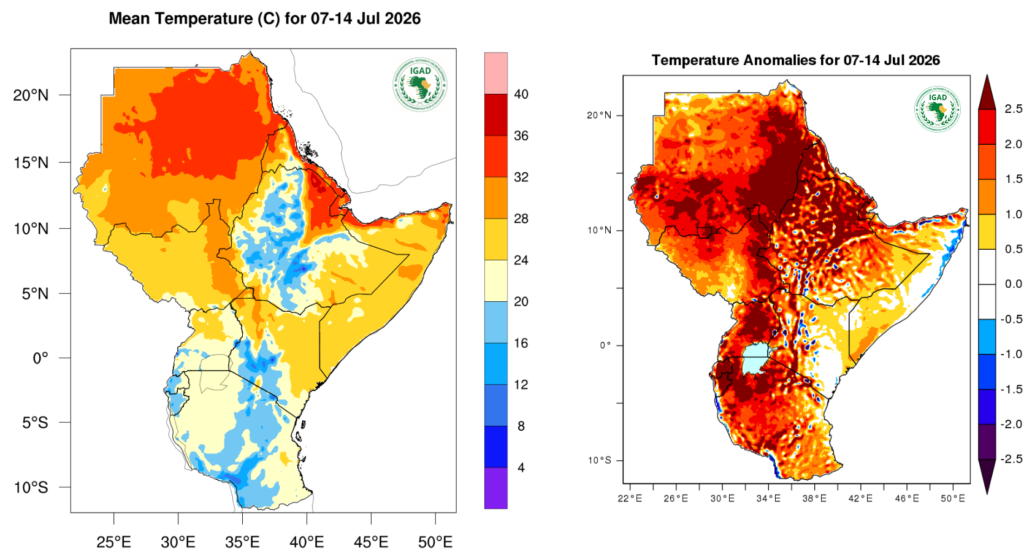
The broader outlook continues to indicate warmer-than-normal conditions across most of the Greater Horn, with only a few isolated areas expected to experience slightly cooler temperatures than average.
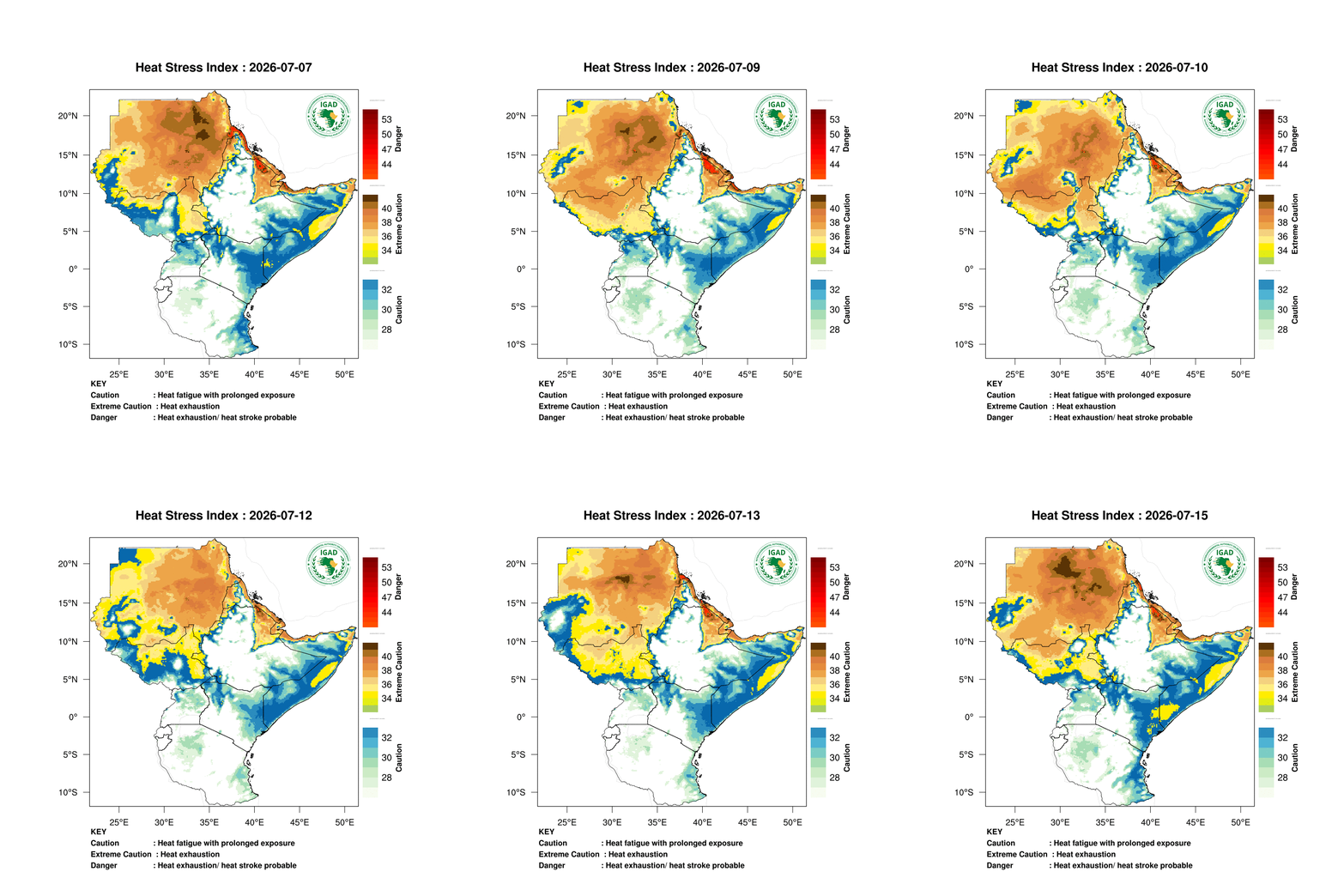
Heat stress also remains a significant concern. ICPAC forecasts “Extreme Caution” heat stress levels across most parts of South Sudan, Sudan, Eritrea, Djibouti, central to northern Somalia, and north-eastern Ethiopia.
In addition, parts of Ethiopia’s Afar region extending into central Eritrea are expected to experience heat stress within the more severe “Danger” category, increasing the risk of heat-related illnesses, particularly for vulnerable populations, pastoral communities, and people working outdoors.
The latest forecast highlights the continued contrast in weather conditions across East Africa, with localized heavy rainfall and flood risks occurring alongside persistent heat and uneven rainfall distribution. As the region progresses through the season, close monitoring of weather updates and early preparedness will remain essential to minimize the impacts of both flooding and extreme heat.
Author Profile

-
Seeker.
Inspire AFRIKA.
Latest entries
 Biodiversity24 October 2026Faith Leaders and Civil Society Call for Stronger Partnerships to Restore Nature
 Biodiversity23 October 2026Inside Kobe’s Grassroots Effort to Train the Next Generation of Biodiversity Leaders
 Animals23 October 2026As COP17 Meets, World’s Rarest Great Ape Faces a Make-or-Break Test in Indonesia
 Biodiversity22 October 2026One in Five Tropical Biodiversity Sites Overlapped by Mining Concessions, COP17 Report Finds